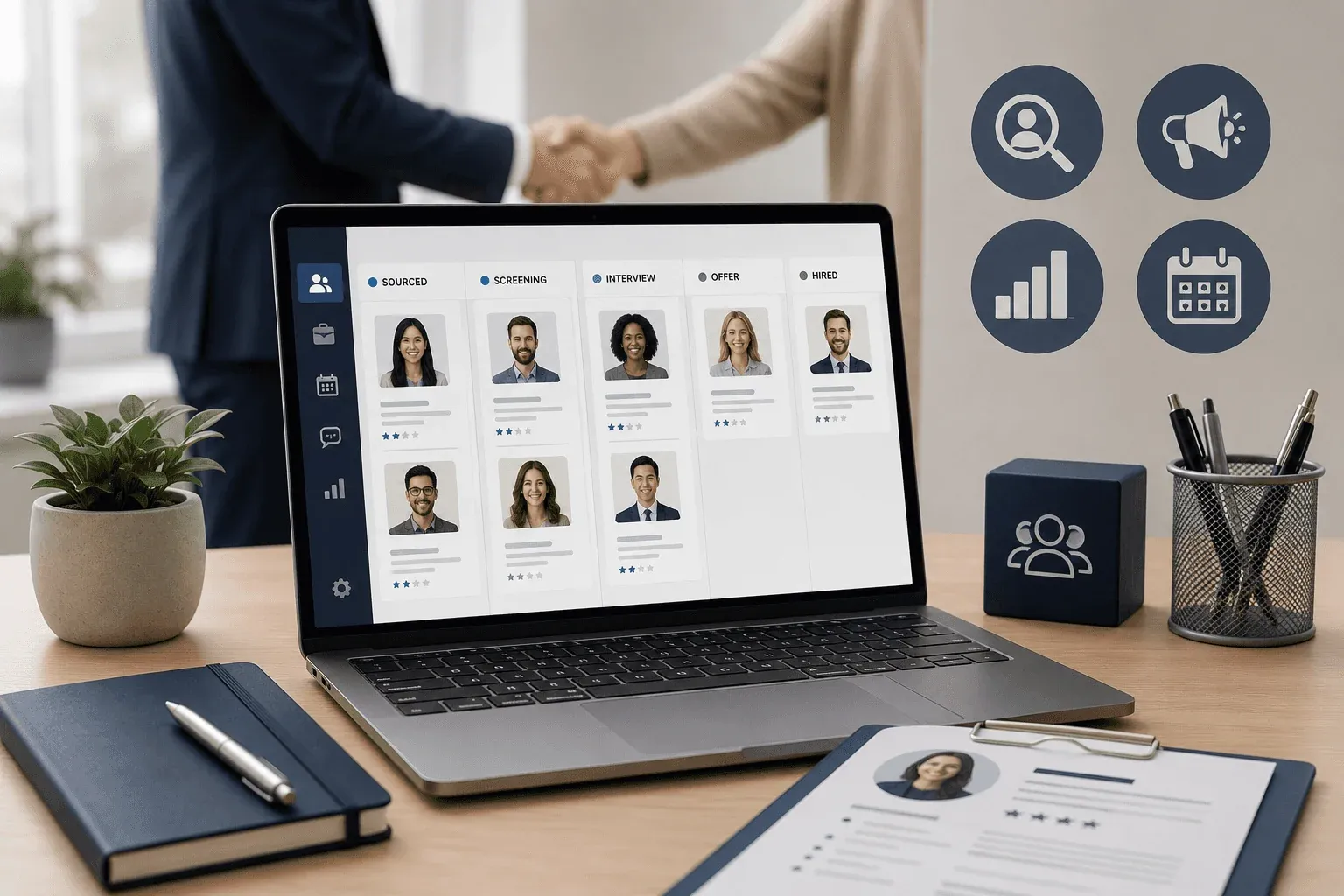

You’re three weeks into setting up an enterprise ATS, and you still can’t post a job without configuring role templates, requisition approvals, and permission hierarchies that assume a recruiting team you don’t have. The system was designed for organizations with dedicated HR staff and multi-department workflows. For a startup trying to hire quickly, that complexity compounds fast. An enterprise ATS too complex for startups doesn’t professionalize your hiring process. It turns into another bottleneck slowing you down.
TLDR:
- Enterprise ATS products were built for Fortune 500 HR teams with dedicated administrators, not founders managing recruiting alongside every other business function.
- Setup and onboarding can run weeks or months, pulling focus from actual hiring when small teams need to move fast on two or three critical roles.
- Startups need software that posts jobs in minutes and moves candidates through stages in a few clicks, not approval chains and compliance workflows built for multi-department review.
- Full enterprise ATS suites can carry contracts in the tens of thousands of dollars a year before implementation and training costs, which can be hard for an early-stage budget to absorb.
- Some tools pair a free ATS with on-demand recruiting support, matching how startups actually hire across roles that vary in urgency, and some also offer paid tiers that add controls such as permissions and approval guardrails as a team grows, so the software can scale with the business.
Why Enterprise ATS Systems Are Built for the Wrong Buyer
Enterprise ATS products were built to serve procurement cycles, compliance checklists, and HR departments with dedicated administrators. The buyer profile that shaped their feature sets is a Fortune 500 company with hundreds of open roles, a legal team with specific audit requirements for applicant tracking systems, and an IT department to manage integrations. That context produced software loaded with approval workflows, permission hierarchies, and configuration layers that assume someone’s full-time job is managing the system itself.
Startups occupy a completely different hiring reality. A founding team or early operator is typically running sourcing, scheduling, and candidate communication alongside every other business function. The complexity baked into enterprise ATS products doesn’t disappear because the company is smaller; it just falls on fewer people.
| Aspect | Enterprise ATS | Startup-Focused ATS |
|---|---|---|
| Setup Timeline | Weeks or months with vendor-led implementation and dedicated resources required before posting first job | Minutes to set up with jobs posted and applications collected the same day |
| Pricing Structure | Full-suite contracts that can reach tens of thousands annually, plus per-seat charges, module add-ons, and implementation fees | Free core ATS (Premium is $199/month with no contract), with optional hourly recruiter support billed at rates each recruiter sets, and an Enterprise plan with flexible pricing for larger teams |
| Primary User | Dedicated HR teams with administrators, IT support, and multi-department approval workflows | Founders and hiring managers running recruiting alongside other business functions without dedicated staff |
| Core Workflow | Multi-level approval chains, compliance audit trails, role-based permissions, and HRIS integrations for enterprise governance | Post jobs in minutes, collect applications centrally, move candidates through stages with a few clicks, gather quick feedback |
The core issue is that enterprise ATS products charge for depth that early-stage teams won’t use and can’t afford to manage.
The True Cost of Enterprise ATS Goes Far Beyond the License Fee

The license fee is usually the number founders fixate on, but it rarely tells the whole story. Pricing for full enterprise ATS suites can start with a base contract in the tens of thousands of dollars annually, then layers on per-seat charges, module add-ons, and implementation fees that can push total first-year costs considerably higher.
Beyond the invoice, soft costs accumulate just as fast, and SHRM’s 2025 benchmarking data puts the average nonexecutive cost per hire at $5,475, which shows how quickly direct spend adds up on its own. Configuration and onboarding can take weeks or months, pulling engineering and recruiting attention away from actual hiring, and training non-technical hiring managers on a system built for dedicated HR teams adds friction at every step. A system that requires a dedicated administrator effectively means hiring for a role that exists only to manage your hiring software. Enterprise ATS contracts can run to nearly $65,000 per year for a full iCIMS suite, according to Vendr buyer data cited in Pin’s 2026 ATS buyer’s guide, before implementation and training costs are added on top.
There is also the cost of delay. Every week spent configuring approval chains or troubleshooting integrations is a week your pipeline sits idle. For a startup closing two or three roles quickly, that lag can affect offer timelines and whether strong candidates stay engaged.
Feature Bloat Creates Friction Instead of Solving Problems
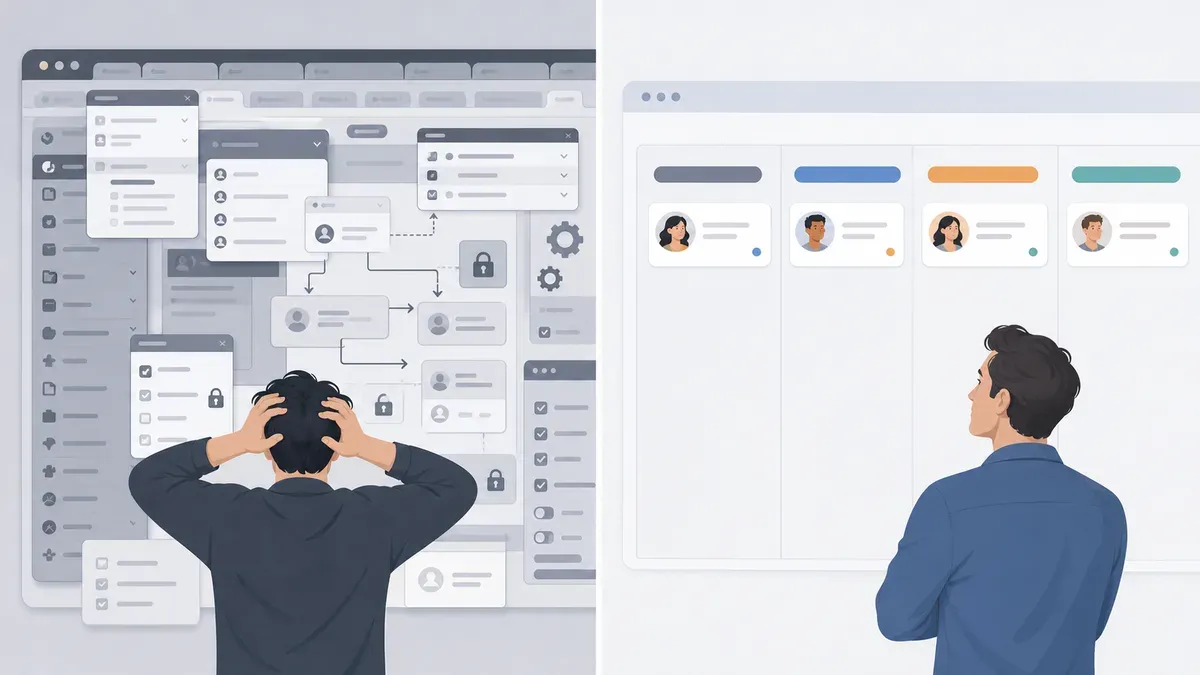
When an ATS is built for a 500-person company, every feature it ships reflects that company’s HR reality: compliance workflows, granular permission hierarchies, multi-department approval chains, HRIS integrations that took six months to configure. For a startup hiring its first ten engineers, those features don’t fade into the background. They get in the way.
The friction shows up immediately. Before you can post a job, you’re configuring role templates and approval flows built for a recruiting org that doesn’t exist yet, and onboarding alone can take weeks.
Enterprise ATS products often advertise depth as a feature, but depth only helps when you have the headcount to use it, which is why comparing applicant tracking systems against your actual needs matters. Without that, you’re carrying the weight of a system built for scale you haven’t reached, and paying for it in time every time you open the tool. Feature bloat in enterprise software creates complexity that drains productivity instead of supporting it.
What Startups Actually Need From Hiring Software
Strip away the enterprise complexity and the startup hiring workflow is short: post a job, collect applications centrally, move candidates through a few stages, gather quick feedback from a small group of interviewers, and extend an offer.
That workflow needs software where jobs go live in minutes, applications from multiple sources land in one place automatically, and moving a candidate from screen to offer takes a few clicks, not a configuration session. Feedback from two or three interviewers should be easy to collect without a dedicated coordinator managing the process.
The list of things a startup does not need is longer: audit trails built for regulated industries, multi-department approval chains, headcount planning modules, and integrations with enterprise HRIS systems the team has never heard of.
How Dover Removes Complexity Without Sacrificing Capability
Dover’s free ATS is built around the reality that early-stage teams don’t have time to configure scoring rubrics, train hiring managers on multi-tab dashboards, or audit compliance workflows before making their first offer. The setup takes minutes, and the core pipeline view gives everyone on the team the same unambiguous picture of where each candidate stands.
Where enterprise tools layer complexity on top of collaboration, Dover keeps the interface flat. Hiring managers see what they need to act. Founders don’t need to delegate ATS administration to someone whose actual job is something else entirely.
Dover’s ATS plans are also built to grow with the business. The free plan covers the first hires. Premium at $199/month with no contract adds AI resume review, bulk actions, and offer e-signing. The newer Enterprise plan, with flexible pricing, adds more control over what the team can do, guardrails for how jobs and offers move forward, and extra protection against fraudulent applicants. A small team can adopt that governance once headcount calls for it, instead of configuring it on day one, and stay in the same system as the company grows.
The recruiter marketplace adds a dimension no legacy configuration can replicate. When a search needs more hands-on work, Dover connects teams with experienced recruiters who have deep startup hiring backgrounds, without a separate vendor relationship or long-term contract. Recruiters set their own hourly rates, and every hire’s all-in cost appears in a public cost-per-hire table, while the core ATS remains free.
That structure matches how startups actually hire: inconsistently, across roles of varying urgency, with no institutional memory of last quarter’s process. A free ATS paired with on-demand recruiting support fits that pattern in a way an enterprise system built for procurement cycles cannot.
What Has Changed for Startup Hiring Software in Late 2026
Much of the recent conversation around hiring software has moved from feature lists to AI oversight. Colorado’s Senate Bill 26-189, signed into law in May 2026, sets new requirements for developers and deployers of automated decision-making technology used in consequential decisions, a category that may reach hiring tools, with provisions taking effect January 1, 2027.
For startups, a small team still needs a clear view of where AI scores or filters applicants, such as resume scoring or knockout questions, and a person responsible for the final call. Software alone does not make a process compliant, so teams that use AI scoring in an ATS may want to check with counsel about the rules in the states where they hire.
FAQs
How long does enterprise ATS implementation take for a startup?
Enterprise systems can take weeks or months, often requiring vendor-led onboarding, workflow configuration, and IT support before posting your first job. Startup-focused ATS tools can be set up in minutes, letting you post jobs and collect applications the same day.
Can a startup use an ATS without hiring a dedicated HR administrator?
Yes, if you choose tools built for small teams. Enterprise ATS products assume someone’s full-time job is managing the system, but startup-focused tools keep the interface flat so founders and hiring managers can post jobs, move candidates, and gather feedback without training or administrative delegation.
What is the best free ATS for startups in 2026?
The best free ATS for a startup is usually one that lets you post jobs and collect applications on day one without a sales call, a contract, or a seat limit. Dover’s free plan is built around that idea, with unlimited users, jobs, and candidates and no expiry, and a Premium plan at $199/month with no contract if you later want AI resume review, bulk actions, or offer e-signing. Dover also offers an Enterprise plan with flexible pricing for larger teams that want more control over permissions, guardrails on how jobs and offers move forward, and extra protection against fraudulent applicants, so the same system can scale as hiring grows. Other tools offer free tiers or trials with tighter caps, so it helps to check user limits and which features sit behind a paid plan before committing.
What is the best ATS for a company under 50 employees?
For a company under 50 employees, the best fit is typically an ATS that a founder or hiring manager can run without a dedicated administrator. Look for fast setup, a simple pipeline view, interview feedback that is easy to collect, and pricing that does not scale with every seat. Some enterprise-grade tools, such as Greenhouse, are sold through quotes and annual contracts, and some users report that tools like Ashby or Lever can be more than a small team needs. Smaller-team options such as Dover, Breezy HR, JazzHR, and Workable tend to suit teams hiring a handful of roles at a time, and a free tier can keep costs near zero while hiring volume is still uneven.
What is the best recruiting solution for a startup?
The best recruiting solution usually depends on how many roles you hire for each year and how much time the founders can give to recruiting. Teams hiring a few roles a year can often manage with a free ATS and their own sourcing. Companies hiring roughly 5 to 50 roles a year may find that a fractional recruiter working inside the same ATS adds capacity without the cost of a full-time hire, and a first full-time recruiter often starts to make sense around 15 to 20 hires a year. Traditional agencies and contingency marketplaces can fit one-off urgent searches, though percentage-of-salary fees tend to rise with each offer.
Final Thoughts on Enterprise ATS Complexity That Doesn’t Scale Down
An enterprise ATS too complex for startups doesn’t get simpler because your team is small. The feature depth enterprise products charge for only pays off once a team has the headcount to use it. Setup timelines that assume dedicated implementation resources, approval chains built for multi-department review, and integrations with systems your team hasn’t heard of create friction at every stage. Dover takes a different approach: a free ATS built for early-stage teams, with on-demand recruiter support available when searches need more hands-on work, so the tool fits how startups actually hire instead of the other way around. Dover’s plans also scale from the free ATS through Premium to a newer Enterprise plan, so a team can add structure as its hiring calls for it, without starting over on a different system.