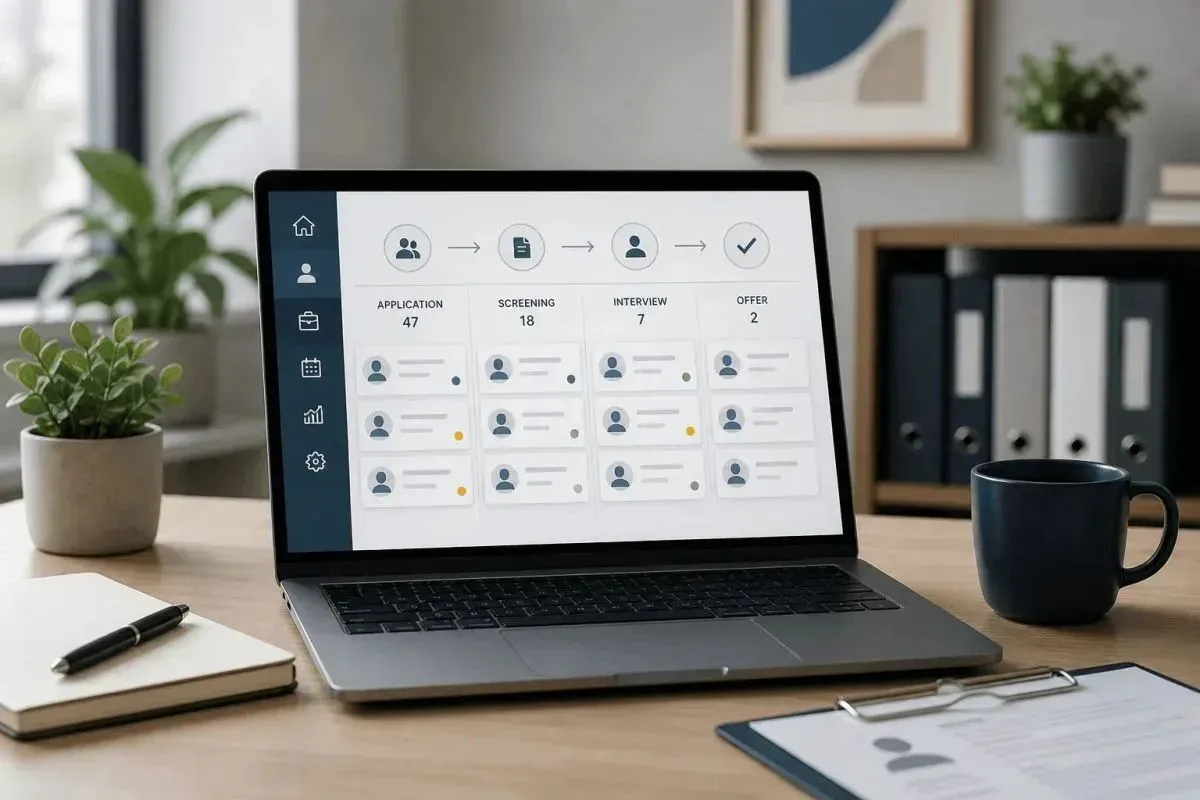
In 2026, the difference between AI-powered applicant tracking systems comes down to how much they do after the resume gets scored. Some rank candidates and step back. Others handle outreach, scheduling, and communication until someone accepts an offer. We reviewed seven systems using publicly available feature documentation and pricing details, from enterprise suites needing months of setup to tools ready this week, with a focus on filling roles.
TLDR:
- AI-powered ATS tools use machine learning to rank candidates by fit, beyond simple keyword matches.
- Some tools pair a free ATS with fractional recruiters billed hourly, instead of the roughly 15% to 25% of first-year salary that traditional agencies typically charge.
- Most AI systems handle screening only; one solution includes recruiters for full-cycle hiring support.
- Enterprise options like Workday and iCIMS often require longer implementation timelines and dedicated administrative support.
- One free option includes distribution to 50+ job boards with no per-user fees, with AI resume scoring available as a paid upgrade.
What Are AI-Powered Applicant Tracking Systems?
AI-powered applicant tracking systems go beyond storing and sorting resumes. Where a traditional ATS flags a resume for containing the word “Python,” an AI-powered system understands context, ranking candidates by predicted fit, surfacing passive talent, and flagging potential drop-off risks before they happen.
Many AI-powered ATS tools use machine learning models to help rank and focus on candidates based on role-specific criteria. Adoption reflects this shift: Resume Genius’s 2026 survey of 1,000 hiring managers found that 71% screen applications using ATS software. The result is a recruiting workflow that moves faster and wastes less time on manual screening.
How We Ranked AI-Powered Applicant Tracking Systems
Every tool on this list was assessed using publicly available product information, feature documentation, and pricing details. No internal trials were run. We looked at criteria that matter most to hiring teams making real decisions:
- AI capabilities, including resume scoring, candidate matching, and automated outreach
- Ease of setup and day-to-day use
- Pricing transparency and total cost
- Integrations with existing HR tools
- Fit across company sizes, from early-stage startups to enterprise
No single system wins on every dimension, which is why context matters. For a broader AI recruiting tool comparison, a Series A startup and a 5,000-person company have very different needs from an applicant tracking system.
Best Overall AI-Powered Applicant Tracking System: Dover
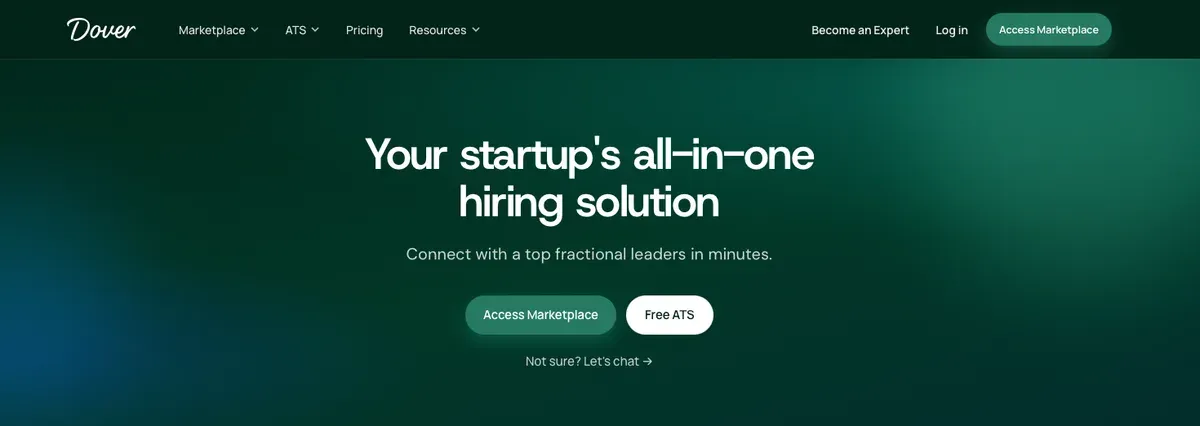
Dover pairs a free AI-powered ATS with a marketplace of experienced fractional recruiters who embed into your hiring process, handling outreach, screening, and coordination. AI resume review is available on the Premium plan. Where most AI applicant tracking systems hand you a ranked list and step back, Dover stays involved through the full hiring cycle, keeping searches moving without adding work for your team.
What Dover Offers
- A free CRM, a LinkedIn sourcing extension, and email outreach campaigns support candidate sourcing, with AI resume review available on the Premium plan for scoring applicants.
- Fractional recruiters handle screening calls, candidate communication, and interview coordination for your team.
Pros
- AI sourcing paired with fractional recruiters who handle screening and coordination
- Sourcing, tracking, and coordination live in one view instead of scattered tools
- Pricing stays accessible for startups without full-time hiring overhead
Cons
- Integration ecosystem is smaller than enterprise suites like Workday or iCIMS
- Built mainly for startups and growing teams, so large multi-location enterprises may need deeper configuration
Dover works especially well for companies that want AI-assisted sourcing with human recruiters who understand early-stage and high-growth hiring contexts.
Sapia.ai
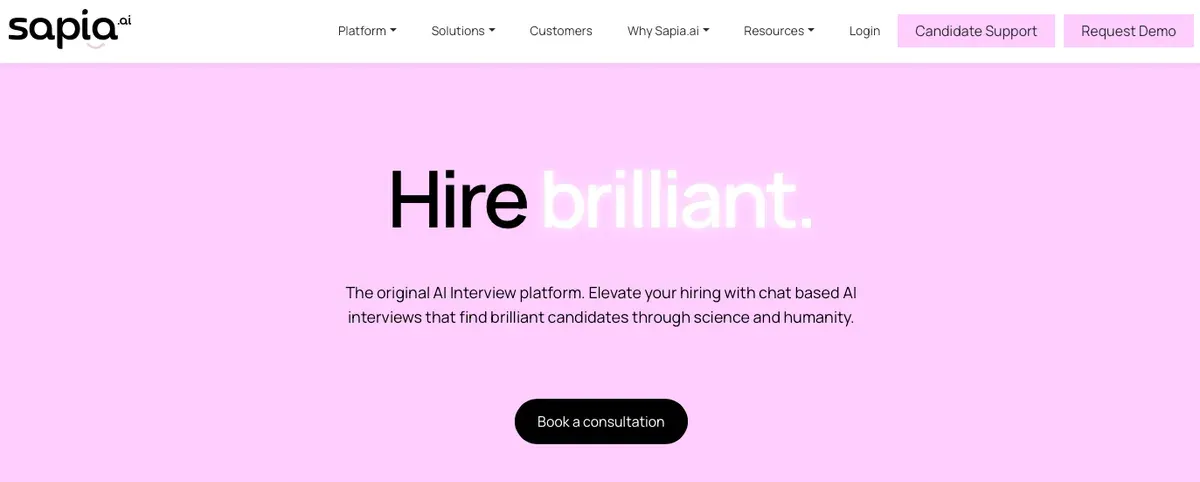
Sapia.ai takes a conversational approach to screening. Instead of forms or async video, candidates go through AI-driven chat interviews that assess personality traits, behavioral competencies, and communication style through text exchanges.
What They Offer
- AI chat interviews assessing personality traits, behavioral competencies, and communication skills across text-based conversations
- SAIGE scoring engine that ranks candidates against competency models Sapia describes as science-based
- Integration capabilities with major ATS providers to sync candidate data and screening results
- Job Analysis Studio for building structured, science-based interviews quickly
Pros
- Chat screening can process thousands of applicants without adding recruiter hours
- Structured, competency-based scoring standardizes evaluation across large applicant pools
- Integrates with major ATS providers to sync candidate data and results
Cons
- Chat-only format can feel impersonal for professional or technical roles
- Not a standalone ATS, so it needs to pair with an existing tracking system
- Pricing is not publicly listed
Good for large enterprises running high-volume frontline hiring.
Workday Recruiting
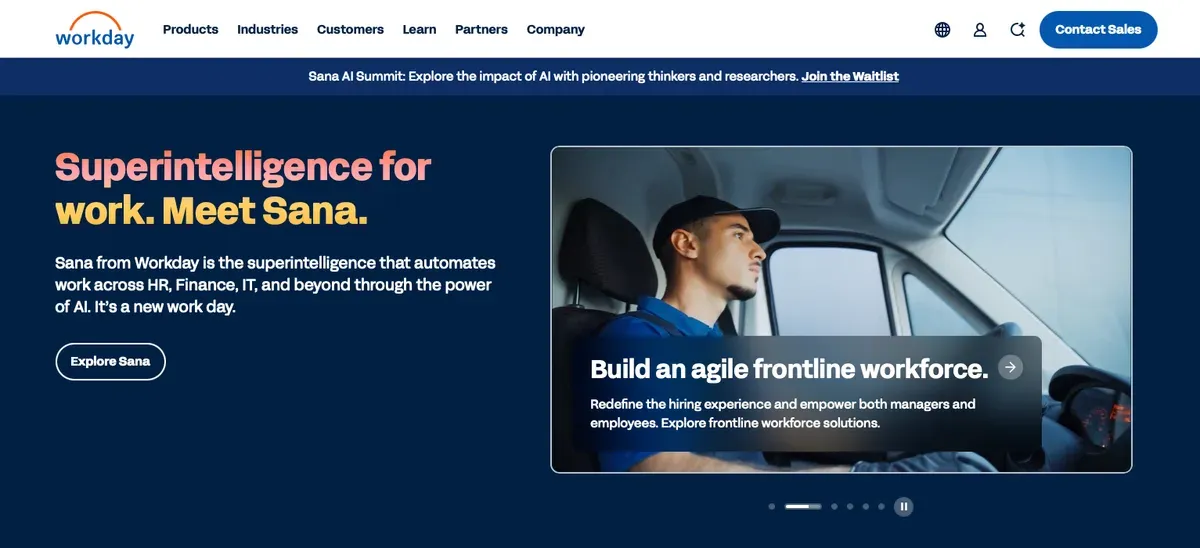
Workday Recruiting is the ATS built into Workday’s broader HR suite. The appeal is consolidation, with recruiting data living alongside payroll, benefits, and workforce planning records in one system.
What They Offer
- AI candidate matching that ranks applicants based on role requirements
- Job description generation to speed up role setup
- Automated interview scheduling built natively into the HR suite
- Consolidated recruiting data alongside payroll, benefits, and workforce planning records
Pros
- Recruiting data sits alongside payroll, benefits, and workforce planning records in one system
- Native AI candidate matching and interview scheduling built into the HR suite
- A strong fit for companies already running Workday for other HR functions
Cons
- Implementation can take months and comes at a high cost
- Typically requires dedicated admin resources to configure and maintain
- The overhead can be hard for smaller hiring teams to support
iCIMS
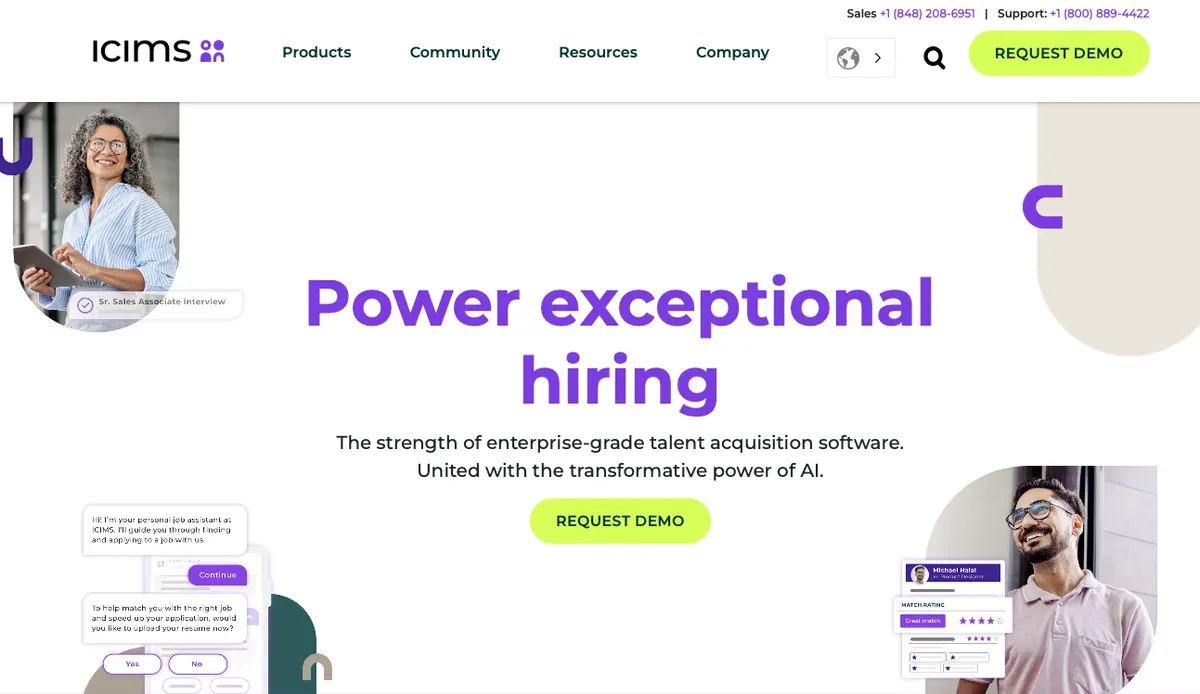
iCIMS positions itself as a full talent cloud for enterprise recruiting, covering applicant tracking, candidate relationship management, recruitment marketing, onboarding, and AI-powered engagement, built for organizations running complex, high-volume recruitment across multiple brands or locations that need deep customization and integration capabilities.
What They Offer
- AI-powered resume parsing, candidate ranking, and job description optimization against specific role requirements
- Conversational AI chatbots on career sites to answer candidate questions in real time
- Text recruiting capabilities for high-volume candidate communication
- A large prebuilt integration ecosystem with HCM connectors and APIs to centralize HR tech stacks
Pros
- Covers ATS, CRM, recruitment marketing, and onboarding in one system
- Large prebuilt integration ecosystem for connecting HR tools
- Text recruiting built for high-volume candidate outreach
Cons
- Higher pricing compared to free or mid-market options
- Longer setup times that can stretch implementation timelines
- More system than smaller teams with straightforward hiring needs tend to require
Higher pricing and longer setup times create friction for smaller teams with straightforward hiring needs.
Phenom People
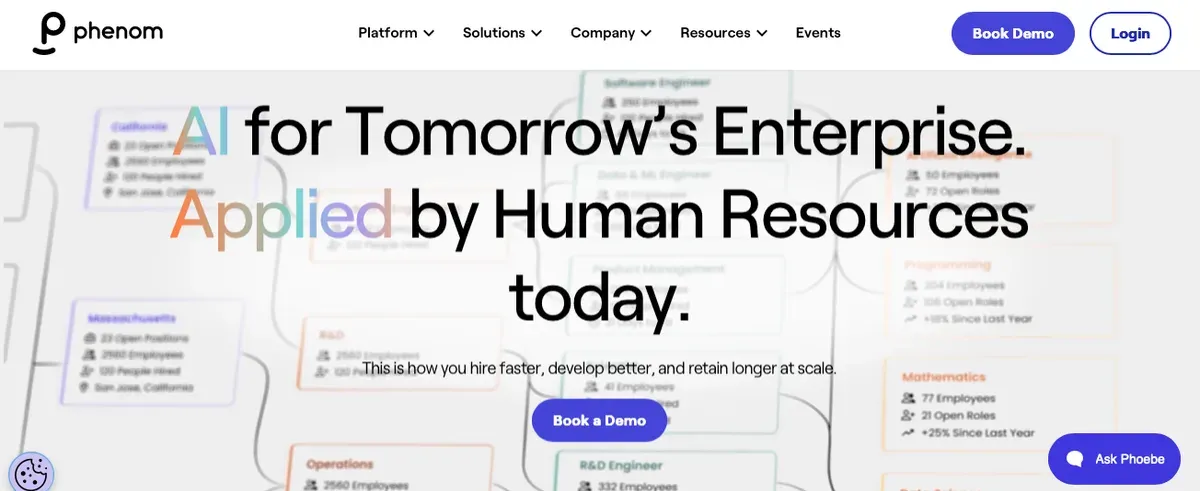
Phenom treats recruiting as an experience layer, personalizing every touchpoint from first career site visit through internal promotion.
What They Offer
- An AI career site that personalizes job recommendations and messaging based on visitor behavior, with a chatbot for initial engagement and scheduling
- A recruiter CRM with automated candidate matching and pipeline intelligence
- Internal mobility and career pathing tools for employee development
- High-volume hiring automation
Phenom suits an enterprise that already runs Workday or SAP SuccessFactors as its core ATS but wants a stronger candidate experience on top of it. The appeal is that none of this requires migrating off the ATS already in place.
Pros
- Personalized career site and chatbot improve candidate engagement from first visit
- Covers both external hiring and internal mobility in one layer
- Works on top of an existing ATS, so no migration is needed
Cons
- Requires a separate ATS underneath, meaning teams pay for two systems
- Built for large enterprises, so smaller teams may find the cost hard to support
Beamery
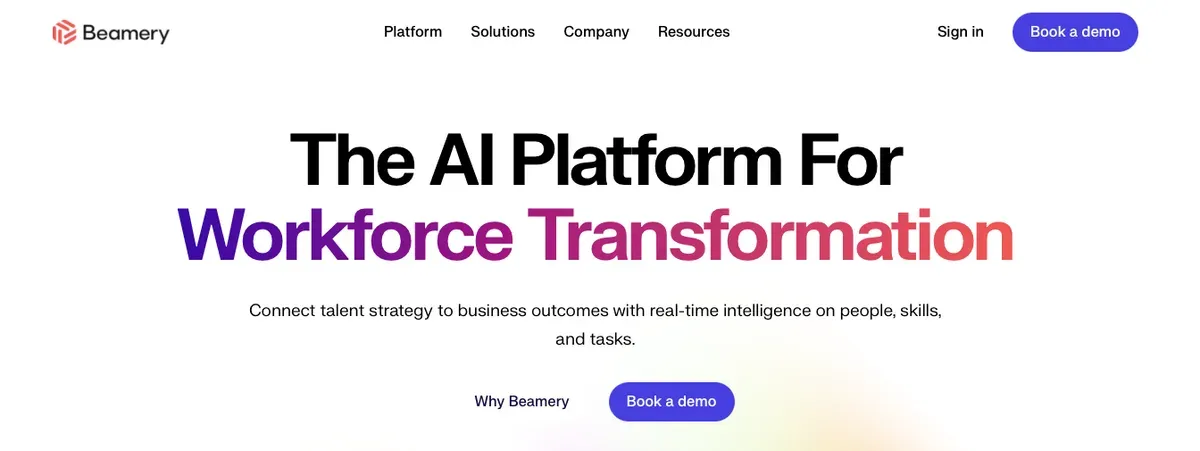
Beamery sits at the strategic end of talent tech, built for enterprises managing the full talent lifecycle. Its TalentGPT engine ties together a candidate CRM, internal talent marketplace, skills inference, and workforce planning in one system.
What They Offer
- TalentGPT covers candidate engagement, internal mobility, skills inference, and workforce planning across the hiring cycle.
- AI candidate matching factors in skills, experience, and role requirements to surface relevant profiles.
- Integration with SAP SuccessFactors for enterprise users running that system.
Pros
- Ties candidate CRM, internal mobility, skills inference, and workforce planning into one system
- AI candidate matching built around skills data, not resume keywords alone
- Integrates with SAP SuccessFactors for enterprise users already running that system
Cons
- Not a standalone ATS, so it adds cost and complexity on top of existing HR infrastructure
- Built more for long-range talent planning than for filling an urgent opening
Greenhouse
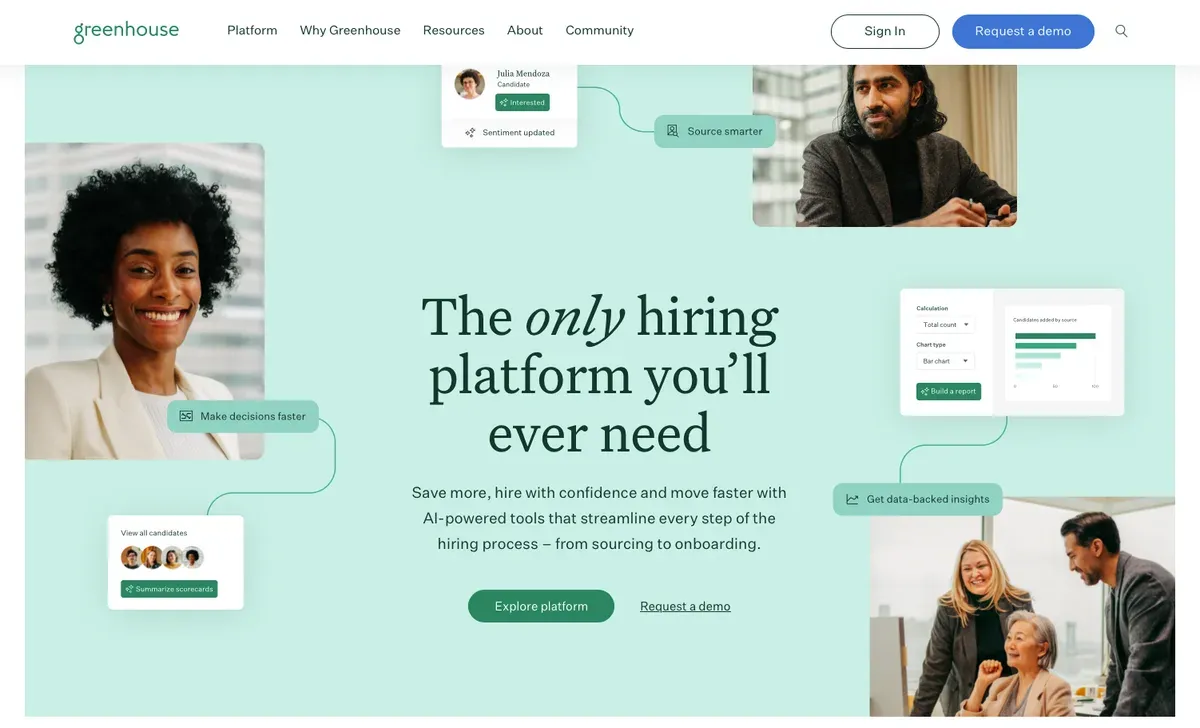
Greenhouse built its reputation on consistent, data-driven hiring and remains one of the most widely adopted ATSs in the tech sector.
What They Offer
- AI sourcing, CRM functionality, and candidate matching against open requisitions
- AI workflows for summaries, job descriptions, scheduling, and pipeline management
- Structured interview kits and scorecards to reduce bias and standardize evaluation
- A large integration marketplace covering HRIS, sourcing, and collaboration tools
Pros
- A large integration marketplace connects Greenhouse to the HRIS, sourcing, and collaboration tools most TA teams already use
- Structured interview kits and scorecards standardize evaluation across interviewers and roles
- A repeatable, measurable hiring process gives TA ops teams the data and consistency boards and investors expect
Cons
- Headcount-based pricing scales costs as the company grows
- Setup typically requires dedicated TA operations resources to configure workflows properly
- Less suited to early-stage startups that don’t have a recruiter or TA ops person on staff
Greenhouse fits Series B+ tech companies with roughly 100 to 500 employees that have dedicated recruiting operations teams and want a repeatable, measurable hiring process. Headcount-based pricing scales costs as the business grows, and setup typically requires TA operations resources most early-stage startups lack.
How to Choose the Right AI-Powered ATS for Your Team
Company Size and Hiring Volume
Team size changes what matters most in an ATS. Smaller companies want fast setup with little process, while larger organizations typically need deep HR integrations.
Standalone vs. Layered Systems
Some systems, like Dover, Greenhouse, and Workday, replace your applicant tracking system outright, while others, like Phenom and Beamery, sit on top of an existing ATS and mean paying for two systems. Teams avoiding that added cost often lean toward standalone options.
AI Depth: Screening Only vs. Full-Cycle Automation
Most AI recruiting tools inside an ATS stop at resume scoring and candidate ranking, while a smaller group extends into outreach, scheduling, and recruiter coordination. Human oversight still typically plays a role, so teams should be clear on where a tool’s AI capability actually stops.
Pricing Model Fit
Pricing structures vary widely, from per-seat and headcount-based fees to free tiers with paid add-ons. Startups often do better with flexible startup recruitment software, while enterprises may prefer predictable headcount-based licensing.
Implementation Timeline Tolerance
Some tools are ready within a day, while others require months of configuration and dedicated administrative support. Teams needing to fill roles quickly can’t absorb a long setup window, but organizations with more hiring stability may accept it for deeper customization.
Here’s how the seven AI-powered ATS options stack up across the features that matter most to hiring teams.
| Feature | Dover | Sapia.ai | Workday | iCIMS | Phenom | Beamery | Greenhouse |
|---|---|---|---|---|---|---|---|
| AI Resume Screening | Yes (Premium) | Chat-based | Yes | Yes | Yes | Yes | Yes |
| Starting Price | Free ATS; Premium $199/mo; recruiters billed hourly | Custom pricing (enterprise) | Custom pricing; high implementation cost | Custom pricing; enterprise tiers | Custom pricing (enterprise) | Custom pricing (enterprise) | Custom pricing; scales with headcount |
| Free Tier | Yes | No | No | No | No | No | No |
| Job Board Distribution | Yes (50+ boards) | No | No | Yes | No | No | Yes |
| Recruiter Marketplace | Yes | No | No | No | No | No | No |
| Fast Setup | Yes | Moderate | No | No | No | No | No |
| Transparent Pricing | Yes | No | No | No | No | No | No |
| Standalone ATS | Yes | No | Yes | Yes | No | No | Yes |
| Integration Ecosystem | Moderate | Moderate | Yes | Yes | Yes | Yes | Yes |
Why Dover Is the Best AI-Powered Applicant Tracking System
Most AI-powered ATS options force a choice: sophisticated software or human recruiting support. Dover skips that tradeoff. The free ATS includes distribution to 50+ job boards and unlimited seats with no per-user fees, and AI resume scoring is available on the Premium plan at $199/month.
When you need extra help, Dover’s recruiter marketplace connects you with vetted fractional recruiters who bill by the hour and set their own rates, with hours tracked in real time, a pairing that gives startups and growing teams serious recruiting infrastructure without the enterprise price tag or a months-long implementation.
FAQs
What’s the main cost difference between ATS tools?
Free and mid-market tools charge little or a moderate subscription fee, while enterprise systems like Workday or iCIMS add implementation costs and license fees that scale with headcount.
Can an AI-powered ATS work without replacing your entire HR tech stack?
Yes. Phenom and Beamery layer on top of your current ATS, so you pay for both, while standalone options like Dover, Greenhouse, or Workday replace it and may need migration work upfront.
When should a startup consider adding human recruiters alongside their ATS?
Usually when recruiting takes up a large share of founders’ week or hiring outpaces what software alone can handle. Fractional recruiters can fill that gap without a full-time salary.
Which AI features matter most for reducing time spent screening candidates?
Resume scoring and candidate matching cut the most manual work, while automated scheduling and messaging save time on coordination.
Final Thoughts on Picking Your Recruiting Stack
The right AI-powered applicant tracking system depends less on feature counts and more on whether it removes friction from your actual hiring process.
- Early-stage startups and founder-led teams: Dover pairs a free ATS with on-demand fractional recruiters, skipping enterprise overhead and agency retainers.
- Mid-market companies (100 to 500 employees) with a TA team: Greenhouse offers structured workflows and a large integration ecosystem built for a dedicated recruiting operations function.
- Enterprise organizations (500+ employees) with existing HR infrastructure: Workday, iCIMS, or Phenom add AI capabilities to multi-location hiring programs, though each needs meaningful implementation investment.
Dover pairs a free AI-powered ATS with hourly recruiter support, a lighter path than enterprise software or agency retainers. The best fit for an AI-powered applicant tracking system still comes down to team, hiring volume, and company size.