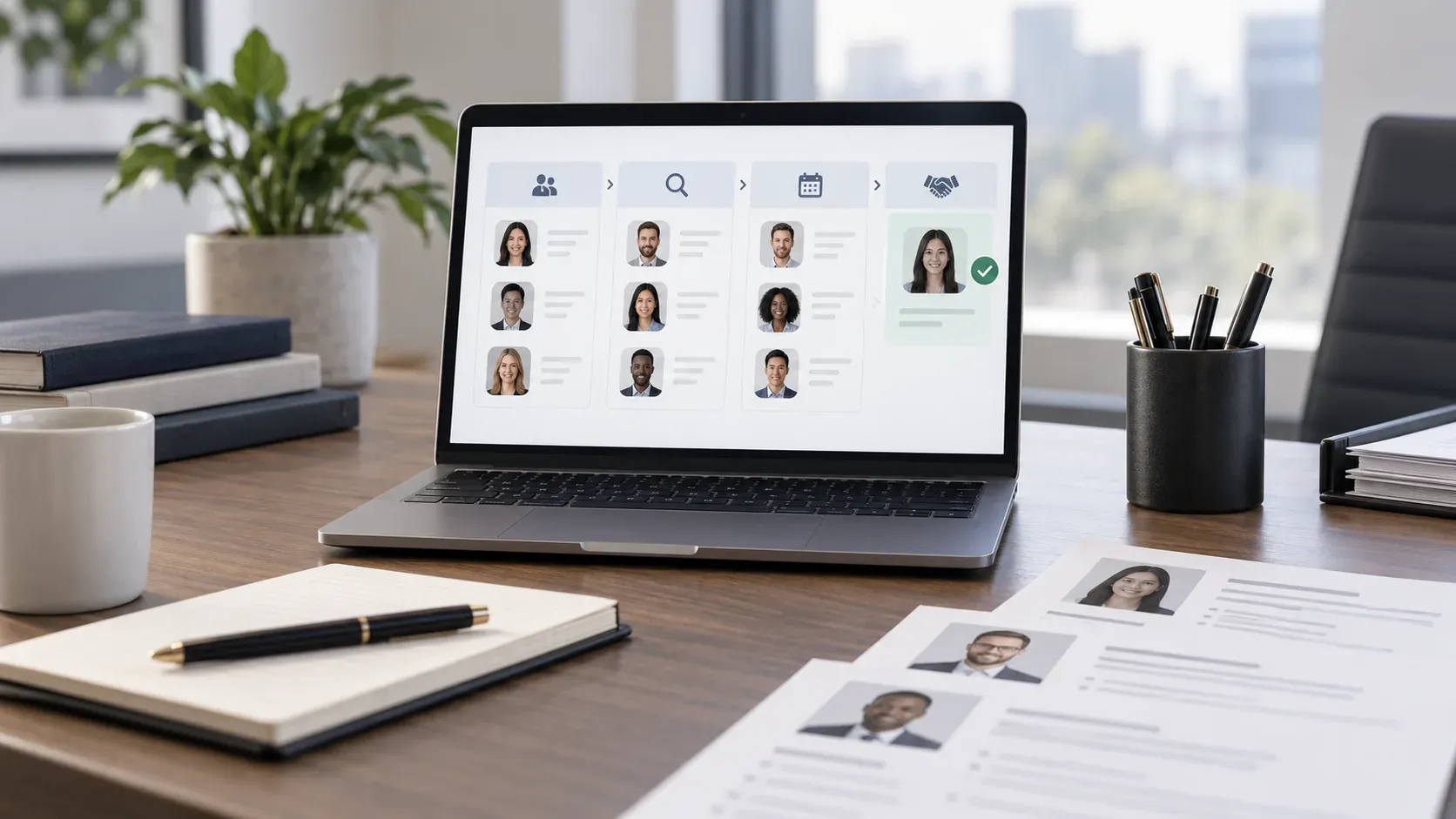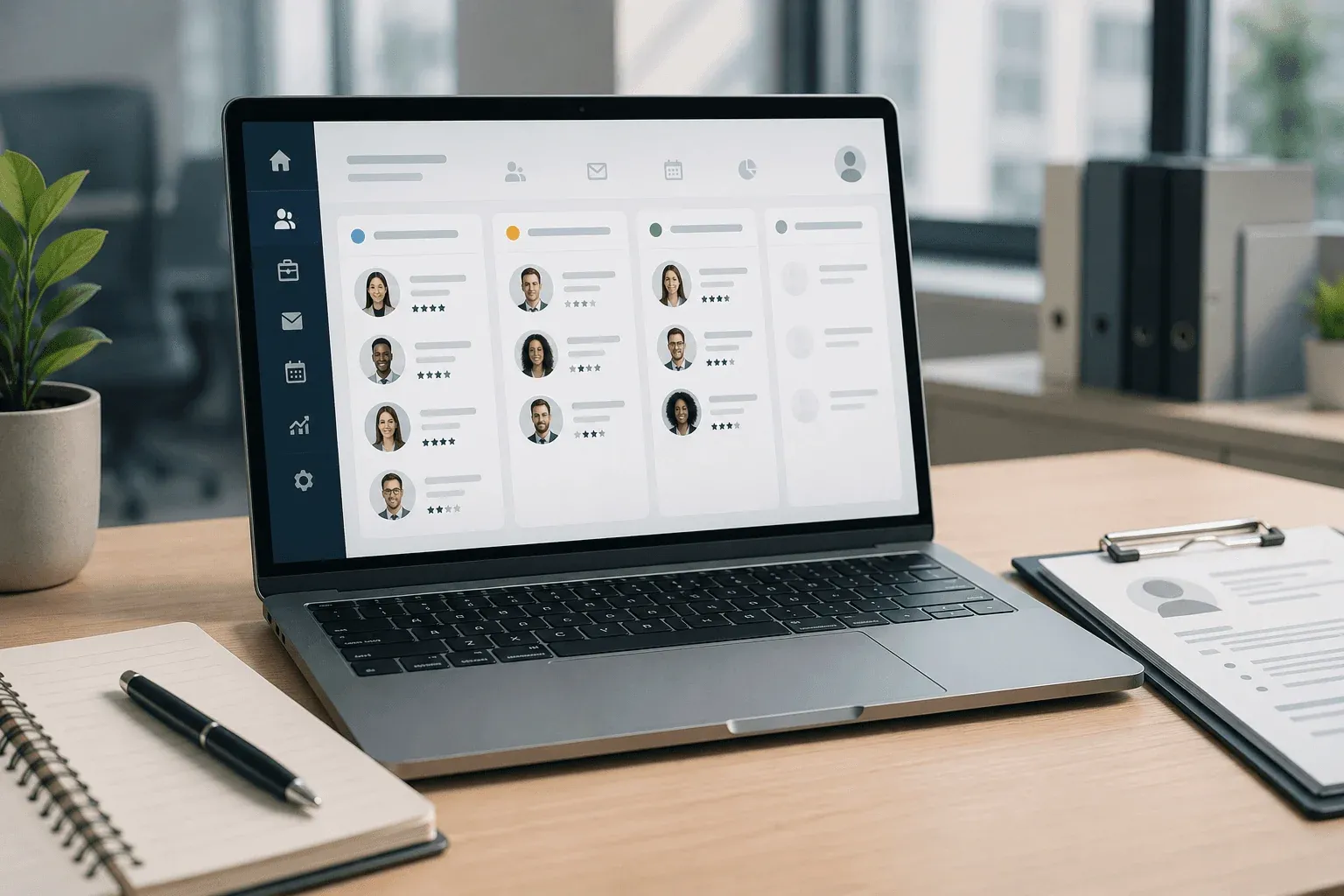

When you’re filling three roles at once, the manual work stacks up fast: follow-ups, scheduling, job board posts, and status updates. Top recruiting tools handle those tasks so you can focus on hiring decisions instead of calendar Tetris. Recruitment automation can reduce hiring costs by handling repetitive work, often without a costly contract or a steep learning curve.
TLDR:
- Recruitment automation can handle tracking, sourcing, scheduling, and outreach in one place, which may help fill roles faster depending on the role and process.
- Some tools pair free ATS software with on-demand recruiting support, adding human expertise without long-term contracts, and with no placement fees on hourly engagements.
- Free plans from Zoho Recruit cap you at one active job with no AI, while enterprise tools like Greenhouse and SmartRecruiters often start at several thousand dollars or more per year.
- Good recruitment software cuts manual work by tying workflows together and giving full pipeline visibility as hiring volume grows.
- Choosing between free and paid tools comes down to hiring volume, team size, and whether software alone is enough.
What Is Recruitment Automation Software?
Recruitment automation software handles the repetitive parts of hiring: applicant tracking, candidate sourcing, interview scheduling, and outreach. Without it, hiring teams juggle spreadsheets, lose track of candidates, and spend hours on scheduling back-and-forth.
Interview scheduling and first-pass resume screening are where manual hours tend to pile up, and they are what automation handles best. One UK recruiter admin study found roughly 2.5 hours per vacancy goes to scheduling interviews alone. Self-serve booking links take the coordinator out of the email chain, and structured pipeline stages let reviewers start from a ranked shortlist instead of a full inbox. Average time to hire has climbed to 68.5 days in 2025, though actual results vary by role and process. SHRM research puts the average cost per hire at nearly $4,700, with total costs often running several times that once manager time and productivity loss are factored in.
Types of Recruitment Automation (And What Each One Handles)
ATS workflow automation. Moves candidates through pipeline stages and sends status updates so nobody edits a spreadsheet by hand.
Sourcing automation. Surfaces candidates from job boards, LinkedIn, and talent databases using AI search instead of manual weekly searches.
Screening automation. Ranks applicants against job criteria so a recruiter starts with a shortlist instead of a pile of resumes.
Interview scheduling automation. Syncs calendars and sends self-serve booking links, letting candidates pick a time without any back-and-forth.
Candidate relationship management (CRM). Nurtures passive candidates with automated outreach, so a strong prospect hears from you again later. The best tools combine these layers in one workflow, while point solutions leave you stitching the rest together.
How We Ranked Recruitment Automation Software
Each tool was assessed against vendor sites, G2 and Capterra reviews, and verified pricing, with no credit given for reputation alone.
- Setup and daily use across team sizes
- Sourcing, tracking, scheduling, and outreach features
- Pricing transparency and genuine free tier value
- Integration depth with job boards and HR tools
- How well AI use in recruiting holds up in real workflows
We noted unlisted pricing and meaningful free-plan limitations where they appeared.
Who Should Use What
Startups: Teams with 1 to 50 employees and fewer than 10 hires a year usually get more from fast setup than software breadth, and a free ATS paired with on-demand recruiters, like Dover, fits this stage well.
Growing mid-market teams: Companies with 50 to 500 employees hiring roughly 20 to 75 people a year often need structured pipelines and job board distribution at scale. Workable and SmartRecruiters are worth a closer look here.
Enterprise and high-volume hiring: Organizations with 500+ employees and 100+ hires a year typically need compliance workflows, DEI reporting, and HRIS integration. Greenhouse and SmartRecruiters are built for this tier, usually with annual contracts.
| Tool | Best For | Standout Feature | Starting Price | Main Limitation |
|---|---|---|---|---|
| Dover | Startups & scaling teams | Free ATS + fractional recruiter marketplace | Free (ATS); recruiters billed hourly | Recruiter expertise is startup-focused; less suited to enterprise hiring at scale |
| Zoho Recruit | Zoho ecosystem users | Native Zoho CRM integration | Free (1 job); paid plans from $25/recruiter/mo (billed annually) | Free plan caps at one active job with no AI or sourcing tools |
| Workable | Growing in-house HR teams | 200+ job board postings + HR suite | $299/mo | AI sourcing locked to higher tiers; cost climbs with headcount |
| SmartRecruiters | Mid-to-large enterprises | Multilingual hiring & compliance coverage | $14,995/yr | High cost and setup overhead for smaller teams |
| Greenhouse | Structured enterprise hiring | Interview scorecards & compliance workflows | ~$5,000+/yr (estimated) | No free trial; add-on modules priced separately |
| Lever | Mid-market pipeline hiring | Unified ATS + built-in CRM | ~$3,500+/yr (estimated, unpublished) | Opaque pricing; reporting flexibility draws frequent criticism |
Best Overall Recruitment Automation Software: Dover
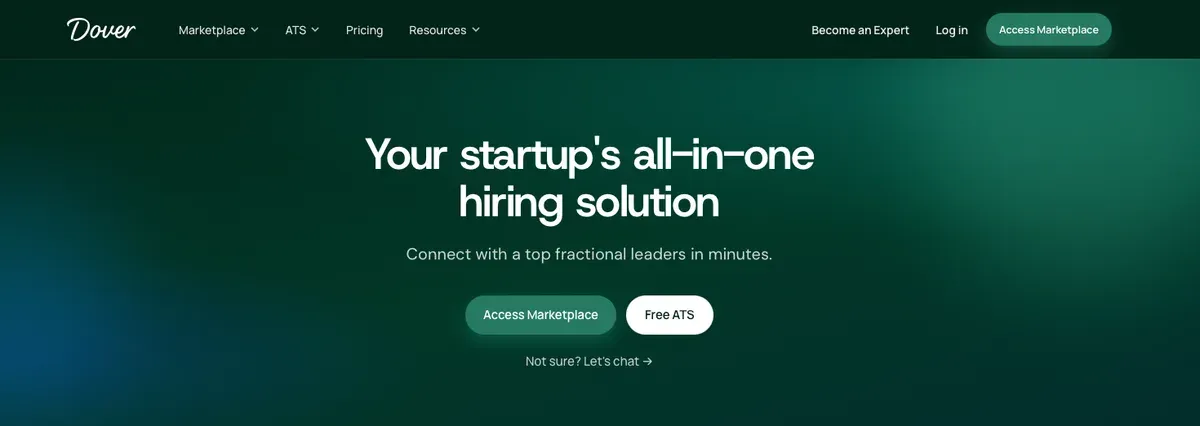
Dover sits at the top of this list because no other tool pairs a genuinely free ATS with on-demand recruiting expertise. The free ATS covers what growing teams actually need: a no-code careers page, one-click posting to 50+ job boards, and a Chrome sourcing extension for finding candidates on LinkedIn. Getting set up is quick, with no seat limits and no hidden costs.
Where Dover pulls ahead is the recruiter marketplace. When your hiring ramp outpaces what software alone can handle, you can bring in a vetted fractional recruiter billed hourly with no long-term contracts and no placement fees on hourly engagements. Instead of locking you into a retainer or a percentage of salary, you get access to a highly selective network of experienced recruiters with deep startup hiring backgrounds. You choose who you work with, scale up or down as needed, and keep full visibility through the same ATS dashboard you started with for free.
Pros:
- Free ATS with careers page, 50+ job board posting, no seat limits.
- Vetted recruiters billed hourly, with no long-term contracts and no placement fees on hourly engagements.
Cons:
- Recruiter expertise is startup-focused, less suited to enterprise hiring.
- Hands-on recruiter support is billed hourly on top of the free ATS.
That gap between software-only tools and expensive agency support is exactly what Dover fills.
Zoho Recruit
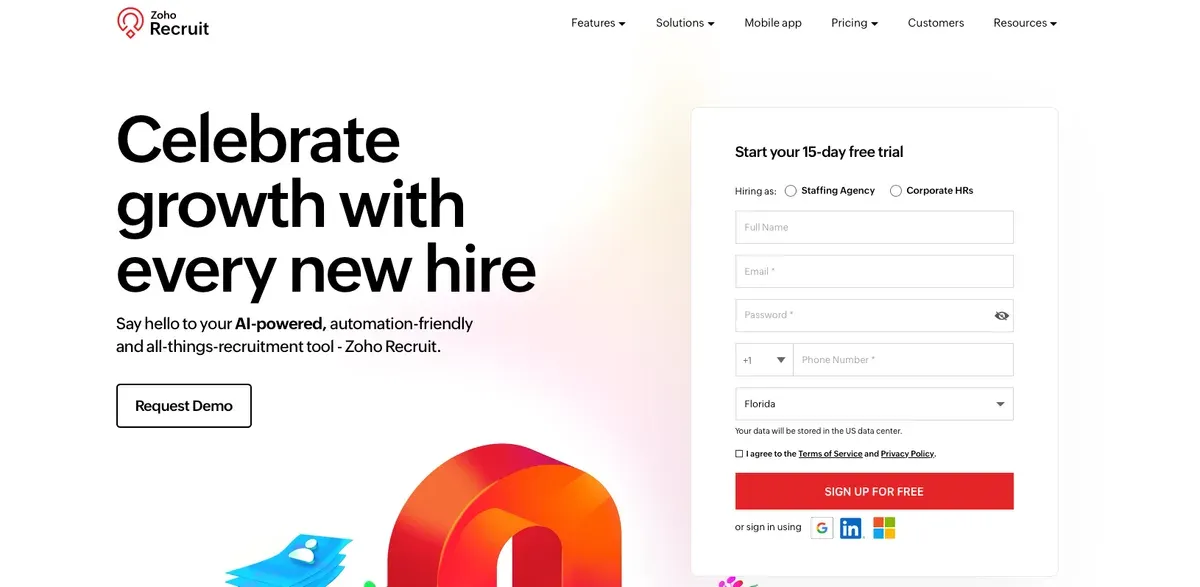
Zoho Recruit is a cloud-based ATS built for staffing agencies and HR teams inside the Zoho ecosystem.
What They Offer
- Resume parsing, job board integrations, and workflow automation
- Native Zoho CRM integration and broader Zoho suite connectivity
Pros:
- Native Zoho CRM integration gives Zoho users a natural fit.
- Workflows are customizable at accessible price points.
Cons:
- The free plan caps you at one active job.
- No AI, resume parsing, or sourcing tools included free.
Good for small to mid-sized businesses in the Zoho ecosystem, though the Forever Free plan caps you at one active job with no AI, parsing, or sourcing tools.
Workable
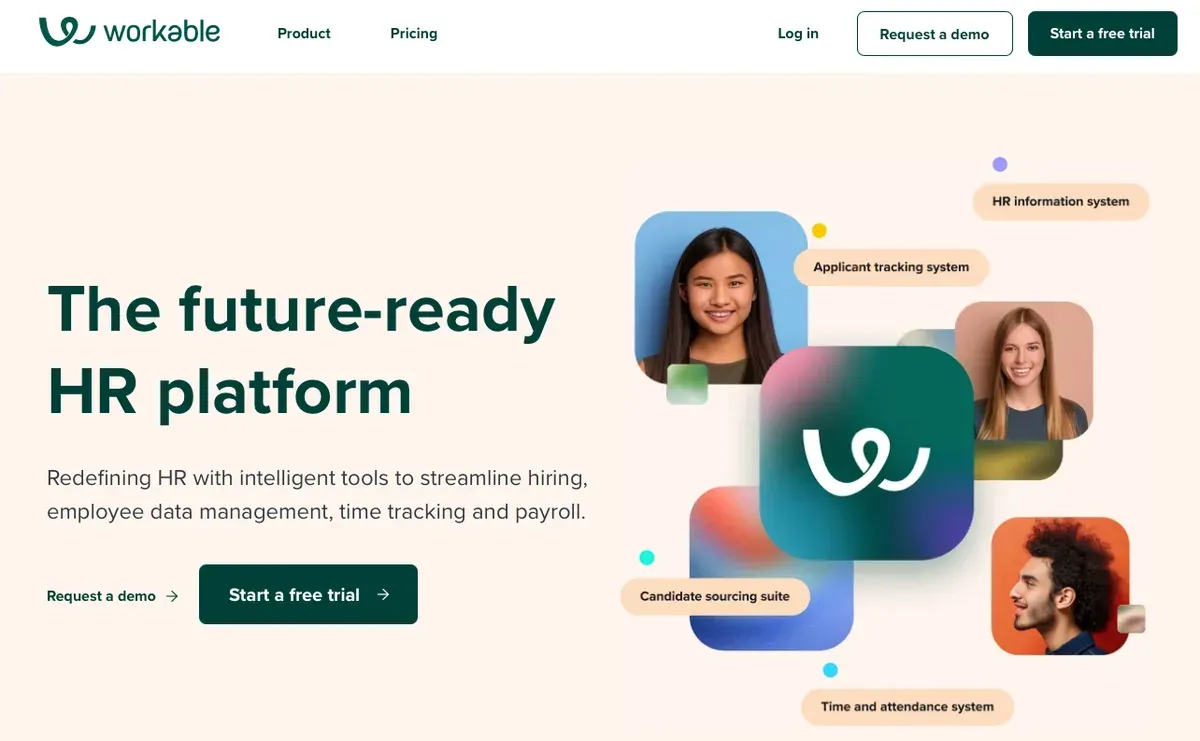
Workable is an all-in-one recruiting and HR suite that extends beyond applicant tracking to cover employee management for mid-market teams.
What They Offer
- Applicant tracking, AI-assisted screening, and candidate recommendations
- HR features including onboarding, time off management, and payroll prep
Pros:
- Tracking, AI screening, and recommendations come in one tool.
- HR features extend beyond hiring into onboarding and payroll.
Cons:
- Pricing climbs fast as headcount grows.
- AI sourcing may require higher tiers or add-ons.
Good for growing in-house teams wanting structured hiring, though published pricing runs $299 to $599+ per month and climbs with headcount.
SmartRecruiters
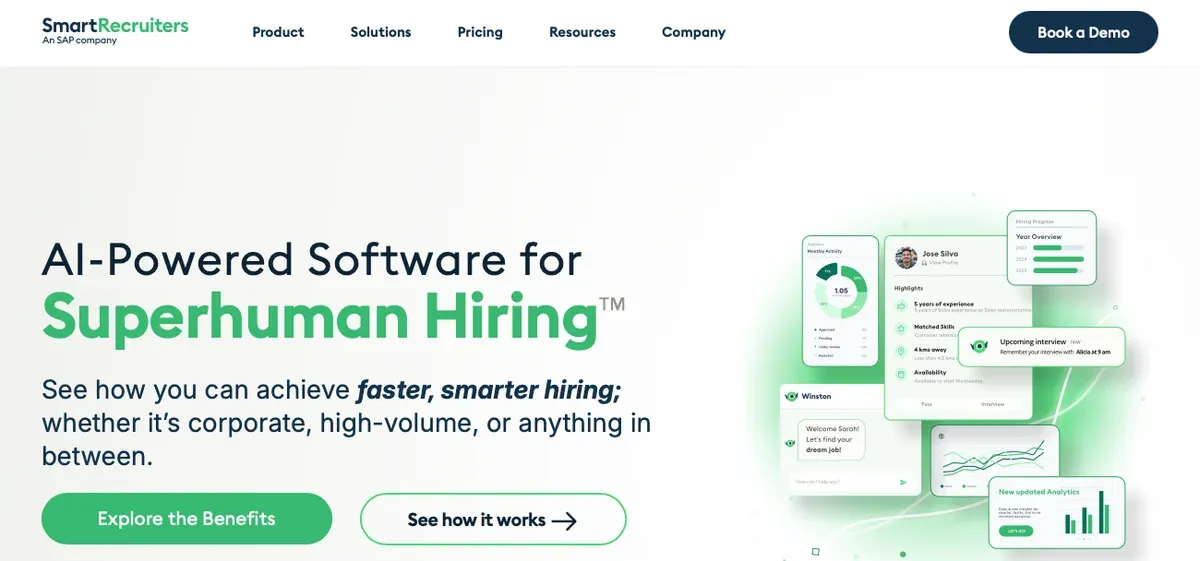
SmartRecruiters is an enterprise talent acquisition suite built for mid-sized to large organizations that need scale, compliance coverage, and multilingual hiring.
What They Offer
- ATS workflows, AI talent matching, AI-powered screening, and a career site builder
- Built-in CRM, employee referral management, and multilingual support for global hiring
Pros:
- Multilingual support and compliance coverage suit hiring across multiple regions.
- AI talent matching, screening, and a career site builder are included.
Cons:
- Pricing starts at $14,995 per year, with custom quotes required beyond that.
- Cost and configuration overhead are hard to work around for smaller teams.
Good for organizations with 250+ employees that need compliance features and regional scalability. Pricing starts at $14,995 per year, and the cost and setup overhead can be hard for smaller teams to work around. Learn more in our SmartRecruiters vs. Dover comparison.
Greenhouse
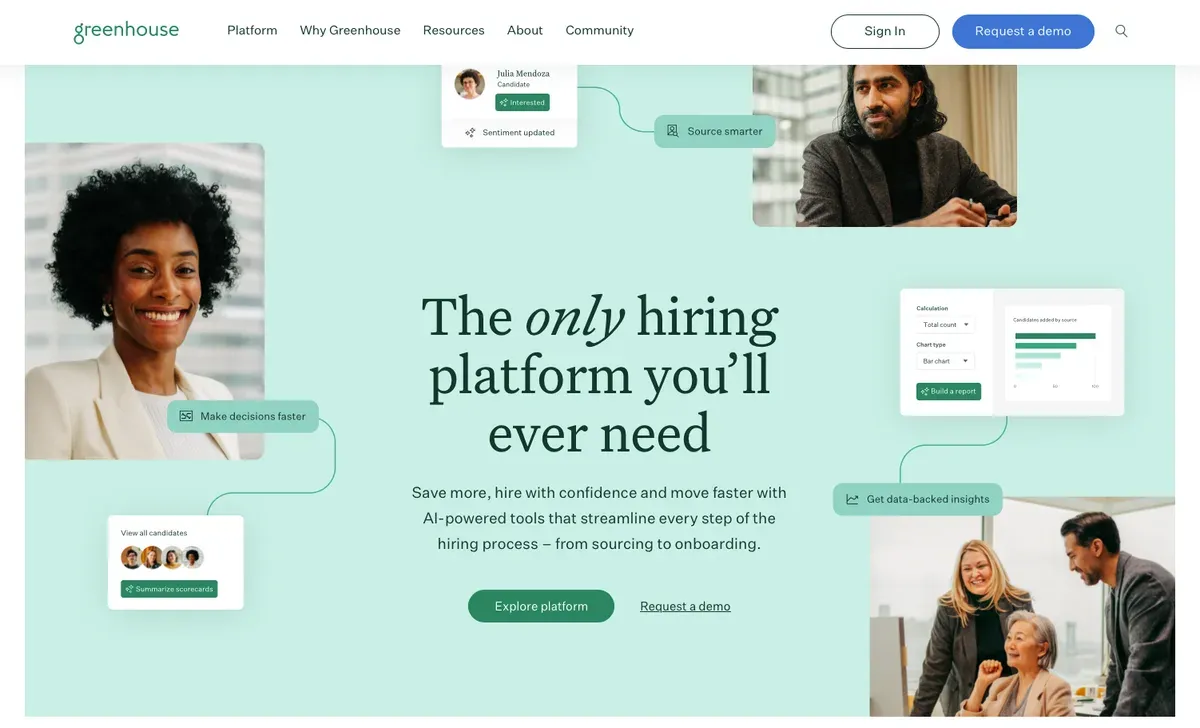
Greenhouse is a structured hiring solution built around interview consistency, scorecards, and compliance for mid-sized companies and enterprises.
What They Offer
- Interview plans, scorecards, and automated sourcing and scheduling
- Optional add-on modules for CRM, advanced analytics, and diversity tools
Pros:
- Interview plans and scorecards support structured hiring and data integrity.
- Automated sourcing and scheduling are included.
Cons:
- Pricing starts at $5,000 per year with no free trial available.
- Each add-on module is priced separately, which pushes total costs up considerably.
Greenhouse does not publish pricing; it is quoted per company on annual contracts, and third-party estimates put the starting cost around $5,000 per year or more. Add-on modules are priced separately and can push total costs higher for teams with structured recruiting needs and budgets for premium tools. Free ATS options can cover the core workflow at no cost, with recruiters available on demand. Read our full Dover vs. Greenhouse analysis for more details.
Lever
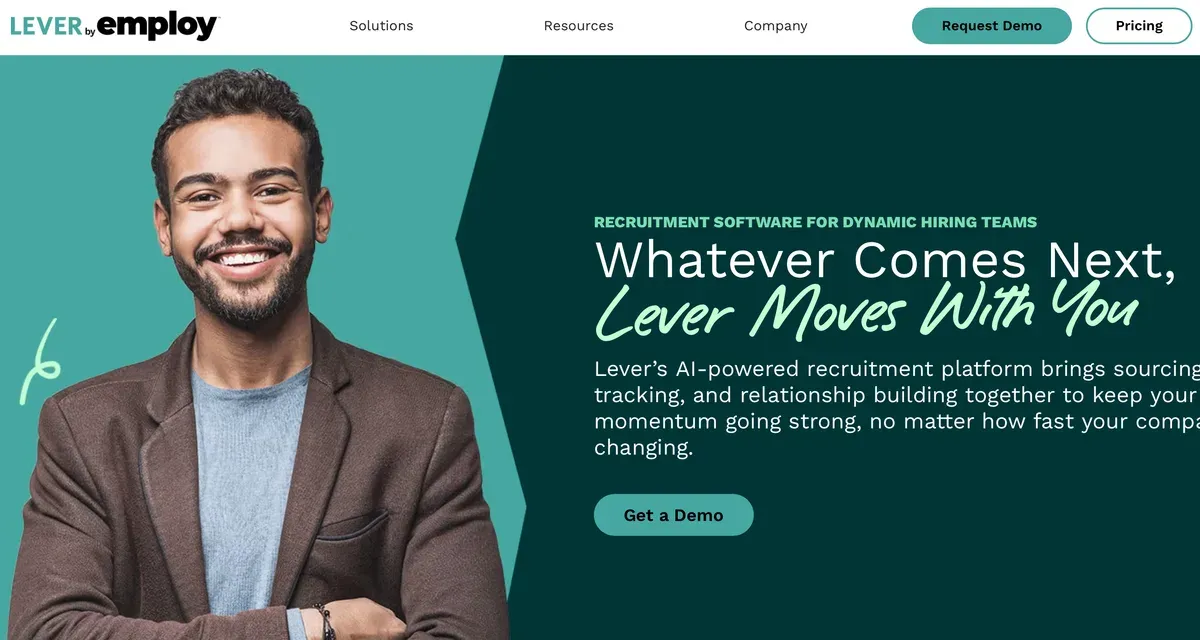
Lever is an ATS with built-in candidate relationship management for mid-market companies focused on pipeline-driven hiring.
What They Offer
- Unified ATS and native CRM for nurturing passive candidates over time
- AI screening, AI sourcing, and 400+ integrations including Slack and DocuSign
Pros:
- A unified ATS and CRM keep passive candidate relationships in one place.
- 400+ integrations connect tools like Slack and DocuSign.
Cons:
- Lever does not publish pricing, and third-party data suggests costs in the mid four figures per year for small teams, rising as team size grows.
- Some users report reporting feels inflexible and boolean search feels basic.
Good for mid-market teams focused on candidate relationship nurturing. See our Lever vs. Dover comparison for a side-by-side view.
Why Dover Is the Best Recruitment Automation Software
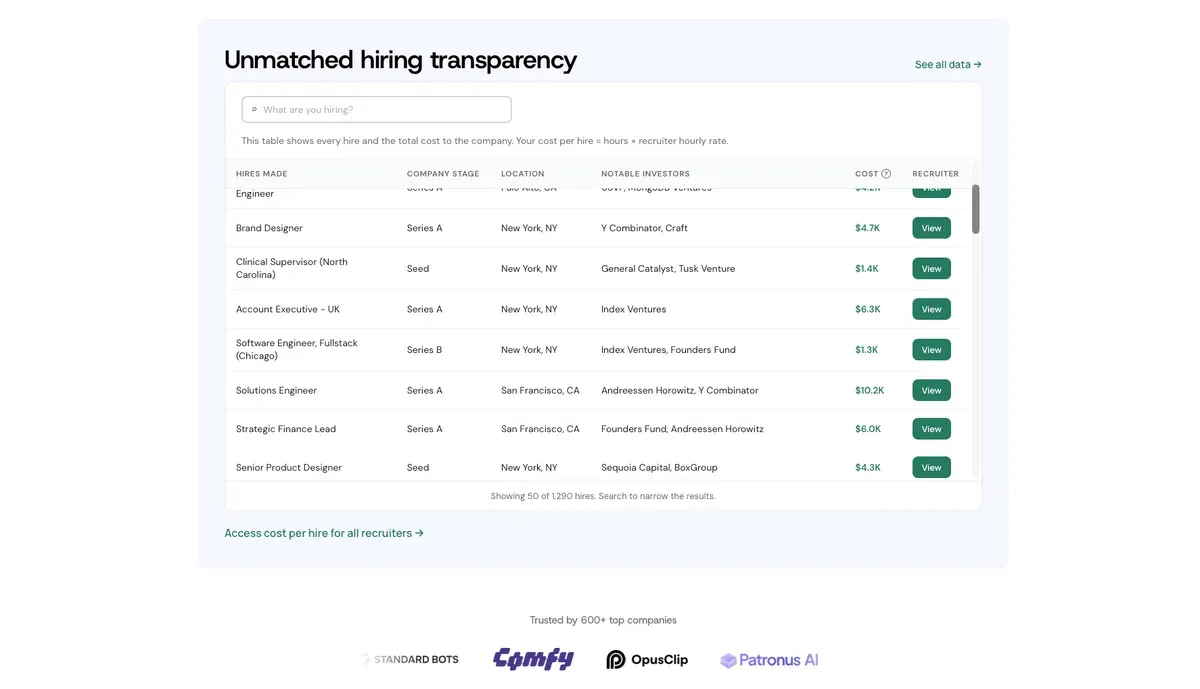
Most tools in this category ask you to pick a side: spend on software and handle recruiting yourself, or pay agency fees and lose control of the process. Dover removes that tradeoff entirely.
The free ATS handles your pipeline from day one, with no seat caps or artificial limits forcing an upgrade. When a search gets complex, fractional recruiters from Dover’s marketplace step in at hourly rates that can often keep total cost per hire below what traditional agencies charge for a single placement, depending on the role and the hours a search takes. You get full visibility throughout, with recruiters and internal teams working from the same dashboard. That combination of free software, expert access, and transparent pricing is what no other tool on this list offers together.
FAQs
What integrations should recruitment automation software have?
Calendar integrations with Google Calendar and Outlook power scheduling, and job board connections such as Indeed and LinkedIn allow one-click posting. HRIS and background check connections cover later stages. Integration depth often matters more than count, and bi-directional sync keeps candidate data from drifting.
Does recruitment automation introduce bias risks?
It can, depending on how tools are built and used. AI screening trained on historical hiring data may reflect past biases, and University of Washington researchers found bias in AI resume screening tied to the perceived race and gender of applicant names. Configurable scoring, blind resume review, and audit trails help. The EEOC guidance on selection procedures notes that employers stay responsible for validating the tools they use, even when a vendor supplies the documentation, so teams may want to review scoring logic and keep a human involved in final decisions.
What is the best ATS for a company under 50 employees?
Smaller teams usually do better with a free or low-cost ATS that can be running the same day instead of enterprise tools requiring annual contracts. Dover suits founder-led hiring, Zoho Recruit fits teams inside the Zoho ecosystem, and Workable is worth pricing out for a broader HR suite.
What hiring tools do YC-backed startups typically use?
There is no public tally, and stacks vary by stage. Many combine an ATS, a sourcing tool, and an outside recruiter when needed. Dover reports roughly 100 or more YC startups among its users, and verified venture-backed startups can post free at jobs.dover.com.
Final Thoughts on Selecting Recruitment Software
Most recruitment automation software forces you to pick between doing everything yourself or handing control to an agency. The tools worth considering give you both options without requiring a choice upfront. With Dover, you get free software that handles your pipeline and access to expert recruiters when searches need more hands-on work, with costs tied to hours worked, though retainer and pay-per-hire options are also available.