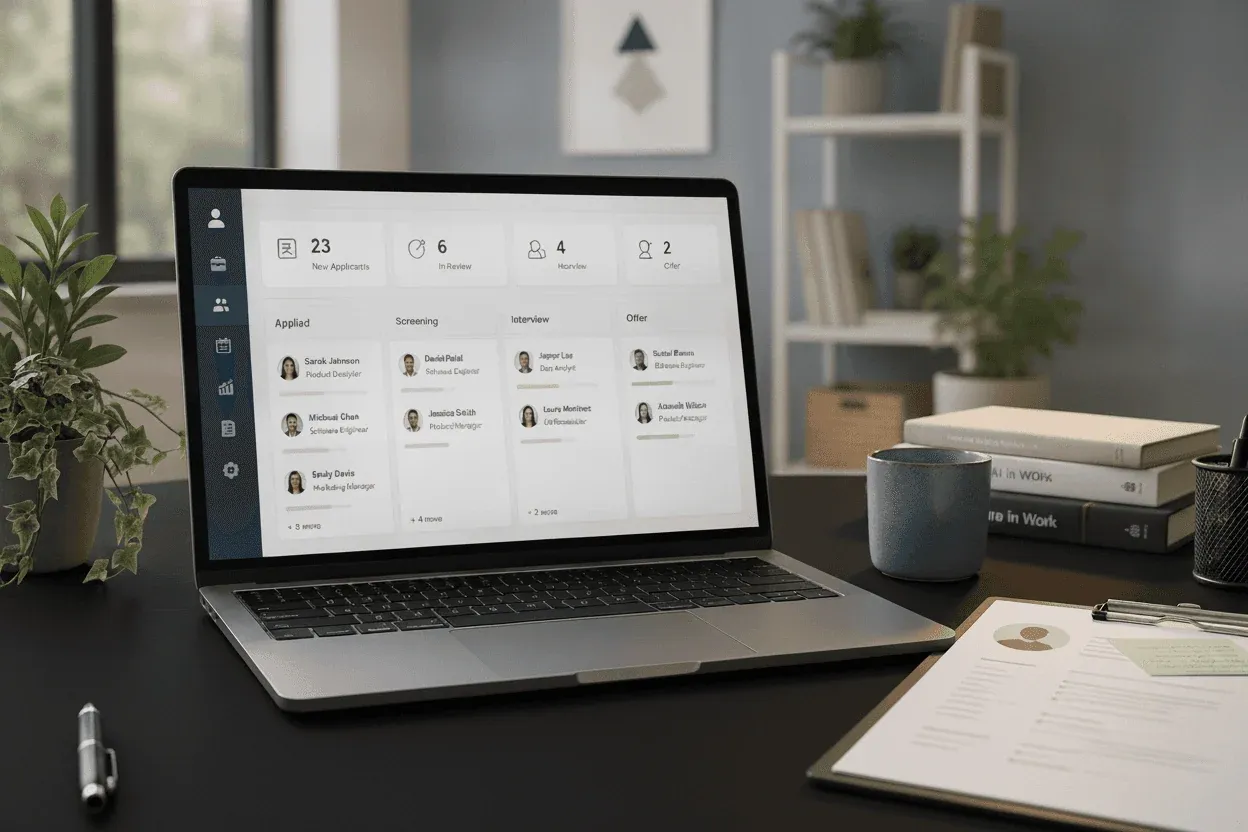

You open a new role and start looking at small business hiring software, and the options split into two categories. One group charges per seat or per job posting and hands you a tool to manage everything yourself. The other connects you with agencies that want 20% of the hire’s first-year salary.
TLDR:
-
Most small business hiring software charges per-user or per-job, ranging from free tiers to several thousand dollars annually.
-
Free plans from tools like Zoho Recruit and Breezy HR cover basic ATS tracking but exclude recruiter access for active sourcing.
-
Greenhouse and Lever typically cost considerably more and may require several weeks of onboarding, making them impractical for small teams.
-
One option in this category pairs teams with experienced recruiters who handle sourcing, outreach, and scheduling without traditional agency-style success fees or annual contracts.
-
When inbound applications are thin for a competitive or specialized role, an ATS alone covers only part of the search. Adding recruiter support for sourcing and outreach is the practical next layer.
What Hiring Software for Small Business Is
Hiring software for small businesses is a category of tools designed to help companies find, track, and hire candidates without a dedicated HR team. At the most basic level, these tools replace spreadsheets and email threads with a structured system for managing job postings, applicant pipelines, and interview coordination. Some stop there. Others go further, adding sourcing tools, automated outreach, or access to external recruiting help.
The category splits into two broad types. Applicant tracking systems (ATS) organize candidates who apply to your open roles. They do not go out and find candidates for you. Sourcing tools and recruiter services fill that gap by identifying passive candidates who have not applied but might be a strong fit. Most small businesses need both, but the right balance depends on how competitive the role is and how much inbound interest a job posting is likely to generate on its own.
Most hiring software was built for companies with dedicated recruiting staff, so the tools worth considering for smaller teams are the ones that reduce workload from day one.
Key Features to Look For in Small Business Hiring Software
-
Job board syndication. The ability to post to Indeed, LinkedIn, ZipRecruiter, and other boards from one place reduces manual effort and gets roles in front of more candidates without duplicating work across platforms.
-
Applicant tracking and pipeline management. Structured stages, scorecards, and interview scheduling keep candidates moving so nothing falls through the cracks when multiple roles are open at once.
-
Sourcing and outreach tools. Inbound applications alone rarely fill competitive roles. Look for proactive candidate identification: through AI matching, a searchable candidate database, or fractional recruiter access.
-
Onboarding and payroll integrations. Connections to HRIS or payroll tools like Gusto, BambooHR, or Rippling mean a new hire doesn’t require re-entering data in a second system once an offer is accepted.
-
Transparent, predictable pricing. Flat monthly fees or per-hire costs that don’t balloon with headcount bands or required add-ons make it easier to budget without surprises as hiring volume changes.
Each of the tools below was assessed against these criteria; the comparison table that follows summarizes where each one lands.
Job posting and applicant tracking cover inbound hiring well: candidates find the role, apply, and move through a structured pipeline. That model works reliably when a posting generates strong interest on its own. For competitive or specialized roles where inbound volume is low or applicant quality is inconsistent, a fractional recruiter added on top of the ATS fills the gap by sourcing and engaging passive candidates directly.
How We Reviewed These Tools
Filling open roles is one of the most common challenges small businesses face, with many reporting few or no qualified applicants for open positions. Each tool below was assessed against five criteria:
Pricing transparency and total cost of ownership. Whether pricing is published, whether a free tier exists, and what hidden costs look like: add-ons, onboarding fees, and headcount-based price jumps.
Sourcing vs. inbound-only. Whether the tool actively finds candidates or only tracks applicants who come to you.
Ease of setup for non-HR teams. Time to go live, onboarding requirements, and whether recruiting expertise is needed to extract value from day one.
Integration with payroll and HRIS tools. Relevant for small businesses that want hiring connected to onboarding and payroll without manual handoffs.
Scalability. Whether the tool stays affordable as headcount or hiring volume grows.
Quick Comparison: Small Business Hiring Software at a Glance
| Tool | Starting Price | Free Tier | Sourcing Support | Best For |
|---|---|---|---|---|
| Dover | Free ATS, $199/mo Premium; recruiter-set rates | Yes (unlimited jobs) | Yes (fractional recruiters) | Teams needing recruiter help without agency fees |
| Zoho Recruit | Free; up to $75/user/mo | Yes (1 active job) | No | Teams already using the Zoho ecosystem |
| Workable | $299/month | No (15-day trial) | Yes (AI sourcing) | Growing teams with a fixed recruiting budget |
| Breezy HR | Free; up to $439/month | Yes (1 active job) | No | Small teams managing inbound applicants |
| Greenhouse | ~$5,100/year | No | No | Companies with dedicated HR staff and larger budgets |
| Lever | ~$6-$8/employee/mo | No | Limited (email sequences) | Relationship-driven hiring with CRM needs |
| JazzHR | $75/month | No | No | Basic ATS needs at entry-level pricing |
Best Overall Small Business Hiring Software: Dover
Dover takes a different approach than most hiring software. Instead of giving you a tool and leaving you to manage everything, Dover pairs you with an experienced recruiter who manages the search end to end, from writing job descriptions and sourcing candidates to coordinating interviews. Fractional recruiting through Dover means you get dedicated expertise without the cost of a full-time hire. Recruiters set their own rates and you agree terms with them directly, choosing hourly, retainer, or pay-per-hire, with no annual contract and a highly selective network of recruiters with deep startup hiring backgrounds.
Pros
-
Free ATS with no job or user limits, plus a $199/month Premium tier for AI applicant scoring and AI note taking
-
No annual contract; hourly, retainer, and pay-per-hire options
-
Recruiters manage sourcing and scheduling end to end
-
Vetted recruiters with real published reviews. Choose based on track record, not promises
Cons
-
Recruiter help is a real line item, often a few thousand dollars per hire, which may not suit very low-budget teams
-
The managed model requires ceding some direct control over the recruiting process
Zoho Recruit
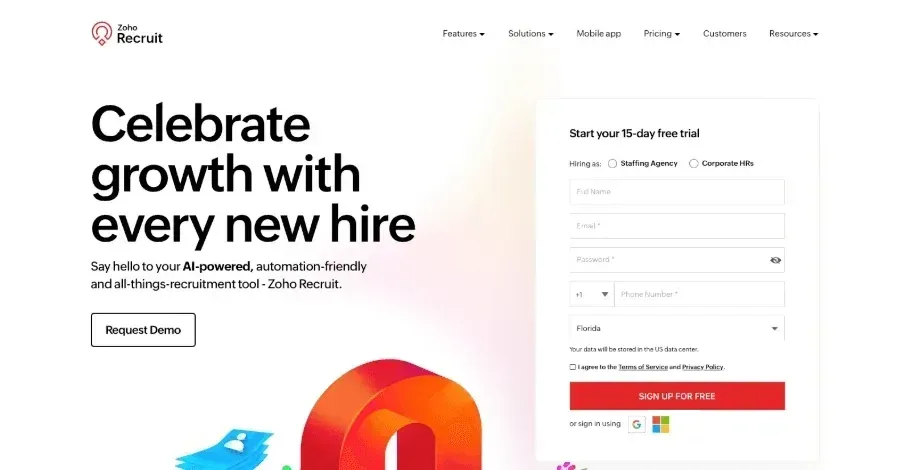
Zoho Recruit fits teams already running on Zoho CRM or Zoho People. Pricing runs from a Forever Free plan up to Enterprise at $75/user/month. The free plan caps you at one active job and excludes resume parsing, AI features, and sourcing tools. Paid tiers unlock AI candidate matching, advanced analytics, and custom roles. Reviewer feedback frequently flags a dated UI and inconsistent support. There is also no built-in candidate database for proactive outreach.
Bottom line: Zoho Recruit works well inside the Zoho ecosystem, but Dover offers a cleaner interface with a free ATS and recruiter access for active sourcing.
Workable
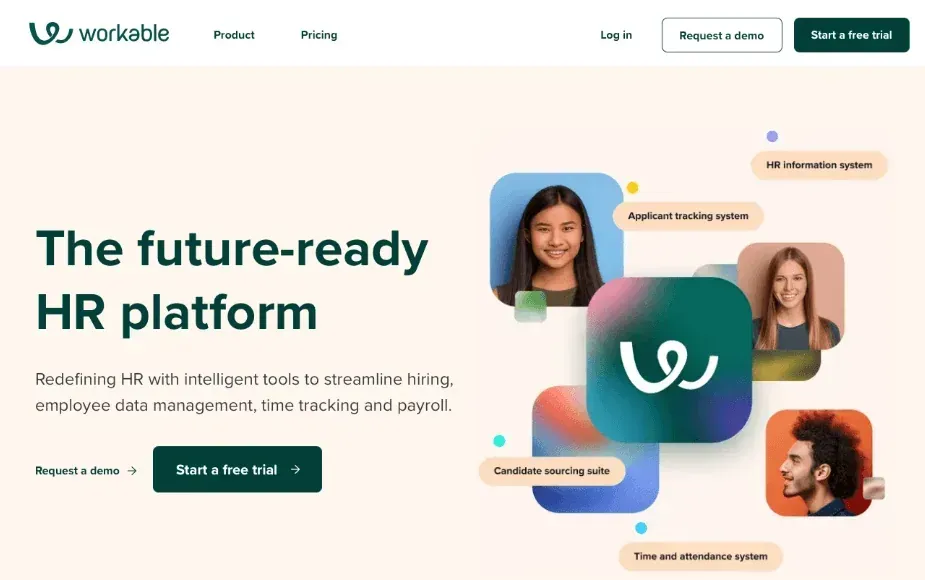
Workable’s Standard plan starts at $299/month and includes a 15-day free trial. Pricing scales by headcount bands, so crossing certain employee thresholds can trigger cost jumps. The base plan covers job posting to 200+ boards, AI candidate sourcing, interview scheduling, and offer management. Higher tiers add onboarding workflows, HR reporting, and advanced automations. Texting, video interviews, and assessments are add-ons.
Bottom line: Workable’s headcount-based pricing can climb unpredictably, while a free ATS with transparent per-hire recruiting costs offers a simpler structure for small teams.
Breezy HR
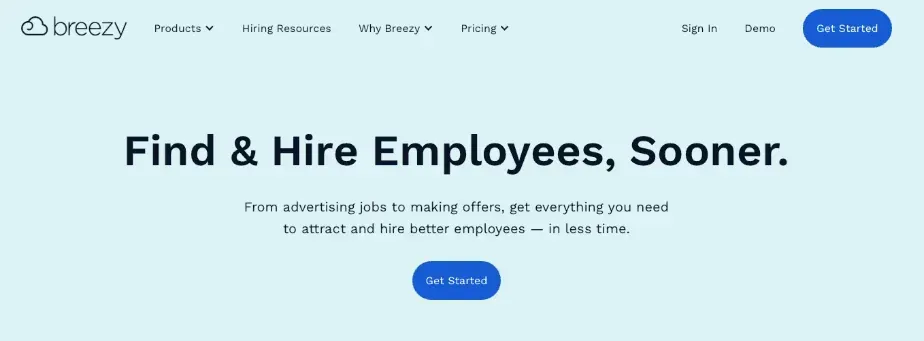
Breezy HR runs four tiers: Bootstrap (free), Startup ($157/month), Growth ($273/month), and Business ($439/month). All paid plans include unlimited users and positions. The free Bootstrap tier covers one active job posting and basic pipeline management. Paid tiers add automated candidate messaging, interview scheduling, background checks, and reporting. Feature gating is steep: interview scorecards, eSignatures, and multiple pipelines require Growth ($273/mo), while HRIS integrations and offer management are locked to Business ($439/mo).
Bottom line: Breezy HR tracks inbound applicants well, while Dover pairs applicant tracking with proactive sourcing through expert recruiters who identify passive candidates.
Greenhouse
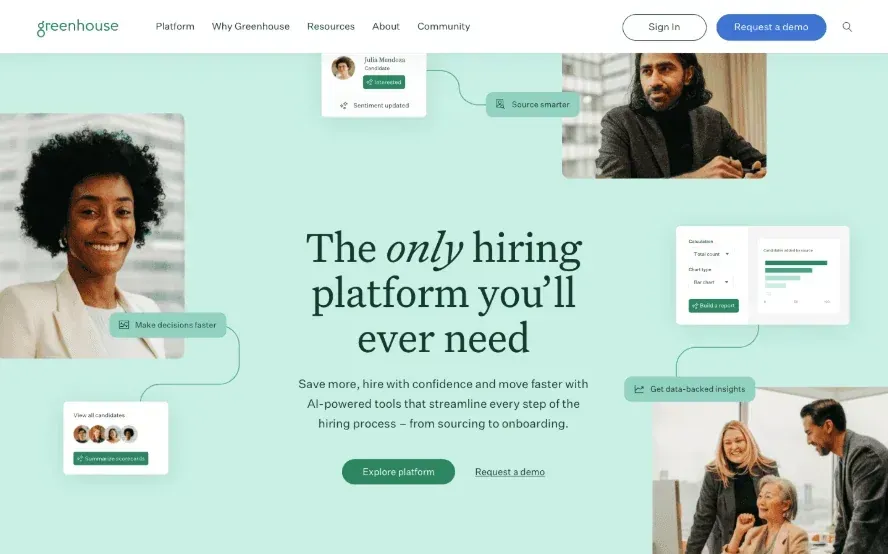
Greenhouse pricing ranges from roughly $5,100/year for teams under 50 employees to $36,000 to $70,000+ per year for enterprise organizations, with a median contract around $12,250/year. There is no free tier or trial. The tool covers structured hiring workflows, interview kits, scorecards, job board distribution, offer management, and reporting, with deep HRIS integrations and a 500+ partner app marketplace. Implementation can run $1,000 to $15,000, with onboarding typically taking 4 to 8 weeks.
Bottom line: Greenhouse delivers enterprise-grade structured hiring for companies with considerable budgets, while Dover offers free ATS tools plus flexible access to experienced recruiters at a fraction of Greenhouse’s cost.
Lever
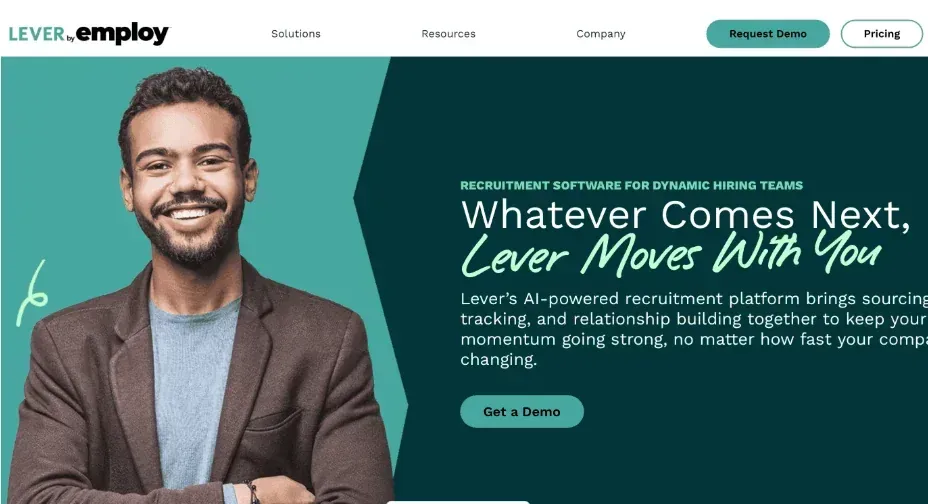
Lever runs on a subscription model priced between $6 and $8 per employee per month. There’s no free trial. The tool combines ATS and CRM into one view with customizable pipeline stages, automated candidate movement, and email sequences for passive candidates. Reviewers frequently flag inflexible reporting and Boolean search limitations, and e-signatures require third-party tools like DocuSign.
Bottom line: Lever’s CRM focus suits relationship-heavy hiring, while Dover covers outreach through fractional recruiters at no added software cost.
JazzHR
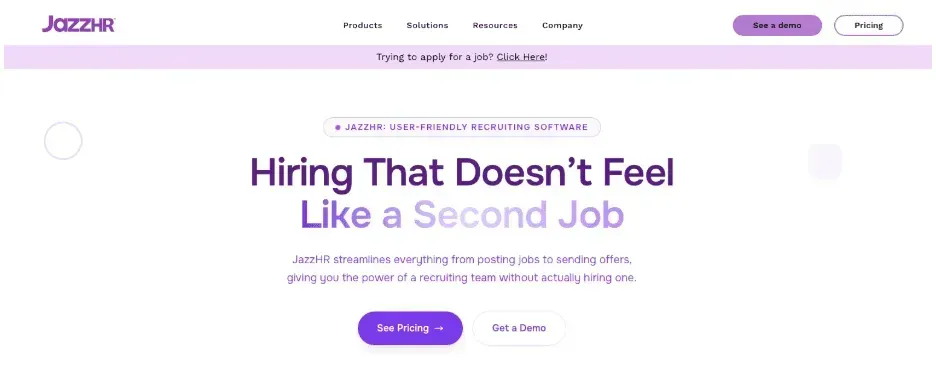
JazzHR runs three tiers: Hero ($75/month annually, 3 active job postings), Plus ($269/month annually, 200 postings), and Pro ($420/month annually, unlimited jobs). The tool covers applicant tracking, resume screening, interview scheduling, and candidate messaging, with EEO reporting and background check integrations included.
Bottom line: JazzHR covers basic ATS needs at entry-level pricing, while Dover’s free ATS has no job or user limits and includes recruiter access when you need it.
Why Dover Is the Best Small Business Hiring Software
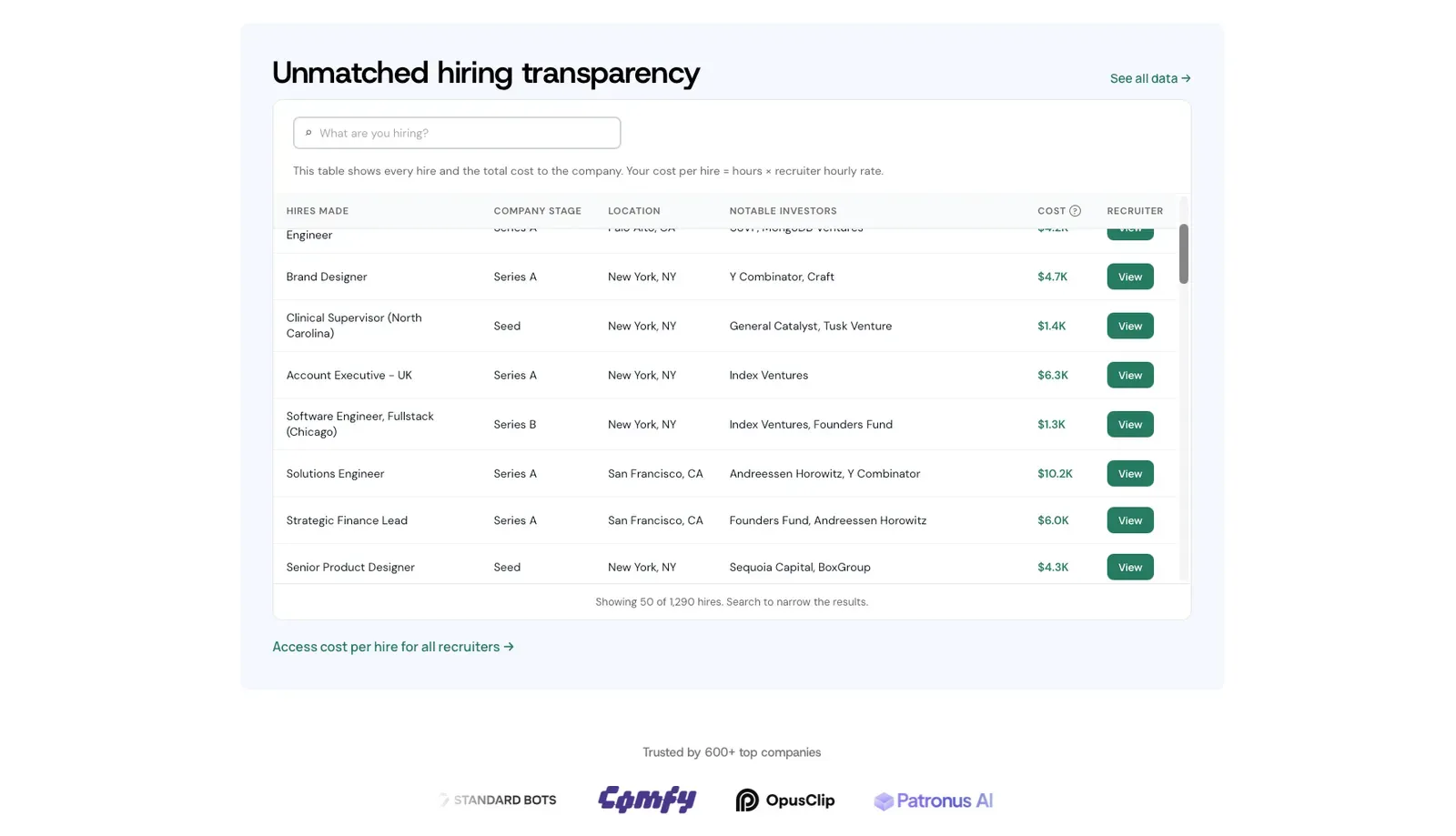
Most small businesses face two familiar options when a role gets hard to fill: pay a traditional recruiting agency a percentage of salary (with recruiting costs that can run well into five figures) or handle the search in-house. Applicant tracking systems organize hiring workflows well but cover only the inbound side, and for competitive or specialized roles, sourcing passive candidates requires recruiting bandwidth most small teams don’t have.
That’s where fractional recruiting fills the gap. Dover is built around this model: a free ATS, with a $199/month Premium tier for AI features, paired with experienced fractional recruiters who set their own rates and agree terms with you directly. Past searches have most often landed between $2,000 and $7,000 per hire, with no annual contract required. Dover also serves as the infrastructure layer that fractional recruiting agencies run on, giving teams access to a vetted marketplace with real, transparent reviews of individual recruiters, so hiring managers can choose based on verified track record, not self-reported credentials.
Here is what to look for in a model like this:
-
Recruiter and team visibility into the same pipeline, so sourcing activity, candidate status, and outreach history are accessible to both parties without manual handoffs or duplicate data entry.
-
Hourly or retainer pricing with no placement fee tied to salary, which removes the incentive to push toward faster or higher-compensated candidates over the best fit. Pay-per-hire remains available where a team prefers it.
-
Fast activation, so recruiting motion starts within days instead of weeks, which matters when a role is open and the team is already stretched.
-
Flexible engagement, so recruiter involvement can scale up for a competitive search and back down once the role is filled, without locking into a retainer or an annual contract.
For small businesses that want real recruiting help without a large headcount or a bloated software subscription, Dover sits in a category of its own.
FAQs
Which hiring software works best for teams with no dedicated HR function?
Dover pairs you with a fractional recruiter who handles sourcing, outreach, and coordination, removing the need for internal recruiting expertise. Recruiters set their own rates, so you price the engagement against the role rather than a fixed fee.
Can I use free hiring software for multiple open roles?
Yes, with limitations. Dover’s free ATS supports unlimited jobs, while Zoho Recruit’s free plan caps you at one active job and Breezy HR’s Bootstrap tier also restricts you to one posting. Hiring across several roles at once requires a paid plan or a tool with no job limit on the free tier.
Do I need a recruiter if I already have an ATS?
An ATS organizes applicants, tracks pipeline stages, and keeps interviews moving. For roles with strong inbound interest, that may be enough. For competitive, senior, or niche roles where inbound volume is low, the ATS alone won’t fill the position; it just tracks the shortage. That’s when layering in a recruiter makes practical sense: they handle sourcing and outreach on top of the same pipeline, so there’s no coordination gap between what the recruiter sees and what the hiring manager sees. Whether that recruiter is internal, fractional, or agency-based depends on hiring volume and budget, but the ATS remains the foundation either way.
Final Thoughts on the Top Small Business Hiring Software
Your choice of small business hiring software comes down to what kind of support you need and how often you’re hiring. Traditional ATS tools often work well for one or two roles a year with strong inbound interest. For roles that require active sourcing, the gap between tracking applicants and actually finding qualified candidates becomes the real cost, and that’s where a platform like Dover can provide support beyond what a feature list alone can offer.