

Most roles don’t get filled because the right candidate applied. They get filled because someone found them first. Teams without dedicated recruiting headcount often default to posting and waiting, which works for high-volume or lower-bar roles but leaves the best passive candidates untouched. This guide covers how talent sourcing works, which methods tend to produce the strongest candidates across most hiring contexts, and how to build a process that scales.
TLDR:
-
Talent sourcing targets candidates who would not apply on their own, making passive outreach higher ROI than inbound alone.
-
Personalized outreach can drive 30% more interested responses compared to generic recruiting messages.
-
Strong employer branding can produce 60% more interested responses to outreach, and a negative reputation costs at least 10% more per hire.
-
AI-assisted applications have made inbound queues noisier, making targeted passive sourcing more valuable for finding quality candidates.
-
Some tools pair a free ATS with on-demand recruiting support averaging $2,000 to $7,000 per hire, with no retainer required.
What Is Talent Sourcing?
You’re probably familiar with talent sources: job boards, LinkedIn, internal teams, and so on. Talent sourcing, on the other hand, is all of the tasks associated with finding, engaging and (in some cases) screening best-fit candidates, with the aim to build a candidate pipeline. In simpler terms, it’s an active way to seek talent that wouldn’t have otherwise applied.
Unlike a recruiter who needs to focus on the end-to-end process after a candidate is vetted (aka getting hires), a sourcer focuses on cold-calling and tedious networking to build and maintain candidate pipelines.
Most Common Talent Sourcing Methods
There are a variety of methods that organizations can use to source talent, including:
-
Recruitment agencies: These are third-party organizations that specialize in finding and placing candidates in job openings. Most companies typically use recruitment agencies to fill executive or C-suite roles, or to find candidates with niche skills or experience.
-
Job boards and online job postings: Job listings are foundational for any company, allowing potential candidates to apply directly to the organization.
-
Social media: We all know LinkedIn as the social media platform to engage with potential candidates. However, in recent years, other notable sites to find candidates (especially in tech) have expanded to include X (formerly Twitter), Github, StackOverflow, and Reddit.
-
Employee referrals: Encouraging current employees to refer friends and colleagues can be an effective way to find qualified candidates.
-
Campus recruiting: Many organizations visit college campuses to recruit recent graduates and interns.
-
Professional associations and networking events: Attending professional association meetings or networking events can be a way to meet potential candidates and learn about job openings.
-
Headhunting: This involves actively seeking out and approaching specific individuals with the goal of recruiting them for a job opening.
-
Temporary staffing agencies: These agencies provide temporary or contract workers to organizations as needed. This can be a good way to find talent on a short-term basis.
| Method | Sourcing Type | Best For | Relative Cost |
|---|---|---|---|
| Recruitment Agencies | Outbound | Executive and niche roles | High |
| Job Boards | Inbound | High-volume, broad roles | Low to Medium |
| Social Media | Both | Tech, creative, and early-career roles | Low |
| Employee Referrals | Outbound | Culture-fit hires | Low |
| Campus Recruiting | Outbound | Entry-level and interns | Medium |
| Networking Events | Outbound | Senior and professional roles | Medium |
| Headhunting | Outbound | Hard-to-fill specific roles | High |
| Temp Staffing Agencies | Outbound | Short-term and contract needs | Medium to High |
So How Do You Know Which One Is Most Effective?
The answer is that there is no right answer. It depends on a multitude of factors, such as: your company brand recognition, the number of hiring managers or recruiters available to source, or host events, which types of roles you’re hiring for, and what the current hiring market looks like for your industry.
That being said, for the purposes of this article, we’re discussing passive talent sourcing, because it provides the highest ROI when it comes to candidate quality across most industries and company sizes. For a broader view of how sourcing fits into every stage of hiring, see our complete recruitment process guide.
The Talent Sourcing Process
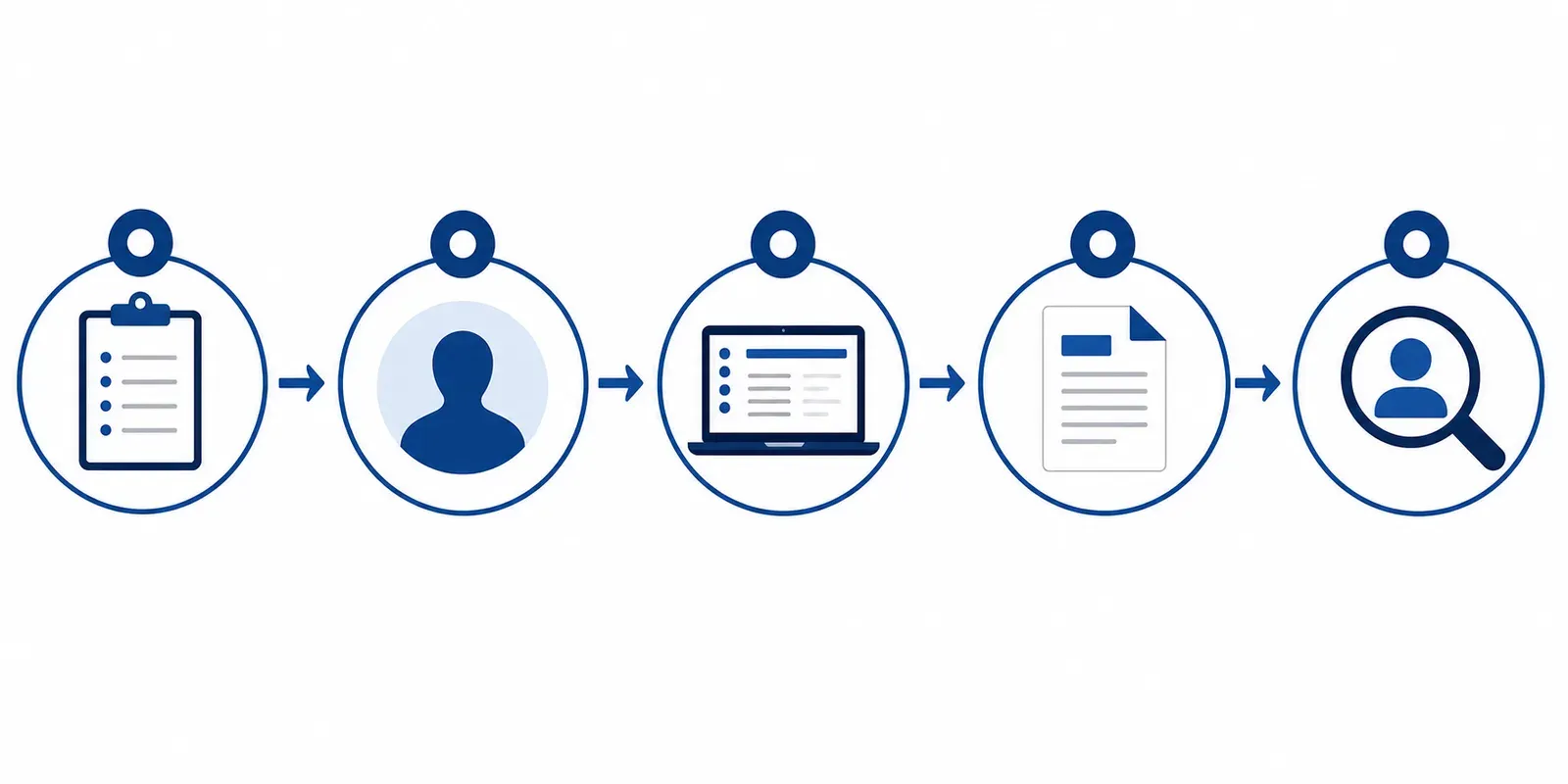
1. Create a Hiring Plan and Get Organized
Before sourcing starts, map out your timeline, channels, budget, and the team members who will own the search. A simple spreadsheet works; most teams track this in their ATS. At a minimum, your plan should cover:
-
A timeline with clear deadlines for each hiring stage
-
The channels you plan to use and any relevant notes
-
Budget and the team members responsible for the search
2. Build a Simple Candidate Persona
A candidate persona sharpens your targeting by defining what your ideal hire actually looks like. Three inputs that matter most:
-
Key role characteristics: education, experience, skills, and any traits tied to success in this function.
-
Culture fit: values, communication style, and how the person needs to work within the team.
-
Patterns from top performers: scan profiles of people in similar roles at comparable companies to calibrate your expectations and spot recurring backgrounds.
3. Invest in the Right Software.
Two tool categories matter at sourcing volume:
-
An ATS (Applicant Tracking System) automates job posting, resume filtering, and scheduling. Our best ATS comparison for 2026 breaks down the top options.
-
A CRM (Candidate Relationship Management platform) builds passive pipelines ahead of demand, handling nurture and warm outreach so you’re not starting from scratch on every new req.
Most modern ATS tools include CRM functionality. Dover handles touchpoints, scheduling, and follow-ups from one shared pipeline. Check out Dover’s free ATS. For senior or specialized hires, a fractional recruiter adds the active sourcing layer on top of your ATS, keeping candidate status visible to everyone without coordination overhead.
4. Write a Great Job Description
More than half of job seekers say description quality is “very or extremely influential” on their decision to apply. Skip the copy-paste template. A strong JD has three parts:
-
Mission and problem you’re solving. Keep it short. LinkedIn research found candidates ranked company info last when scanning a job post.
-
Specifics of the role: day-to-day responsibilities, future projects, must-haves, and nice-to-haves.
-
Benefits and your diversity statement. Posts with an equal opportunity statement fill 10% faster on average.
For a full walkthrough, see our job description writing guide.
5. Source and Assess
Start by posting the role on LinkedIn and your careers page, then use Boolean search strings to build a shortlist of around 50 best-fit passive candidates. Tools like Dover automate this step, surfacing candidates who meet your criteria and flagging only those who respond with interest.
Sourcing tools surface candidates; they do not close them. For senior or specialized hires, a fractional recruiting agency adds the human layer: personalized outreach, qualification calls, and relationship management. Dover’s network of fractional recruiting agencies operates directly inside your ATS, so your hiring manager always has full pipeline visibility without extra coordination.
4 Talent Sourcing Strategies to Optimize Your Recruiting Process
Four passive sourcing strategies that hold up regardless of how the tools evolve:
1. Personalize Your Outreach by Tailoring Your Messages to Individual Candidates
Dover’s internal data shows candidates responded with interest 30% more to personalized outreach. When writing messages yourself, look for a shared background, a standout skill relevant to the role, or a recent milestone like a promotion. One specific detail goes a long way.
2. Keep in Touch with Candidates Who Weren’t a Fit Right Now
Send occasional company updates or invite past candidates to networking events. A warm pipeline means you’re not rebuilding from zero on every new req.
3. Track Drop-Off with Detailed Data
Drop-off data pinpoints where candidates go cold in your funnel. Dover’s dashboards let you pull reports by week, month, or year to audit the process and present findings to leadership.
4. Audit Your Employer Brand/Website
88% of job seekers factor in employer brand before applying, and a negative reputation can cost at least 10% more per hire. Dover customers who scored high on our employer branding rubric received 60% more interested responses to initial outreach than those who scored lowest, regardless of funding stage or company size. Most companies underestimate how much branding work it takes to stand out, and our Employer Branding Guide walks through the practical steps.
Talent Sourcing in 2026: Navigating the AI Application Wave
The sourcing environment has a new wrinkle heading into 2026. AI-assisted job applications have made inbound applicant pools larger and harder to read. SHRM’s 2026 AI in HR report found that 39% of organizations have adopted AI in HR tasks, up from 26% in 2024, with recruiting the single most common use case at 27% of organizations.
The practical effect for sourcing teams is that the inbound queue is noisier than it used to be. Candidates who can polish an application in seconds are flooding roles, while the people most worth hiring, those not actively looking, still require direct, targeted outreach to reach at all. That gap is what passive sourcing closes.
Where Dover Fits Into Talent Sourcing
The methods covered above, from outreach personalization to pipeline maintenance to employer brand, all require either software infrastructure, human effort, or both. Dover is built around that reality: a free ATS that serves as the operating layer for both your internal team and any fractional recruiting agency you bring in.
Dover’s free ATS covers the foundational pieces: job posting to 100+ boards, a branded careers page, automated scheduling and follow-ups, native referral tracking, and a shared pipeline your whole team can see in real time, with no per-seat fees, no contracts, and no limit on jobs or users. A premium plan at $199/month adds AI-powered applicant scoring. For roles that need active sourcing, Dover’s network of fractional recruiting agencies operates directly inside your ATS, so sourcing activity, candidate status, and outreach history stay visible to everyone without coordination overhead. Each agency carries real, verified reviews, so you know exactly who you’re working with before the search starts. Most engagements average $2,000 to $7,000 per hire, with no retainer required.
Frequently Asked Questions
What’s the Difference Between Talent Sourcing and Recruiting?
Talent sourcing focuses on finding and engaging candidates who wouldn’t have applied on their own, building a pipeline through outreach, Boolean search, and direct contact. Recruiting picks up from there, managing the end-to-end process once candidates are in the pipeline: interviews, evaluation, offers, and closing.
When Does a Fractional Recruiter Make More Sense Than Sourcing Tools Alone?
Sourcing software surfaces candidates but doesn’t qualify them or build the relationships that move passive candidates toward an offer. For senior, specialized, or competitive roles (a VP of Sales, a senior backend engineer, a compliance hire), a fractional recruiter adds the outreach strategy, qualification calls, and candidate relationship management that tools can’t replicate. The two work best together when both operate from the same ATS, keeping the hiring manager informed without coordination overhead.
Why Does Employer Branding Affect How Passive Candidates Respond to Outreach?
Passive candidates aren’t looking for a job, so your company’s reputation does a lot of the persuasion work before they ever reply. Dover’s data found that companies scoring high on an employer branding rubric received 60% more interested responses to initial outreach than those scoring lowest, regardless of funding stage or company size, and a negative reputation can cost at least 10% more per hire.
Final Thoughts on Talent Sourcing and What Makes It Work Long-Term
Talent sourcing is one of those areas where small process improvements compound over time. A cleaner candidate persona, a more consistent outreach cadence, or a stronger employer brand can each move response rates, and together they shift hiring from reactive to proactive. Dover’s free ATS gives teams the infrastructure to run that talent sourcing process without adding software costs, and Dover’s network of fractional recruiting agencies is there for roles where an active search requires more dedicated time than an internal team can commit, each recruiter carrying verified reviews so you can choose with confidence. The combination works best when treated as a system rather than a one-off fix: pipelines built now reduce time-to-fill on the next req, and data from each search sharpens the one after it..