
A first-of role has no internal benchmark, no prior scorecard, and often no agreement among interviewers on what the hire is supposed to accomplish. Without that definition, feedback drifts within a few weeks of kickoff and the search turns into rework. A short hiring playbook, written before the req opens, settles the reason for the hire, the objectives, the competencies, and the interview structure in about 30 minutes.
TLDR:
- A hiring playbook for a first-of role takes about 30 minutes to build and can save 20+ hours of rework later in the search.
- It defines why you’re hiring now, the objectives the role needs to hit, the competencies required, and a structured interview process with clear owners.
- Sharing it with your interviewer team keeps feedback aligned weeks into the search, well past the kickoff.
- Candidates increasingly use AI in applications, so playbooks benefit from including work samples and consistent rules for how AI use is treated during interviews.
- Some tools pair a free ATS with on-demand fractional recruiters in one shared system, which keeps interview plans, feedback, and outside sourcing help in the same place.
Build a Hiring Playbook
Coley Raustein, Talent Partner at Memora Health and a recruiting team of one, shared her advice on hiring “first of” roles on our podcast, How We Built Our Team. Her top tip is to write a hiring playbook before the req opens.
The playbook forces a methodical answer to four questions:
- Why you’re hiring for this role, and why now
- What the person needs to accomplish, ideally tied to measurable outcomes
- Which competencies and skillsets those objectives require
- How the structured interview process works: who’s involved, why, and what each interviewer is assessing
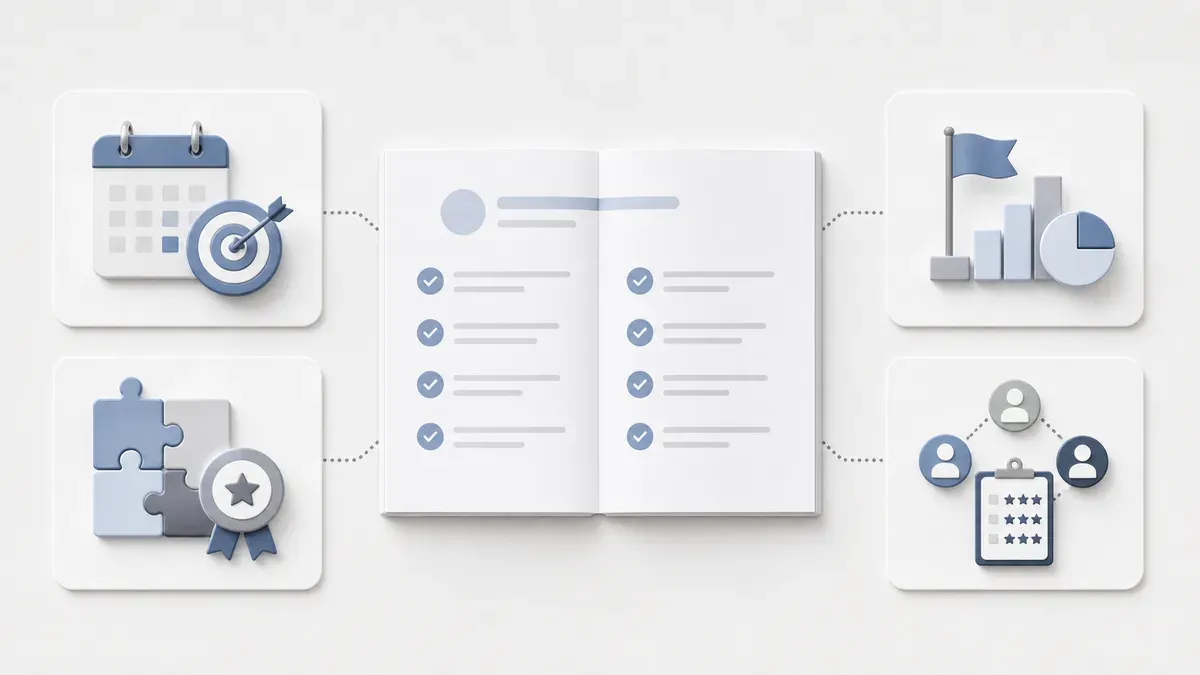
Writing it down gives you clarity on the role and keeps the whole interviewer team aligned weeks later. OPM’s guidance on structured interviews and their validity notes that interviews with more structure tend to show higher validity and rater agreement. The playbook also becomes the first step of a repeatable hiring process you can reuse for every new role.
The New Role Hiring Playbook template below covers each component and fits into the broader recruitment process.
New Role Hiring Playbook components
| Playbook component | Question it answers | Why it matters later |
|---|---|---|
| Reason for hiring | Why this role, and why now? | Keeps the team aligned on the hire’s purpose and gives interviewers a consistent frame for feedback |
| Role objectives | What must this person accomplish in the role? | Keeps the team aligned on priorities and gives interviewers a consistent basis for feedback |
| Competencies and skillsets | What skills and competencies are needed to achieve those objectives? | Keeps the team aligned on what to look for and gives interviewers consistent criteria for feedback |
| Structured interview process | Who is involved, why, and what is each person assessing? | Keeps the team aligned on roles and responsibilities and gives interviewers a consistent structure for feedback |
Adapting the Playbook for AI-Assisted Applications
Add a Work Sample to the Interview Process
Candidates increasingly use AI tools to draft resumes and cover letters. In Clutch’s survey data on AI in hiring, 80% of job seekers said they use AI in their search, most often to edit resumes (84%) and write cover letters (66%), so a polished application can say less about actual ability than it used to. A short, role-relevant work sample or live exercise tied directly to the role objectives gives interviewers firsthand evidence of how a candidate thinks and works, instead of relying mostly on written materials that may have been AI-assisted. The exercise doesn’t need to be elaborate: a scoped problem that mirrors a real task in the role is usually enough to see judgment in action. The playbook should name who designs the exercise and who scores it, so the bar stays consistent across candidates and interviewers aren’t left guessing what a strong answer looks like weeks into the search.
Set Consistent Rules for AI Use in Interviews
Before the first interview, decide whether AI use is allowed on take-home assignments, must be disclosed, or is prohibited in live sessions, and write that decision into the playbook. This keeps every interviewer applying the same standard instead of making an individual call mid-loop, and it means candidates can be told the expectations in advance rather than finding out after the fact. Hiring teams increasingly encounter AI-generated applications, per Willo’s 2026 hiring trends report, so the policy is worth settling before the first one arrives. The same logic applies on the employer side: tools like AI-powered applicant tracking systems can help filter or score applicants, but they work best as an assistive layer paired with clear criteria and human review, instead of a substitute for judgment. Naming these rules upfront can reduce ambiguity for both sides and keep the process measured as more of the hiring funnel involves AI on both ends.
Common Mistakes When Hiring a First-of Role
A founder opens a req for a first marketing hire, and three interviewers each screen for a different job: one wants a strategist, one wants an executor, and one wants someone who can build a team. Most first-of mistakes trace back to that same gap, a role defined by assumption instead of in writing.
- Benchmarking against a predecessor who doesn’t exist. With no prior holder, interviewers compare candidates to each other or to the best person they have worked with before. Written objectives give the panel a fixed point to assess against.
- Writing the job description before the objectives. A list of tasks and tools describes activity, not outcomes. A candidate who matches the list can still miss the objectives the role was opened to hit.
- Hiring for the company you’ll be in a year from now. A first-of hire usually builds the function from scratch. Scoping the role well beyond the current stage often produces a mismatch within the first few months.
- Letting every interviewer assess everything. When each interviewer covers the same ground, questions overlap and gaps go unnoticed. Assigning each interviewer one or two competencies keeps the loop from repeating itself.
- Treating the AI-use policy as an afterthought. Deciding mid-search whether candidates can use AI on a work sample means early and late candidates face different standards.
How Dover Fits Into Hiring for a First-of Role
Dover’s free ATS gives the playbook’s interview structure a working home. Customizable interview plans define the stages and interviews each job goes through, structured feedback forms (the free plan includes a limited number) keep scorecards tied to the objectives and competencies you wrote down, and AI-suggested interview questions based on a candidate’s resume give interviewers a starting point. Unlimited jobs and users mean the whole interview panel can work from the same setup.
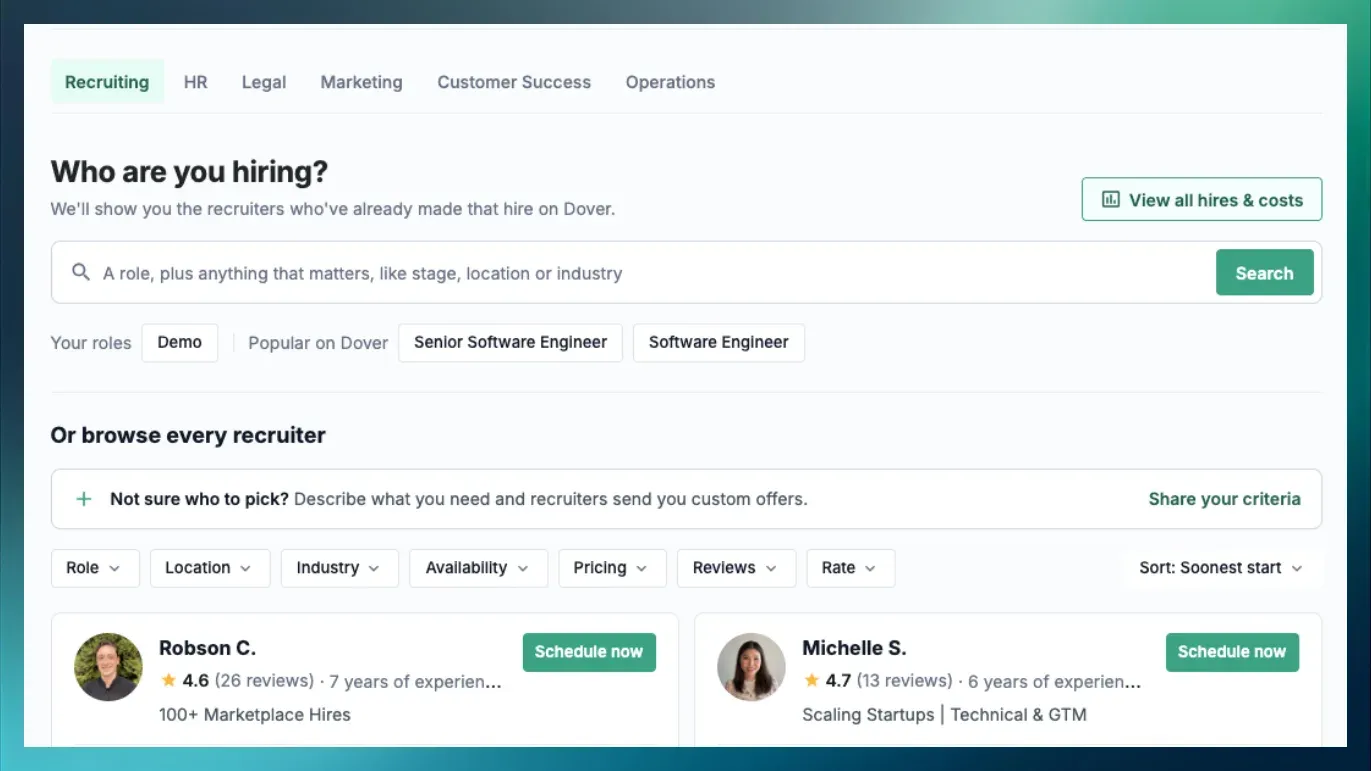
First-of roles often land on a hiring manager with little recruiting bandwidth. The ATS holds the playbook’s structure, the pipeline, and the feedback, and it includes a sourcing extension and email outreach campaigns, but someone still has to do the sourcing work itself. If the role is a common one and the hiring manager has a few hours a week for sourcing, the ATS plus the playbook may be enough. When the role is senior or specialized, or nobody on the team has time to source, a fractional recruiter can add that capacity on top of the same system. Dover’s marketplace of fractional recruiters can run sourcing and screening against the playbook’s objectives and competencies. There are no long-term contracts, so a company can engage a recruiter for one search and pause afterward.
Fractional recruiters and internal interviewers work in the same ATS, which means pipeline activity and feedback are visible in real time and the sourcing notes stay in your own account when the search ends. The next first-of role then starts with the previous playbook and its candidate history instead of from zero.
FAQs
What is a new role hiring playbook?
It’s a short internal document you write before opening a req for a first-of role. It captures why you’re hiring now, the objectives the role needs to hit, the competencies required to hit them, and a structured interview process with a named owner for each stage.
How long does it take to build a hiring playbook?
About 30 minutes upfront. That small investment can save 20+ hours of rework later, because the team isn’t re-debating the role, the bar, or who assesses what once interviews are underway.
Who should have access to the playbook?
The hiring manager, the recruiter, and everyone on the interview panel. Sharing it before kickoff keeps feedback aligned weeks into the search, since every interviewer works from the same objectives and criteria.
How should the playbook handle AI-assisted applications?
Add a short, role-relevant work sample with a named owner who designs and scores it, and decide in advance whether AI use is allowed, must be disclosed, or is prohibited at each stage. Writing those rules down keeps every interviewer applying the same standard.
Do I need a recruiter if I already use an ATS?
Not always. An ATS organizes the pipeline, interview plans, and feedback, while a recruiter adds sourcing and screening capacity. For a first-of role, a team with time to source and a clear playbook can often hire with the ATS alone. Senior, specialized, or urgent roles may benefit from a fractional recruiter who works inside the same ATS, so the hiring team sees pipeline activity in real time and the candidate history stays in the company’s account after the search ends.
Can I reuse the playbook for future roles?
Yes. Once the template is in place, it becomes the first step of a repeatable hiring process. For each new role, update the reason for hiring, objectives, competencies, and interview owners, and keep the structure the same.
Final Thoughts on Building a New Role Hiring Playbook and Putting It to Work With Dover
A hiring playbook works because it moves the hardest decisions to the start of the search, before anyone has a favorite candidate. Teams hiring a role for the first time rarely have a benchmark to fall back on, so a hiring playbook with written objectives, criteria, and AI-use rules carries the weight that experience would otherwise carry. How much structure a role needs will vary with its seniority and the size of the interview panel. Dover’s model, a free ATS with interview plans and feedback forms that mirror the hiring playbook’s stages, paired with on-demand fractional recruiters working in the same system, is one practical way to keep the document, the process, and any outside sourcing help in one place as the search unfolds.