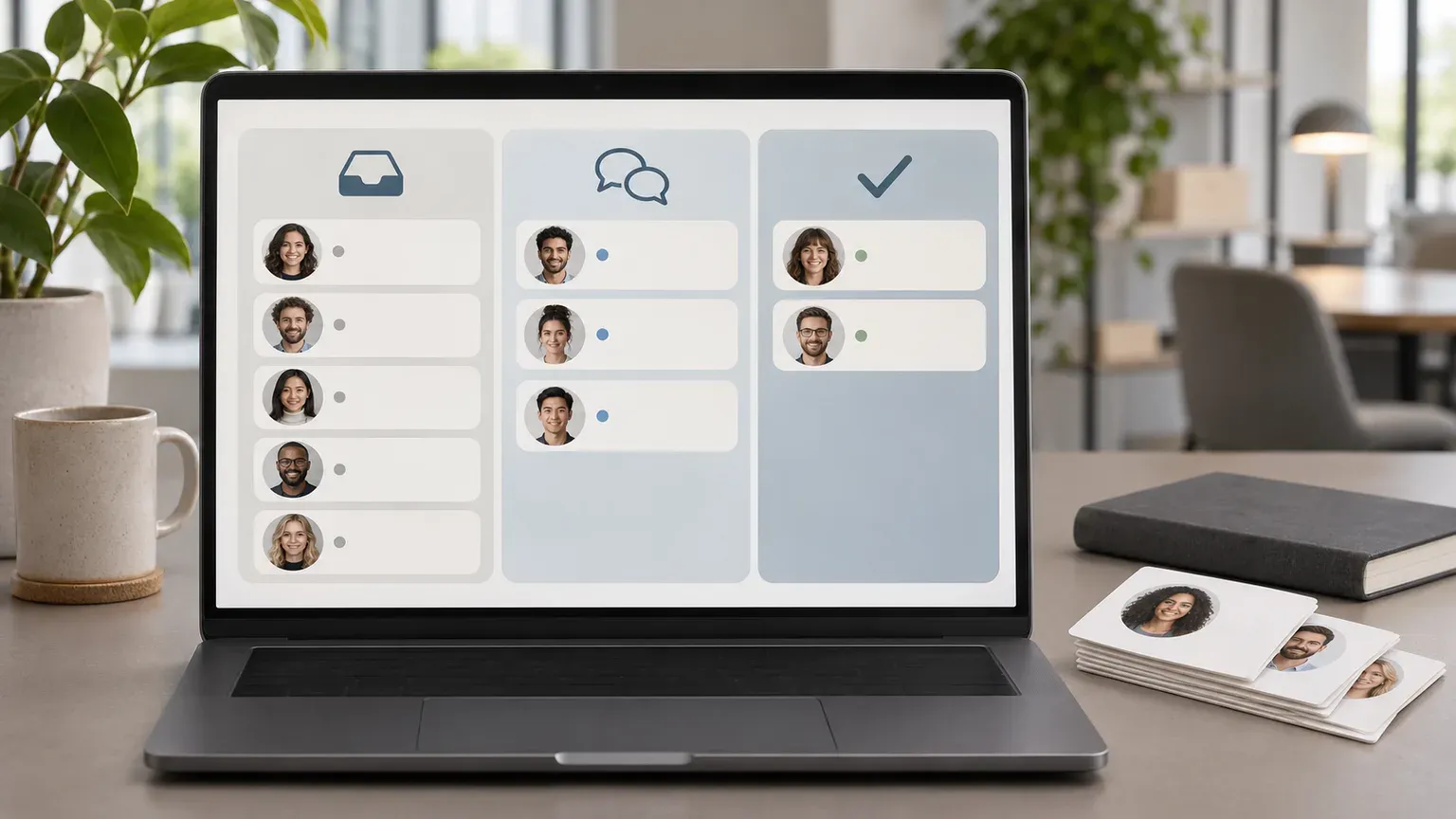

For early-stage teams without a dedicated recruiter, hiring tends to operate reactively: a role opens, the search starts from scratch, and the process stalls on whoever has the least bandwidth that week. Understanding how an ATS reduces time-to-hire can help change that pattern when the team uses it consistently. The right setup automates coordination work, tracks candidates through a defined pipeline, and gives founders and hiring managers a repeatable process that can reduce delays from manual scheduling and scattered feedback.
TLDR:
-
An ATS can cut time-to-hire by automating job distribution, tracking candidates through stages, and reducing scheduling delays when interviewers keep time available.
-
Build a standing pipeline before you need it so new roles pull from warm candidates instead of starting from scratch.
-
Use time-in-stage reporting weekly to spot where candidates stall and fix the right bottleneck.
-
A fractional recruiter can accelerate hiring when your ATS generates more applicant volume than your team can review.
-
Some free ATS tools offer access to separately paid fractional recruiting support, with costs that vary by recruiter and search.
Why Startups Use an ATS to Reduce Time-to-Hire
Every week a role stays open can mean lost output and a higher chance your top candidate accepts an offer elsewhere. An ATS can reduce time-to-hire by keeping candidate records and follow-up in one place. SHRM’s guide to recruiting tools describes how candidate tracking, interview scheduling tools, and automated workflows can reduce manual work, while analytics help teams spot bottlenecks. The time saved depends on your setup and how consistently the team uses it.
| Hiring bottleneck | ATS support | What the team still handles |
|---|---|---|
| Posting the same role across job boards | Job distribution can publish a role to multiple boards at once. | Checking which boards are included and which need a separate budget or approval. |
| Applicants waiting for review | Screening tools can help filter applicants against job criteria. | Setting job-related criteria and reviewing recommendations, especially for senior or niche roles. |
| Back-and-forth interview emails | Scheduling links let candidates book available interview slots. | Making interviewer time available and keeping the process moving. |
| Scattered feedback delaying decisions | Shared candidate records keep interview notes and feedback together. | Recording feedback and making judgment calls on fit. |
| Unclear reasons for a stalled search | Time-in-stage reporting shows where candidates wait. | Reviewing reports weekly and resolving scheduling or decision delays. |
What to Look for in an ATS Before You Reduce Time-to-Hire
Not every ATS for startups will actually help you hire faster. Some are built for enterprise teams with dedicated recruiters. The wrong system adds friction instead of removing it.
-
Pipeline visibility: A clear view of where every candidate stands can reduce slow follow-up when the team acts on pending tasks.
-
Automated scheduling and communication: Candidates should be able to book time directly, with automated status updates so your team isn’t buried in coordination.
-
Job board integrations: Single-source syncing to supported job boards can reduce manual updates when the team keeps the source listing current and checks that changes have synced.
-
Reporting on time-related metrics: Built-in stage-level reporting shows where candidates stall and how long roles stay open.
-
Setup time: A system that runs in under a day beats one with more features that never get configured.
Build AI Screening Safeguards Into Your ATS Setup
Turning on AI screening can create extra work if your team has not checked the rules that apply to its hiring. Illinois Public Act 103-0804 took effect on January 1, 2026, prohibiting discriminatory AI use in recruitment and hiring and adding a notice duty for covered AI use. Ogletree Deakins’ June 2026 analysis reports that Illinois postponed proposed notice rules on June 2 while the law continued to apply. For startups hiring in Illinois, legal review should cover both the statute and any later rulemaking before screening features go live.
A practical setup records which tools influence screening, assigns a person to review AI recommendations, and has legal review confirm which notice requirements apply to your hiring locations and workflow before screening features go live. Treating an AI score as input instead of a hiring decision can help avoid mid-search rework.
Where Time-to-Hire Slips Across Your Hiring Pipeline
Early-stage teams can lose time between pipeline phases when handoffs lack a clear owner. An ATS supports hiring team collaboration through a shared record of where each candidate stands and who acts next, which can reduce handoff delays when owners follow up.
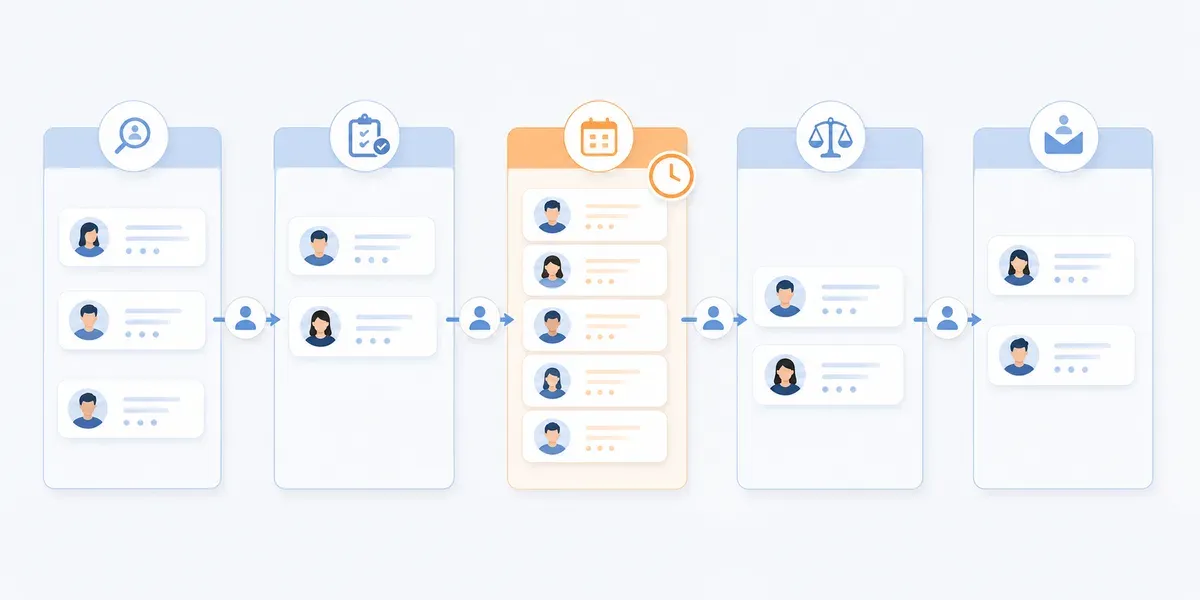
There are a few specific ways this shows up in practice:
-
Keeping sourcing and screening in sync lets screening tools help filter new applicants against your criteria, with a reviewer checking recommendations before deciding who advances.
-
Interview scheduling can take less coordination when interviewers have visibility into the pipeline and candidates can book directly into available slots without back-and-forth email chains.
-
Offer decisions can move faster when the team has a documented assessment trail to reference, instead of reconstructing impressions after interviews have already faded.
When to Bring in a Fractional Recruiter to Speed Up Hiring
A fractional recruiter steps in as a part-time hiring specialist without a full-time overhead, owning sourcing, screening, and coordination when internal bandwidth runs thin.
This tends to work well when:
-
You are hiring three or more roles at once and cannot review volume fast enough to keep candidates warm.
-
Time-to-hire has stretched to the point where you are losing finalists to faster competitors.
-
Roles require sourcing in a tight talent pool that job board postings alone will not reach.
-
Your ATS is running but no one has consistent time to work it.
A fractional recruiter does not replace your ATS: the ATS handles tracking, scheduling, and reporting, while a recruiter adds sourcing capacity and judgment calls on fit, particularly in candidate communication that automation cannot cover. When both work inside the same ATS, the hiring team and recruiter see pipeline status in real time, which can reduce duplicate outreach. For a single, low-volume role with a founder who has weekly time to review applicants, ATS-only hiring often covers the need.
The Cost of a Slow Hiring Process for a Startup
Candidates may accept another offer while your team is still deciding. Robert Half’s October 2025 hiring analysis identifies losing candidates to competitors as a risk of a prolonged process. SHRM’s 2026 recruiting benchmark shows that filling nonexecutive roles remains a multiweek process. Time-to-fill measures the vacancy timeline, not how long an individual candidate stays available. At a startup, delays can mean a postponed launch or more work for the existing team.
-
Time spent manually sorting applicants that ATS screening tools can help filter for human review
-
Candidate drop-off when applicants lose interest or accept competing offers during a slow hiring process
-
Inconsistent evaluations that slow final decisions
How Dover Helps Startups Reduce Time-to-Hire Without the Overhead
Dover’s free ATS can reduce several of the manual bottlenecks that slow early-stage teams down when the team keeps records current and follows up on pending tasks. Instead of juggling spreadsheets or paying for recruiting infrastructure you’ll outgrow, you get a structured hiring workflow that tracks candidates without requiring a dedicated recruiter to run it.
Setup takes minutes, and once your jobs are live, Dover automatically syncs them to supported job boards. That kind of distribution would otherwise require manual posting across channels, which quietly eats hours that founders and operators rarely have.
Where Dover can help startups is in the handoff between sourcing and screening. Instead of letting inboxes fill up while a hiring manager context-switches between other work, Dover’s AI screening tools can help score applicants against your criteria for human review. AI applicant scoring requires Premium and is not included in the free ATS. Human review still matters, especially for senior or niche roles where fit depends on factors that go beyond a job description.
Dover’s recruiting support is paid separately from its free ATS, but both run in one shared system, so a fractional recruiter and the hiring team see the same pipeline in real time. Recruiters set their own rates, and teams agree on a budget upfront. Average cost per hire across all roles is $4,800, though individual searches vary with the recruiter, role complexity, and hours worked. Starting with the free ATS and adding a recruiter later does not require switching systems.
FAQs
What tools let startups post to multiple job boards without paying per listing?
An ATS with included job board distribution can publish a role across supported boards without a separate software fee for each listing. Included distribution is different from paid advertising: sponsored placements and some boards may still require their own budget or approval. Dover is one option; its Free ATS plan includes unlimited jobs and job board distribution, while direct LinkedIn basic posts require Premium. For a startup trying to shorten time-to-hire, the useful checks are which boards the plan includes, whether applicants flow back into the same pipeline, and who reviews incoming applications.
What’s the fastest way to spot where my hiring process is actually stalling?
Pull time-in-stage reports weekly. A lag on first response is a process gap; stalling at the final round is a scheduling or decision problem. The data tells you where to fix things.
Which ATS plan limits can affect hiring speed?
Plan limits matter when they block the workflow your team needs. Check whether scheduling tools, bulk actions, screening assistance, and reporting history are included. A free plan may cover a team’s current process; paid features can be useful at any team size if they reduce a recurring bottleneck. The relevant test is the missing capability, not headcount alone.
Do I need a recruiter if I’m already using an ATS?
An ATS tracks candidates, schedules interviews, and reports on where hiring stalls, but it does not source passive candidates, hold outreach conversations, or make judgment calls on fit. Teams hiring one or two roles, with a founder who has weekly time to review applicants, often run well on an ATS alone. A recruiter tends to add value when several roles open at once, a role is senior or niche, or no one has consistent time to work the pipeline.
Final Thoughts on How to Use an ATS to Reduce Time-to-Hire as a Startup
Knowing how an ATS reduces time-to-hire is less about picking the right software and more about building a repeatable process around it. The tools that can shorten a hiring cycle are not complicated, but they work best when someone has configured the pipeline, set the stage criteria, and committed to reviewing time-in-stage data regularly. For most early-stage teams, that discipline is the gap, not the technology. Dover was built with this in mind: a free ATS that distributes jobs to supported boards, tracks candidates through a structured pipeline, and connects to paid fractional recruiting support when internal bandwidth runs out. That combination of a defined process and the right support is what keeps a hiring cycle short.