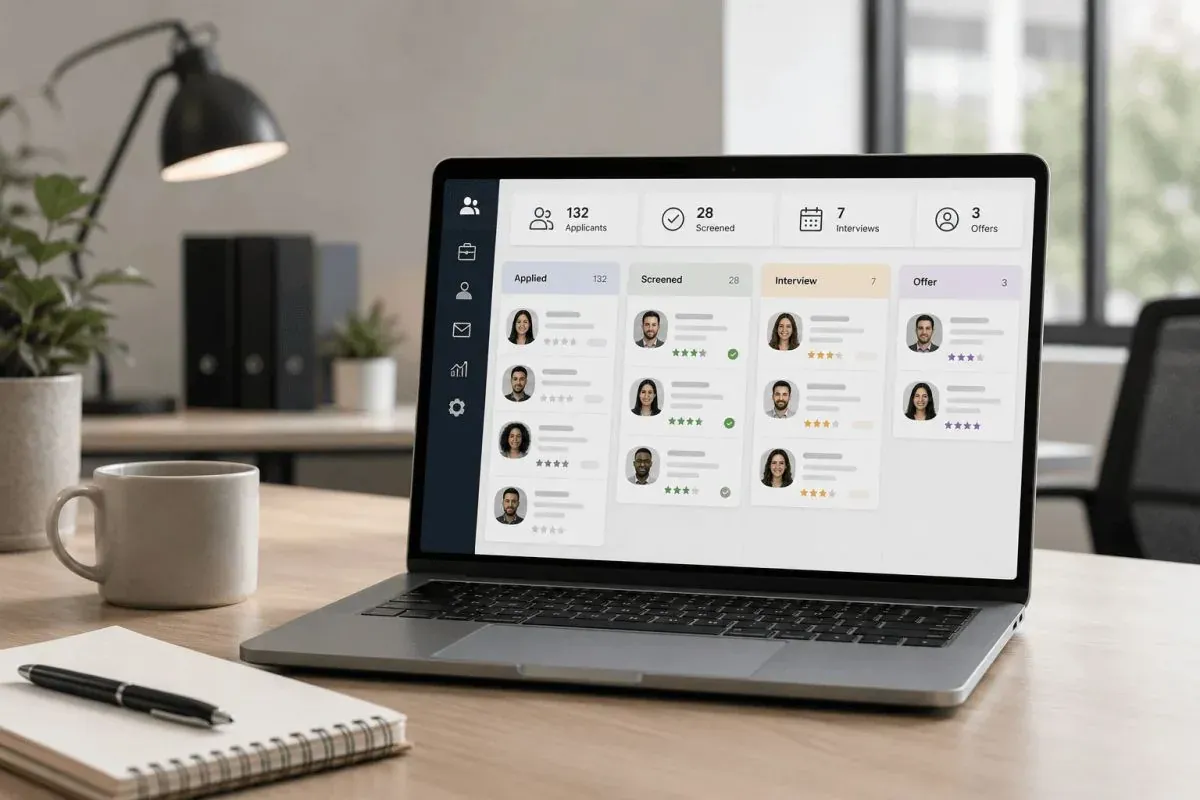

“ATS approval” can mean two different things: the internal hiring-team process of signing off on offer letters inside an ATS, or the candidate-facing question of whether an application clears ATS screening before a human ever sees it. For early-stage teams without dedicated HR, figuring out how to manage offer letters and approvals can feel like an afterthought until a slow sign-off process costs you a top candidate. This guide focuses mainly on using an ATS for offer letters and approvals on the employer side, with a short look at the candidate screening side too.
TLDR:
-
Using an ATS for offer letters cuts approval time and keeps top candidates engaged.
-
Template-based workflows prevent compensation errors that damage trust with hires.
-
Multi-step approval chains with audit trails protect startups from compliance issues.
-
Free ATS tools with built-in recruiter marketplaces let startups run offer workflows and scale hiring support without long-term contracts or agency fees.
-
Fractional recruiting models can cost far less per hire than traditional agency fees.
Why Startups Use an ATS to Manage Offer Letters and Approvals
Offer letters sound straightforward until you’re three days into a back-and-forth between a hiring manager, a founder, and legal over comp numbers that keep changing. For early-stage teams without dedicated HR, the offer process often lives in email threads, Slack messages, and shared docs with no clear owner and no audit trail.

This creates real risk. A candidate sitting in silence while approvals bounce around internally may quietly accept another offer. Research suggests that top candidates are typically off the market within 10 days of starting a search. A failed hire or a restarted search can carry replacement costs that strain a lean budget. Since hiring timelines already stretch across several weeks, any avoidable delay at the approval stage eats a disproportionate share of an already tight window.
An ATS brings structure to this final stretch by centralizing approvals, automating offer document generation, and giving every stakeholder a single place to act. For startups, that speed and clarity can be the difference between closing a hire and restarting a search from scratch.
How ATS Approval Works: The Full Application Journey
Before offer letters ever enter the picture, every candidate moves through a series of earlier steps inside the ATS, and understanding that journey helps explain why offers sometimes stall or lose good candidates along the way.
-
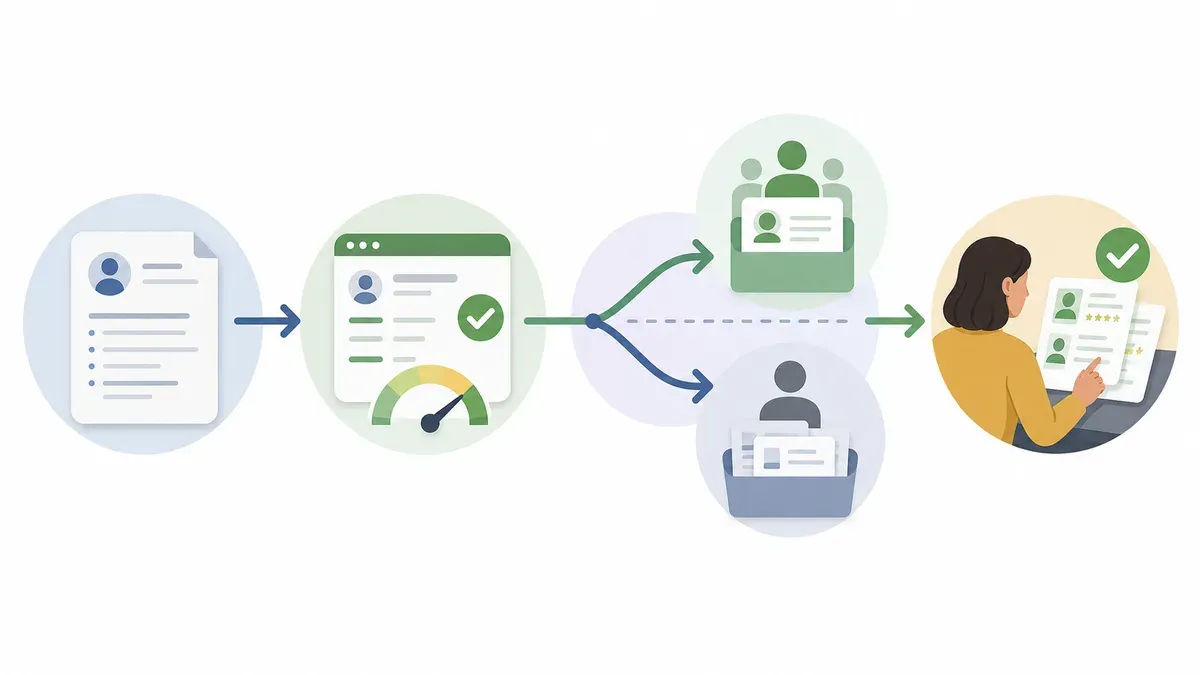
Application Received: The ATS takes in the resume and parses it into structured fields like name, skills, experience, and keywords, so the information is searchable instead of sitting in a PDF.
-
Parsing and Keyword Scoring: The system can score the application against the job description’s required keywords and criteria, giving reviewers a starting point instead of a final verdict.
-
Threshold and Routing: Applications above a configurable score threshold typically move to a recruiter queue, while those below may be auto-rejected or held for later review, depending on how the settings are configured.
-
Human Review and Approval: A recruiter or hiring manager reviews the shortlisted candidates and decides whether to advance or reject them, and that decision triggers the next stage of the pipeline.
Most early-stage teams focus only on step four, but steps one through three run quietly in the background. A resume parsed incorrectly or a keyword mismatch can push a strong candidate out of view before a human ever sees the application.
What to Look for in an ATS Before You Manage Offer Letters and Approvals
Not every ATS handles offer letters and approvals the same way, and choosing the wrong one can create more work than it saves. Before committing to a system, startups should look for a few specific capabilities.
Offer Letter Templating
Look for an ATS that lets you build reusable offer letter templates with variable fields for compensation, title, start date, and equity. Manual editing for each hire is slow and introduces errors.
Approval Workflows
The system should support multi-step approval chains so hiring managers, finance leads, and founders can sign off in sequence without chasing anyone over email.
E-Signature Integration
Native e-signature support or direct integration with tools like DocuSign cuts the back-and-forth of downloading, signing, and re-uploading documents.
Audit Trails
For compliance and internal accountability, look for a system that logs approval actions with timestamps. This matters more as your team scales.
| Feature Category | What It Does | Why It Matters for Startups |
|---|---|---|
| Offer Letter Templating | Reusable templates with auto-populating fields for compensation, title, start date, equity, and reporting structure | Reduces manual copy-paste errors and speeds up turnaround time when extending offers to multiple candidates across different roles |
| Approval Workflows | Multi-step approval chains allowing hiring managers, finance leads, and founders to sign off sequentially or in parallel | Helps keep offers from stalling in busy inboxes and makes proper sign-off easier without chasing stakeholders over email or Slack |
| E-Signature Integration | Native e-signature support or direct integration with tools like DocuSign for candidate acceptance | Cuts the back-and-forth of downloading, signing, and re-uploading documents, keeping the entire process in one centralized system |
| Audit Trails | Logs of approval actions with timestamps showing who approved what and when | Creates accountability for compensation decisions and provides compliance documentation if offer terms are questioned later |
| Time Limits on Approvals | Configurable deadlines that trigger automatic reminders when approvals sit idle beyond set thresholds | Lowers the risk of top candidates accepting competing offers while your internal approval process drags on |
How to Manage Offer Letters and Approvals Using Your ATS
Most ATS tools include offer management features that go underused, especially at early-stage companies where hiring is still ad hoc. Getting this right means setting up a consistent workflow before your first offer goes out.
Setting Up Your Offer Workflow
Start by building an offer letter template in your ATS. Most systems let you create auto-populating fields that fill in candidate name, role, compensation, start date, and reporting structure. This reduces manual copy-paste errors and speeds up turnaround.
From there, configure your approval chain. Even a two-person founding team benefits from a defined sequence: hiring manager approves terms, then a founder or finance lead signs off before the offer sends. You can usually set this up as a sequential or parallel flow depending on your process.
| Sequential Approval | Parallel Approval | |
|---|---|---|
| Speed | Slower, each approver waits on the last | Faster, approvers act at the same time |
| Accountability | Clearer, one owner per step | Can diffuse ownership |
| Risk of errors | Catches issues at each step | May lead to conflicting approvals |
| Best for | Executive hires or roles with strict compliance needs | High-volume IC roles where speed matters |
-
Map out who approves each offer type, since executive hires may need more sign-offs than IC roles.
-
Set time limits on approvals so offers don’t stall waiting on a busy inbox.
-
Use the ATS audit log to track who approved what and when, which matters if a candidate questions terms later.
Once approved, the ATS can send the offer directly to the candidate for e-signature, keeping everything in one place instead of scattered across email threads.
How Managing Offer Letters and Approvals Fits Into Your Full Hiring Pipeline
Offer letters and approvals sit near the end of your hiring pipeline, but their success depends entirely on what happens before them. By the time a candidate reaches the offer stage, your ATS should already hold a complete record of their journey: sourcing channel, interview feedback, compensation discussions, and any red flags that surfaced along the way.
When approval workflows are built into that same system, hiring managers and finance leads can review the full context before signing off. There’s no hunting through email threads or Slack messages to reconstruct what was discussed.
Where Offer Management Connects to Earlier Stages
The offer stage inherits whatever came before it, so a gap earlier in the pipeline (missing compensation bands, thin interview notes, or candidate messages scattered across tools) tends to surface as a delay or an error right at sign-off. Tightening up a handful of upstream touchpoints removes most of that risk before it ever reaches a founder’s inbox. These three touchpoints are worth the most attention:
-
Compensation ranges captured during job setup mean offer letters can be auto-populated with pre-approved figures, reducing back-and-forth with finance at the final hour.
-
Interview scorecards logged in the ATS give approvers the context they need to feel confident in an offer decision, beyond a name and a salary number.
-
Candidate communication history stored centrally means offer timing can be coordinated without accidentally going dark on a candidate who’s weighing competing options.
A quick pre-offer check (approved compensation range, completed scorecards, recent candidate contact) often lets approvers sign off without follow-up questions. Before sending a request to sign off, confirm the job already has an approved compensation range, the interview scorecards are complete, and the candidate was contacted within the last day or two. When that context already sits in the ATS, approvers often have what they need to sign off without asking follow-up questions. It is a small habit, but it can save a few days during the stretch of the process when speed matters most.
When to Bring In a Fractional Recruiter to Support Offer Letter Management
Even with a solid ATS in place, offer letter management can expose gaps that tech alone won’t fix. If your hiring volume is picking up, your approval chains are getting longer, or a mishandled offer recently cost you a candidate, it may be worth bringing in outside recruiting support.
A fractional recruiter steps in at specific stages of the hiring process without the overhead of a full-time hire. For startups managing multiple open roles simultaneously, they can own the offer stage entirely: drafting letters, coordinating approvals with founders or legal, and following up with candidates to keep momentum going.
A few signals that the offer stage has outgrown your current setup:
-
Your ATS is tracking approvals, but no one is accountable for moving them forward quickly.
-
Offers are going out late because founders are too stretched to review and sign off promptly.
-
Candidates are dropping off between verbal offer and signed letter due to slow follow-through.
Fractional support pairs well with an ATS because the recruiter works inside your existing workflows instead of around them, keeping your data clean and your process intact.
The Cost of Getting Offer Letters and Approvals Wrong as a Startup
Botched offer letters and slow approval chains carry real consequences for early-stage companies. When a candidate receives an offer with incorrect compensation, wrong title, or missing equity details, trust erodes fast. Many will walk away entirely, and the cost of restarting a search can run into the tens of thousands of dollars in recruiter time, interviewer hours, and delayed headcount.
Without a structured system, startups also struggle at the audit layer. If an offer goes out without proper sign-off from a founder or legal counsel, you can face compensation inconsistencies across your team, which creates compliance and pay equity exposure down the road.
Consider a Series A startup extending an offer to a senior engineer. The template still carries last quarter’s equity range, the founder doesn’t see the approval request for three days, and the candidate accepts a competing offer on day two. The failure points are a stale template, no approval time limit, and no status updates to the candidate.
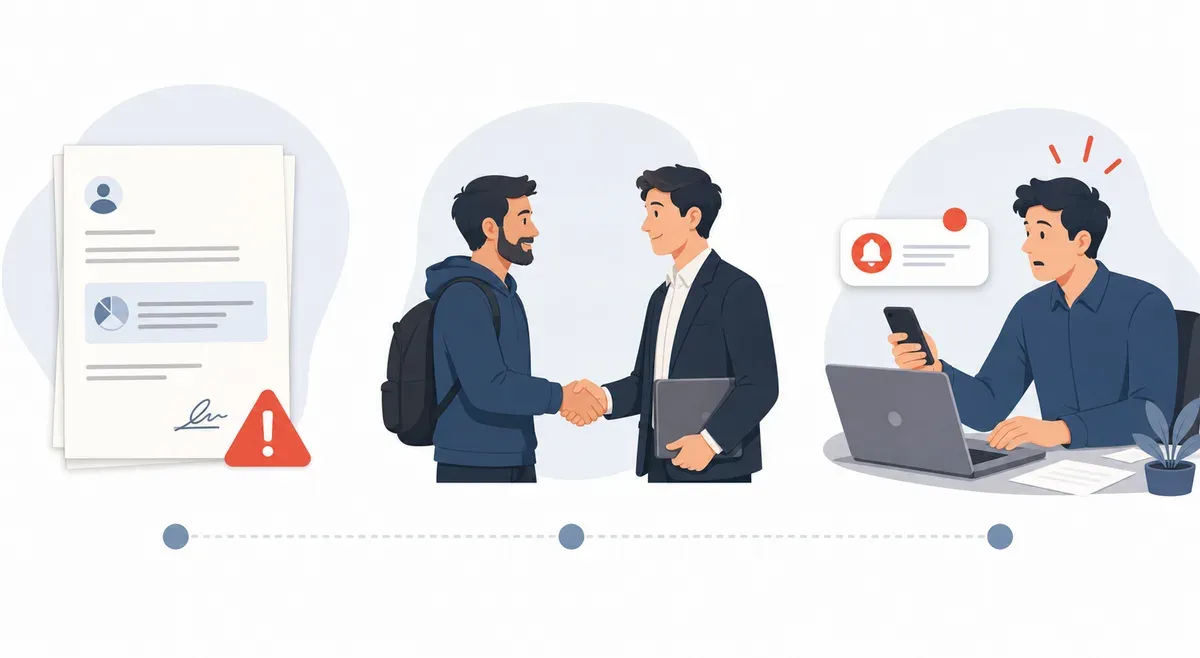
Here is what tends to go wrong most often:
-
Offer letters sent before compensation was formally approved, creating awkward rescissions or underpayments
-
Multiple versions of an offer template floating around, leading to outdated legal language going out to candidates
-
No clear record of who approved what, making it hard to audit decisions if a dispute arises later
How Dover Helps Startups Manage Offer Letters and Approvals Without the Overhead
Dover’s free ATS for startups gives teams the infrastructure to run a clean offer process without paying for it. Setup takes just minutes, there are no seat limits, and the system supports template-based offer generation with automated candidate communications built in. Multi-step job and offer approvals, with approver permissions and approval email updates, are available on the Enterprise plan.
For teams that need more than software, Dover’s recruiter marketplace connects you with fractional recruiters who work on an hourly, retainer, or pay-per-hire basis, with no long-term contracts. These are experienced recruiters with deep startup hiring backgrounds, and because they work fractionally, the cost structure looks very different from a traditional agency. Hourly cost is tied to the work done instead of the candidate’s salary, and the all-in cost of every marketplace hire is published in Dover’s public cost-per-hire table. Traditional agencies, by contrast, typically charge a percentage of first-year salary, often 15% to 25%, so their fee rises with every increase in the offer.
The ATS itself is free, and offer management with e-signing is included on the Premium plan at $199/month with no annual contract. Bringing in a recruiter starts with an $800 deposit that is fully refundable and applied to your recruiter’s first hours, and Dover’s pricing page lists what each plan includes.
FAQs
Can you manage offer letters without a dedicated HR team?
Yes. An ATS lets you build reusable offer templates, set up approval chains, and send e-signature requests without HR infrastructure. Many startup teams can set up their offer workflow in under an hour and run it with just hiring managers and founders in the loop.
What’s the fastest way to reduce offer drop-off as a startup?
Build your approval workflow into your ATS before you make your first offer. Strong candidates often weigh competing offers, so shortening the gap between verbal offer and signed letter can make the difference between closing a hire and losing them.
How do I use an ATS to manage offer letter approvals across multiple stakeholders?
Set up a sequential or parallel approval chain inside your ATS that routes offers to hiring managers, finance leads, and founders in order. Most systems can log approval actions with timestamps, many send automatic reminders if someone stalls, and the process stays in one place instead of scattered across email threads.
Final Thoughts on Using an ATS and Dover to Manage Offer Letters and Approvals
When it’s well configured, using an ATS for offer letters and approvals gives your team the structure to avoid the manual errors, stalled sign-offs, and missing audit trails that cost startups good hires. But tooling only works if someone is actively pushing the process forward. For teams that need both the infrastructure and hands-on support, Dover pairs a free ATS (with offer management and e-signing on its Premium plan) with a marketplace of fractional recruiters who work inside your existing workflows, so you can run a clean offer process from template to signed letter without hiring a full-time recruiter before you’re ready.