

When you’re hiring 15 roles this year, recruiting quickly becomes a tax on your time, but not enough work to support a full-time hire. That gap is where the fractional recruiter fits. Acting as an embedded recruiting partner, they focus on your open roles, learn your team inside and out, and represent your company directly to candidates. You pay by the hour, which has averaged between $2,000 and $7,000 per hire instead of the $18,000 to $30,000 charged by agencies. This overview breaks down how fractional recruiting works, what it costs, and how to decide if it’s the right move for your company right now.
TLDR:
-
Fractional recruiters work part-time on your roles, averaging ~$2K-$7K per hire vs. $18K-$30K agency fees.
-
You get 10-15 years of specialized recruiting expertise without a full-time salary.
-
They embed with your team like internal recruiters but scale up or down based on hiring needs.
-
Best for companies hiring 5-50 roles per year who aren’t ready for full-time recruiting staff.
-
Some modern platforms match startups with top 2% recruiters through a marketplace with no contracts or placement fees.
What Is a Fractional Recruiter?
A fractional recruiter is a recruiting professional who works with your company on a part-time, hourly, or project basis instead of as a full-time employee. They bring deep recruiting expertise without the overhead of a full-time salary and benefits package.Unlike traditional recruiting agencies that juggle hundreds of clients at once, fractional recruiters work with a smaller number of companies. They embed themselves into your hiring process, learn your culture, and represent your company to candidates like an in-house recruiter would.The key difference? You only pay for the hours you need. They handle sourcing candidates, conducting screens, managing pipelines, and supporting offer negotiations and candidate communications on your schedule and budget. For startups not ready to hire a dedicated talent leader, fractional recruiters fill the gap between doing everything yourself and committing to a six-figure hire.
How Fractional Recruiting Works
Fractional recruiters typically work on an hourly basis, though some offer project-based packages for specific roles. You define which roles to fill and what level of support you need. Some companies hand off the entire hiring process, while others bring in help just for sourcing or closing. Once engaged, the recruiter integrates directly into your hiring workflow. They’ll use your ATS, attend team meetings, and coordinate with hiring managers like an internal team member. Most log their hours transparently and provide regular updates on pipeline metrics and candidate progress, making it easier to choose the right recruiter for your startup. The scope usually covers full-cycle recruiting: writing job descriptions, sourcing candidates from their networks and LinkedIn, conducting initial screens, coordinating interviews, gathering feedback, and supporting offer negotiations. You stay involved in final decisions while they handle the time-consuming work.
The setup works best when the recruiter and hiring team share a single pipeline. When a fractional recruiter operates in a separate system, candidate status lives in email threads, feedback gets scattered, and the team ends up doing coordination work instead of focusing on decisions. A shared ATS gives both sides real-time visibility into sourcing activity, interview stages, and candidate movement, so the recruiter can move quickly without creating handoff friction for the team.
The Cost of Fractional Recruiting vs. Traditional Hiring Models
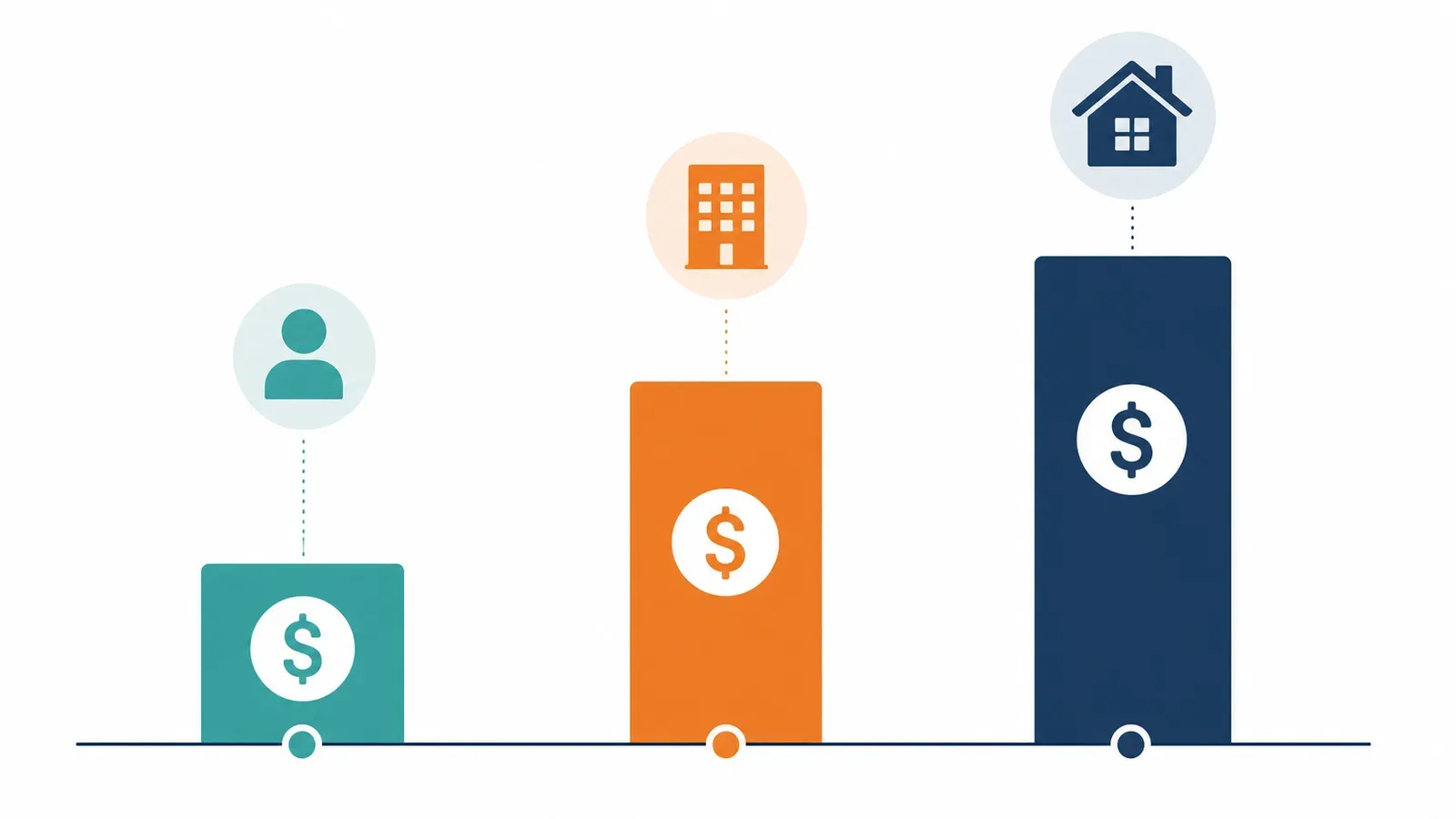
Traditional agencies charge a placement fee of 15% to 25% of a candidate’s first-year salary. For a $120,000 hire, that’s $18,000 to $30,000 per placement. Fractional recruiters work differently. Most companies using Dover spend, on average, between $2,000 and $7,000 per hire, paying only for actual hours worked.
Benefits of Hiring a Fractional Recruiter
The case for fractional recruiting goes beyond simple cost savings:
-
You scale on your terms. Hiring three roles this quarter and none next quarter? Ramp support up and down without layoffs or underutilized headcount.
-
You get specialized expertise. Most fractional recruiters bring 10-15 years of experience across specific functions or industries. Need someone who’s closed 50 engineering roles at Series A companies? You can find that exact profile.
-
They embed with your team. Fractional recruiters learn your culture, attend standups, and build relationships with hiring managers. Candidates get a consistent experience, not generic agency pitches.
-
Quality improves through focus. While agencies spread one recruiter across dozens of clients, fractional recruiters work with a handful of companies at once. Your roles get real attention.
-
You get an outside perspective. They spot gaps in your interview process, compensation misalignment, or unrealistic job requirements that internal teams miss.
Why Fractional Recruiting Is Growing in 2026
Fractional recruiting reflects a broader shift in how companies access talent. Fractional professionals doubled from 60,000 to 120,000 between 2022 and 2024, spanning CFOs, CMOs, CTOs, and recruiters.
Three forces drive this growth. First, economic uncertainty makes flexible staffing less risky than fixed headcount. Second, the talent war created specialist roles companies only need intermittently. You might need a technical recruiter who understands machine learning for two months, then switch to sales hiring. Fractional models provide that expertise without year-round commitments. Third, remote work normalized distributed teams and project-based collaboration, making fractional arrangements a legitimate way to build teams instead of a compromise.
For recruiting particularly, the model solves a timing problem: you need recruiting help before you have volume to support a full-time hire. Fractional recruiters professionalize your process exactly when needed.
Fractional Recruiter vs. Agency Recruiter vs. In-House Recruiter
The three models differ in how they work with your team and what you pay for.Agency recruiters work for the agency, not you. They often shop your role to multiple clients and focus on speed over fit. You get minimal visibility into their process and pay a success fee only when someone accepts. That misaligns incentives: agencies win by placing anyone, not finding the right person.In-house recruiters are full team members who know your culture deeply and build long-term candidate relationships. But you pay their salary whether you’re hiring or not. They make sense when you have 20+ annual hires to keep them busy year-round.Fractional recruiters integrate closely into your team’s hiring process, providing internal-like alignment while remaining flexible on scope and hours. But you pay hourly and can adjust involvement based on current needs. You get the cultural fit and dedication of in-house recruiting with the flexibility and lower cost of external help.
| Fractional Recruiter | Agency Recruiter | In-House Recruiter | |
|---|---|---|---|
| Cost structure | Recruiters set their own rates, averaging $75 to $125/hr and $2K to $7K per hire | 15 to 25% of first-year salary (~$18K to $30K per hire) | $85K to $170K/year loaded (base + benefits/overhead) |
| Team integration | Embeds with your team, attends meetings, uses your ATS | External; minimal visibility into process | Full team member with deep culture knowledge |
| Flexibility | Scale hours up or down by hiring volume; no contracts | Fixed per engagement; limited ability to pause | Fixed headcount; you pay whether hiring or not |
| Incentive alignment | Paid hourly; no financial reason to prioritize speed over fit | Paid on placement; incentivized to fill fast, not find the best fit | Fully aligned with company goals and culture |
| Best for | Companies hiring 5-50 roles/year not ready for full-time recruiting staff | One-off urgent roles where speed is the only priority | Teams with 20+ annual hires who need year-round recruiting capacity |
A fractional recruiting agency is a firm that coordinates fractional recruiting support on a company’s behalf. It handles recruiter selection, process oversight, and accountability so the hiring team stays focused on decisions. The underlying technology (shared ATS, pipeline visibility, billing) runs on a platform like Dover. For companies that want managed support without building an internal recruiting function, this sits between engaging a recruiter directly and outsourcing to a traditional agency.
When to Hire a Fractional Recruiter
Fractional recruiting fits specific hiring patterns. Here’s when it makes sense for your company.You’re hiring roughly 5 to 50 roles per year. Below five roles, founders can manage hiring themselves. Above 50, a full-time recruiter stays busy year-round. The middle range creates uneven workload where fractional support matches actual demand.You’re not ready to hire internally. Your first recruiter should join around 15-20 annual hires. Before that, fractional recruiters give you professional recruiting without premature headcount.You’re entering a hiring surge. Raised a Series A? Launching a new product? These moments create 6-12 month spikes. Fractional recruiters scale up for the push and scale down after.Your team lacks recruiting skills. First-time founders often write weak job descriptions or conduct unstructured interviews. Fractional recruiters bring process while you learn. Some companies prefer routing this through a fractional recruiting agency that manages recruiter coordination on their behalf, and the same hiring-volume thresholds apply either way.
How to Choose and Work with a Fractional Recruiter
Start by defining your needs before reaching out. List specific roles, expected hiring volume over the next quarter, and where you need help most (sourcing, screening, closing). This helps match you with the right fractional recruiting services for your stage.When assessing candidates, look for recruiters with 10+ years in your industry or stage. Ask for examples of similar roles they’ve filled and request references from founders they’ve worked with recently. Check whether they understand your technical requirements and can speak credibly to candidates about your space.Set up integration points early. Add your recruiter to Slack channels, weekly hiring syncs, and your ATS from day one. Agree on communication frequency and decision-making authority upfront.Define clear success metrics together: time-to-fill, candidate quality ratings from interviewers, and offer acceptance rates. Review these weekly and adjust tactics based on what’s working.Treat this as a partnership by sharing honest feedback on candidates and giving context on why roles exist.
How Dover’s Fractional Recruiting Marketplace Works
Dover connects startups with a highly selective network of experienced recruiters who bring 10-15 years of startup hiring expertise. Each recruiter carries verified reviews from prior startup hiring engagements, so you can assess fit before committing. We match you based on your roles, industry, and stage. These recruiters embed with your team, attend meetings, and focus primarily on your open positions while supporting a small number of companies at a time.
Pricing starts with an $800 refundable deposit. You pay only for hours worked with no contracts or placement fees. Most companies have spent an average of $2,000 to $7,000 per hire versus $18,000 to $30,000 for agencies. Everything runs through our free ATS. Your recruiter, hiring managers, and team all work from the same candidate pipeline, with shared visibility into sourcing activity, interview stages, and recruiting metrics. You get full visibility into hours, pipeline progress, and candidate status in one place, so there’s no back-and-forth between your team and the recruiter over where things stand. Dover also serves as the infrastructure layer that fractional recruiting agencies operate on, giving those agencies the same shared pipeline, billing transparency, and recruiter accountability that direct clients rely on.
Frequently Asked Questions
Can fractional recruiters handle the entire hiring process?
Yes, fractional recruiters can manage full-cycle recruiting including writing job descriptions, sourcing candidates, conducting screens, coordinating interviews, gathering feedback, and supporting offer negotiations. You can also bring them in for specific parts like sourcing or closing if you prefer.
What tools do fractional recruiters use?
Most fractional recruiters work within whatever tools the hiring team already has in place: an ATS for tracking candidates, a sourcing tool for outreach, and a scheduling tool for interviews. Coordination is cleaner when both sides share the same ATS, giving everyone real-time pipeline visibility without manual status updates. When a recruiter operates from a separate system, syncs fall back to email and one-off messages, which adds overhead for both sides.
What is a fractional recruiting agency?
A fractional recruiting agency coordinates fractional recruiting support on behalf of client companies. The agency handles recruiter matching, process management, and accountability, while the underlying infrastructure (shared ATS, candidate pipeline, billing transparency) runs on a platform like Dover. For companies that want managed recruiting support without a full internal recruiting function, this sits between engaging a recruiter directly and outsourcing to a traditional contingency firm.
Final Thoughts on Choosing a Fractional Recruiter
For startups that need hiring support but are not ready to commit to a full-time recruiter, working with a fractional recruiter offers a clear middle ground. You get dedicated recruiting help without long-term headcount, paying only for the work that drives hires forward. Dover supports this approach by connecting companies with experienced fractional recruiters who work directly inside your hiring process and focus solely on your open roles. If you are considering your next hiring step, this shows how Dover helps teams hire with flexibility while keeping costs aligned with real demand.
-recruiting-hero-ba99639a.zcrlfqTR_Z1g1uIg.webp)