
When great employees leave, they take the lessons your organization could have used to keep others from doing the same. Too often, exit interviews become a procedural checkbox instead of a genuine opportunity to learn why people move on. But when approached strategically, these conversations reveal patterns, leadership gaps, and cultural insights that can reshape retention efforts. By asking the right questions at the right time, and using modern AI recruiting tools to organize and analyze feedback, you can turn departures into data-driven insights that strengthen your entire talent strategy. According to Gallup research, replacing an employee can cost between 50% and 200% of their annual salary, and voluntary turnover costs U.S. businesses roughly $1 trillion per year.
TLDR:
-
Exit interviews reveal important retention insights when tailored by employee type (managers, interns, full-time staff)
-
Schedule interviews 2-3 days before departure with neutral HR reps, not direct managers for honest feedback
-
Track patterns across departments to identify systemic issues like poor management or limited growth opportunities
-
Use technology to automate scheduling and analyze trends instead of manual paperwork processes
-
Hire recruiters that track exit interview data alongside hiring metrics for complete talent insights
Exit Interview Questions by Category
Exit interviews serve as your a key retention tool for gathering structured feedback from departing employees. When structured properly, they reveal important insights about your company culture, management effectiveness, and day-to-day gaps that might otherwise remain hidden.
The key lies in tailoring your questions to different employee categories. Each group brings unique experiences and observations that require targeted questioning approaches.
Different employee categories require distinct question frameworks. Full-time employees can provide detailed feedback about long-term culture and growth opportunities. Managers offer insights into leadership challenges and team dynamics. Students and interns bring fresh perspectives on onboarding, mentorship, and early career development.
Your recruiters can help track exit interview responses alongside hiring data, creating a complete picture of your talent lifecycle from recruitment through departure.
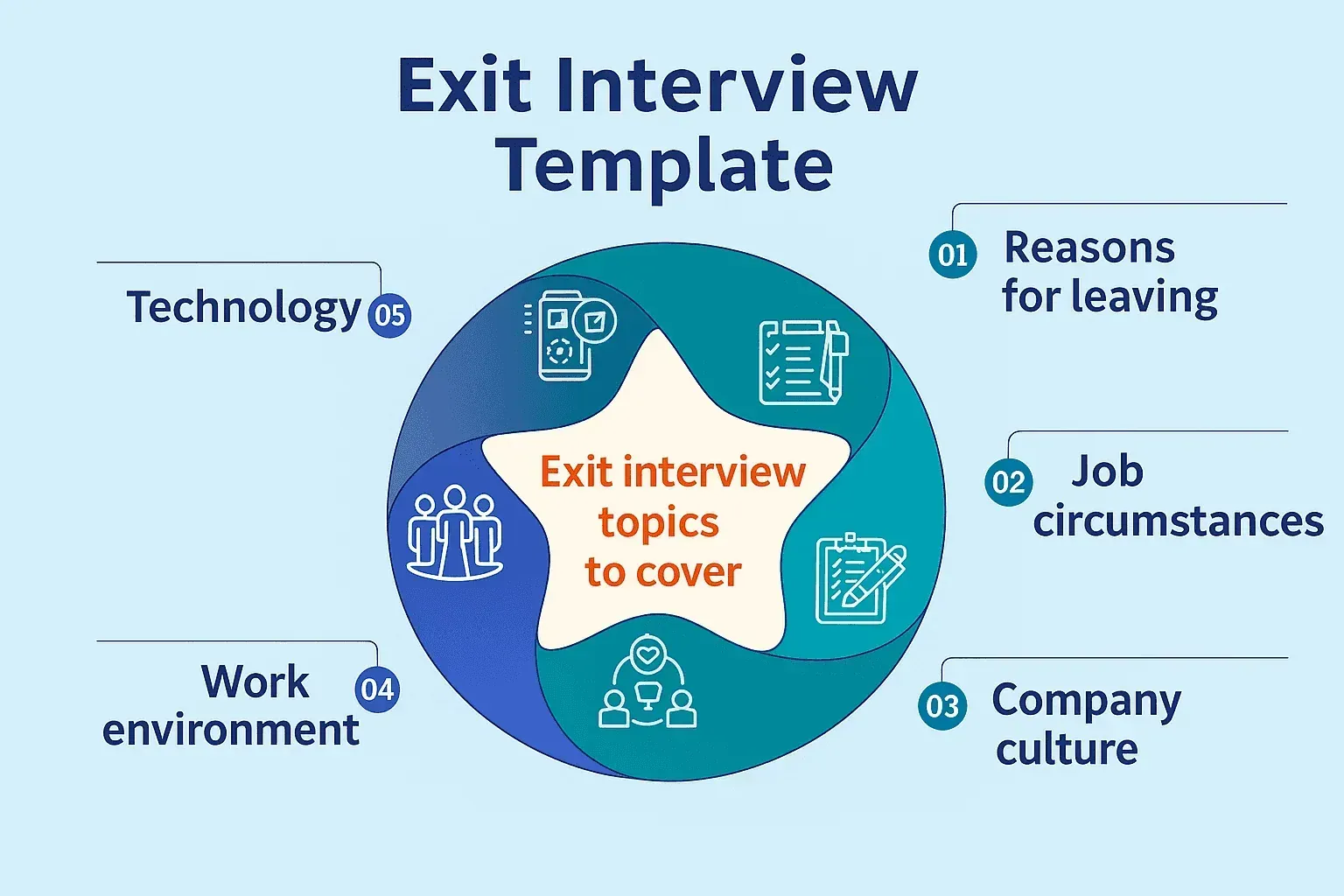
Core Exit Interview Questions for All Employees
Every departing employee, regardless of role or seniority, can provide valuable insights through a core set of universal questions. These foundational inquiries form the backbone of any effective exit interview process.
Start with the basics: “Describe the work environment and how it affected your daily experience” often uncovers issues that management overlooks.
Management effectiveness deserves dedicated attention. “How would you describe your relationship with your direct supervisor?” and “What could your manager have done differently to support your success?” provide direct feedback on leadership performance.
End with forward-looking questions: “What would need to change for you to consider returning in the future?” and “Would you recommend this company as a place to work?” These responses help gauge overall employee satisfaction and brand reputation.
Career development opportunities consistently rank among the strongest predictors of employee retention, making these questions critical to long-term talent retention strategies, and keeping a close eye on your recruiting metrics can reveal whether hiring patterns contribute to turnover. LinkedIn’s 2024 Workplace Learning Report found that career development ranks as the top factor driving employees to stay or go.
Manager Exit Interview Questions
A departing manager’s higher-level perspective on company strategy, team dynamics, and day-to-day challenges makes their feedback invaluable for leadership development and retention planning.
Manager-specific questions should dig deeper into strategic concerns. Ask: “How effectively did senior leadership communicate company vision and strategic priorities?” and “What barriers prevented you from achieving your team’s goals?” These responses reveal systemic issues that impact entire departments.
Leadership development deserves focused attention. “Did you receive adequate support and resources to manage your team effectively?” often uncovers gaps in management training programs. Follow with: “What would have helped you be more successful in your leadership role?”
Team dynamics questions are important since managers directly influence employee retention. “How would you describe the overall morale and engagement of your team?” provides insights into departmental health that may not surface through regular employee surveys.
A 2025 BambooHR study found that 58% of employees cite management style as the primary reason they quit — up from 37% in 2017 — and 47% said they loved their job but could not stand their manager.
Resource allocation questions reveal day-to-day challenges: “Did you have sufficient budget and staffing to meet expectations?” Understanding resource constraints helps leadership make better strategic decisions.
End with succession planning: “How prepared is your team for this transition?” This helps maintain continuity while gathering insights about talent development within their department.
Student and Intern Exit Interview Questions
Student employees and interns bring fresh perspectives that can change your early-career programs. Their feedback reveals whether your internship initiatives actually deliver on learning objectives and career preparation promises.
Start with program-specific questions: “Did this internship meet your initial learning goals and expectations?” and “How well did the role align with your academic studies or career interests?” These responses help you assess whether your program descriptions accurately reflect the actual experience. A strong candidate experience sets expectations early, which makes intern feedback at departure far more telling.
Mentorship quality deserves dedicated focus since it directly impacts intern satisfaction. Ask: “How would you rate the quality of mentorship and guidance you received?” and “What additional support would have improved your learning experience?” Poor mentorship often determines whether interns return for full-time positions.
Future engagement matters a lot. “Would you consider returning for a full-time position?” directly measures conversion potential. Follow with: “What would make you more likely to recommend this internship to other students?”
Your sourcing tools can help you maintain relationships with high-performing interns for future full-time recruitment opportunities.
End with program improvement suggestions: “What changes would make this internship more valuable for future participants?” This feedback drives continuous improvement in your early-career programs.
Exit Interview Best Practices and Timing
Timing matters more than most HR teams realize. Schedule exit interviews during the employees’ final week, but not on their last day when they’re rushing to wrap up projects. Two to three days before departure provides the sweet spot where employees feel comfortable sharing candid feedback without the pressure of immediate deadlines.
| What to Do | What to Avoid |
|---|---|
| Schedule 2-3 days before departure | Schedule on the employee’s last day |
| Use a neutral HR rep or third party | Use the employee’s direct supervisor |
| Ask open-ended questions | Ask leading questions that invite validation |
| Document and track patterns across departments | Collect feedback without acting on it |
| Create feedback loops into policy and training | Let insights sit in a spreadsheet unused |
Interviewer selection is critical for gathering authentic responses. The interview must be conducted by someone other than the employee’s direct supervisor to guarantee unbiased feedback. HR representatives or neutral third parties create the psychological safety needed for candid conversations about management issues or workplace concerns.
Document everything systematically. Your recruiter can track exit interview data alongside hiring metrics, creating complete talent lifecycle insights that inform both recruitment and retention strategies.
Analyzing Exit Interview Data for Actionable Insights
The real value shows up when you turn individual feedback into organizational intelligence that drives meaningful change.
Look for patterns in feedback from departing employees, such as dissatisfaction with management or limited career growth. Track team-specific data to identify whether particular managers, roles, or departments experience unusually high attrition and inform your talent retention strategies.
Use dashboards to visualize trends and connect exit data with recruiting metrics.
Set up feedback loops where exit interview insights directly inform management training, policy changes, and retention initiatives. Regular reporting to leadership creates accountability and drives continuous improvement.
Common Exit Interview Mistakes to Avoid
Even well-intentioned exit interview programs can backfire spectacularly when companies make fundamental execution errors. Pairing exit interview data with a look at your recruitment bottlenecks can reveal whether process friction is compounding turnover.
The biggest mistake is conducting interviews too late in the departure process. Scheduling on the final day creates rushed conversations where employees focus on logistics instead of thoughtful feedback. Similarly, waiting until after someone has mentally checked out reduces the quality of insights you’ll receive.
Using the wrong interviewer destroys credibility instantly. When direct managers conduct exit interviews, employees rarely share genuine feedback about leadership issues. The power imbalance makes authentic conversation nearly impossible, especially if management problems contributed to their departure.
Leading questions represent another common error. Asking “You were happy with your compensation, right?” instead of “How did you feel about your compensation package?” signals that you want validation, not truth. This approach guarantees superficial responses.
The most damaging mistake is failing to act on feedback. When departing employees see no changes after sharing concerns, word spreads quickly through professional networks. This creates a reputation for collecting feedback without implementing improvements.
Technology Solutions for Exit Interview Management
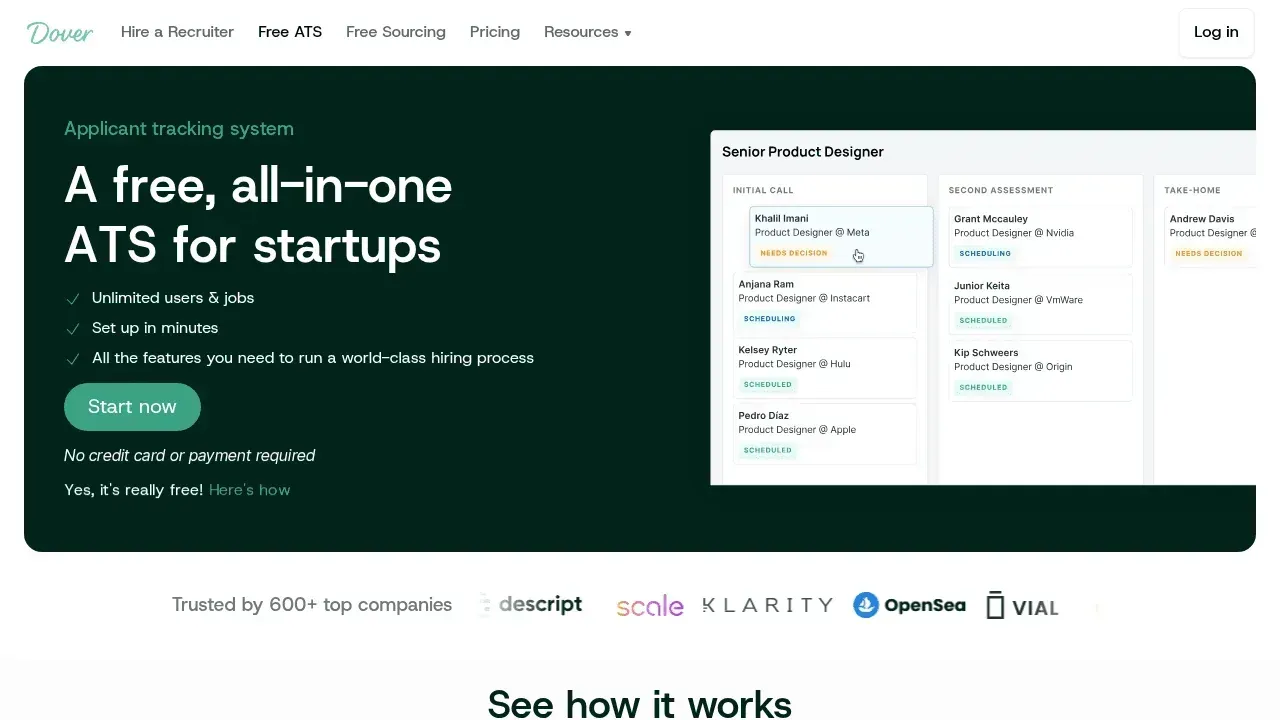
Manual exit interview processes create administrative headaches while limiting your ability to extract meaningful insights from departing employees. Dover’s recruiters can help simplify feedback collection and turn exit interviews into more strategic, insight-driven conversations.
Dover’s recruiters can serve as the foundation for effective exit interview management. They can support scheduling and workflows when employees submit resignation notices, making sure no departures slip through the cracks.
Recruiters can use Dover’s ATS, free for unlimited users and jobs with a $199/month Premium tier for AI applicant scoring and AI note taking, to schedule exit interviews, removing the back-and-forth emails that can delay interviews. With calendar integrations, departing employees can easily book their own slots within appropriate timeframes, while automated reminders guarantee both parties show up prepared. Pairing this with a broader recruiting process automation approach keeps the entire talent lifecycle running without manual bottlenecks.
Recruiters can create questionnaires in Dover’s ATS to refine data collection and maintain consistency across all interviews. Pre-interview surveys allow employees to reflect on their experiences before face-to-face conversations, resulting in more thoughtful, actionable feedback.
Why Exit Interviews Matter More in 2026
The case for treating exit interviews as a strategic priority has only grown stronger heading into 2026. According to an Express Employment Professionals and Harris Poll survey, the average cost per departure hit $45,236 in 2026, a 23% jump from the prior year. At the same time, 50% of U.S. companies expect turnover to increase this year, up from 33% in late 2023. With replacement costs climbing and retention becoming harder, the feedback collected at departure is now one of the cheapest and most direct data sources available to HR teams. Pairing that exit data with recruiting metrics tracked through AI recruiting tools gives HR teams a complete picture of the talent lifecycle, from first application to final day. Organizations that treat exit interviews as a routine formality are leaving serious money on the table.
Frequently Asked Questions
How long should I wait after an employee resigns to conduct their exit interview?
Schedule the exit interview 2-3 days before their departure date, not on their final day. This timing allows employees to provide thoughtful feedback without the pressure of wrapping up last-minute projects or rushing through logistics.
Who should conduct exit interviews to get honest feedback?
Always use someone other than the employee’s direct supervisor, typically an HR representative or neutral third party. This removes power dynamics and creates the psychological safety needed for employees to share authentic concerns about management or workplace issues.
How can I turn exit interview responses into actionable improvements?
Analyze responses systematically by categorizing feedback into themes like management effectiveness, compensation, and career development. Track patterns across departments to identify whether specific managers or teams have recurring issues, then create feedback loops where insights directly inform policy changes and retention initiatives.
Do I need a recruiter if I already use an ATS?
An ATS organizes your pipeline and keeps candidates from slipping through the cracks, but it doesn’t source, screen, or close candidates on its own. For straightforward, high-volume roles, self-serve hiring through an ATS can work well. When searches get specialized, senior, or time-sensitive, layering in a fractional recruiter gives you full-cycle capacity without committing to a full-time hire. The two work best together: the ATS provides the infrastructure and real-time visibility, while the recruiter owns outreach, qualification, and closing. Some platforms, like Dover, combine both in one shared system so there’s no handoff friction between the software layer and the human layer.
Final thoughts on structuring effective exit interviews
Exit interviews are a mirror reflecting how your organization attracts, supports, and retains talent. By asking thoughtful, role-specific questions and acting on what you learn, you turn employee departures into valuable lessons that strengthen culture and performance. One way to put that data to work: pair exit feedback with a shared ATS so recruiting and retention insights live in the same system. Dover’s model, for instance, combines a free ATS, with a $199/month Premium tier for teams that want AI applicant scoring and AI note taking, with on-demand fractional recruiters who set their own rates and agree terms with you directly, no retainer required. The conversations you hold at the end of an employee’s journey can become the foundation for keeping your best people longer and building a more engaged workforce.