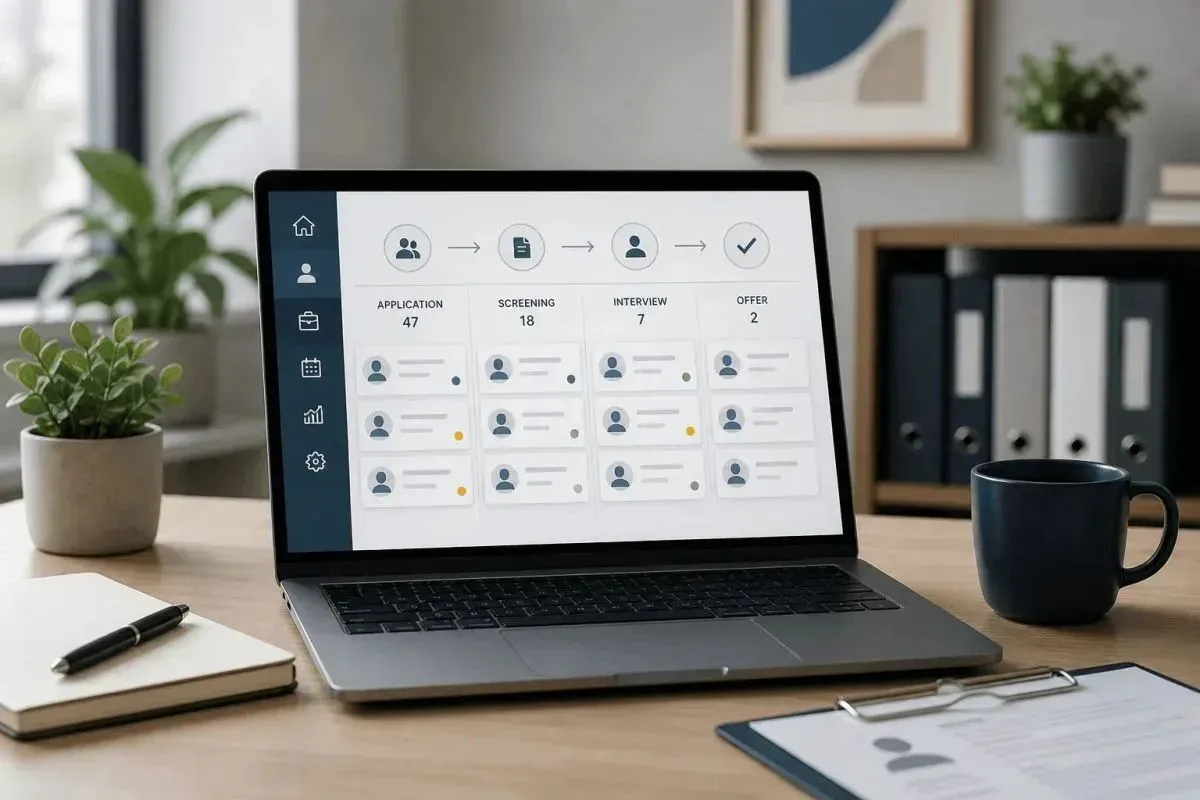

When you search for top ATS systems for recruitment, you’ll find dozens of platforms claiming they’ll fix your hiring process. The reality is messier. The top ATS systems for recruitment range from free tools with quick setup to enterprise platforms that lock you into multi-month implementations and custom pricing that only makes sense if you’re hiring hundreds of people per year. We broke down the actual differences between free startup tools and enterprise systems to show you what fits your hiring volume and team size, beyond what looks good in a demo.
TLDR:
-
An ATS manages your entire hiring pipeline in one place, from posting jobs to tracking candidates.
-
Enterprise options like Workday and iCIMS can require months of setup and custom pricing quotes.
-
One free ATS offers distribution to 50+ job boards and setup in minutes.
-
AI resume review on that same ATS is available on its paid plan rather than the free tier.
-
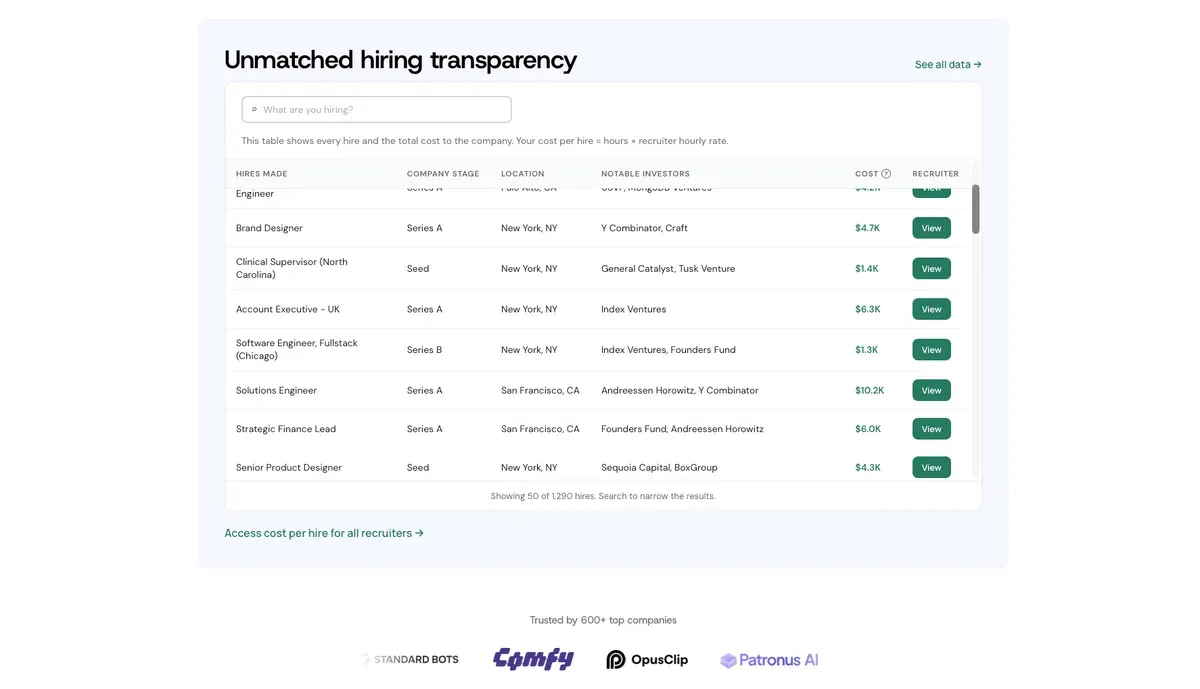
Some tools pair free ATS software with on-demand fractional recruiters, which typically costs considerably less per hire than traditional agency fees, with each hire’s all-in cost published in a public cost-per-hire table.
Best Applicant Tracking Systems (ATS) for Recruiting in 2026
Picking the wrong ATS can quietly wreck your hiring process. Applications fall through the cracks, candidates ghost you after slow follow-ups, and your team spends hours on admin work that should take minutes.
With dozens of options out there, from free tools built for scrappy startups to enterprise systems costing thousands per month, figuring out which one fits your stage and hiring volume takes some digging. We’ve done that work for you. Below is our breakdown of the top ATS tools for recruiting in 2026, plus what actually separates good from great.
What Are ATS Systems for Recruiting?
An applicant tracking system (ATS) is software that manages the full hiring process in one place. Instead of juggling spreadsheets and email threads, recruiters and hiring managers can post jobs, collect applications, screen resumes, schedule interviews, and move candidates through the pipeline from a single interface.
At its core, an ATS stores candidate data in a centralized database, parses resumes for relevant keywords, and keeps hiring teams aligned on where each applicant stands. Most systems also automate routine tasks like rejection emails and interview reminders, freeing up time for the work that actually requires human judgment.
How We Ranked the Best ATS Systems
Our rankings are based on publicly available product information and verified user experiences, not hands-on testing. We looked at six core criteria:
-
Ease of use and setup time
-
Core functionality: candidate tracking, job posting distribution, and interview management
-
Integration with existing HR and productivity tools
-
Pricing transparency across company sizes
-
AI and automation features for screening and sourcing
-
Support for remote and distributed hiring teams
We weighted these factors based on what recruiters and hiring managers actually need in 2026, with extra consideration given to how each tool serves different hiring volumes.
Best Overall ATS for Recruiting: Dover
Dover’s recruiting software brings together sourcing, outreach, scheduling, and candidate management in one place, so recruiting teams spend less time on coordination and more time on hiring. Instead of stitching together separate tools for each stage of the funnel, Dover handles the full workflow.
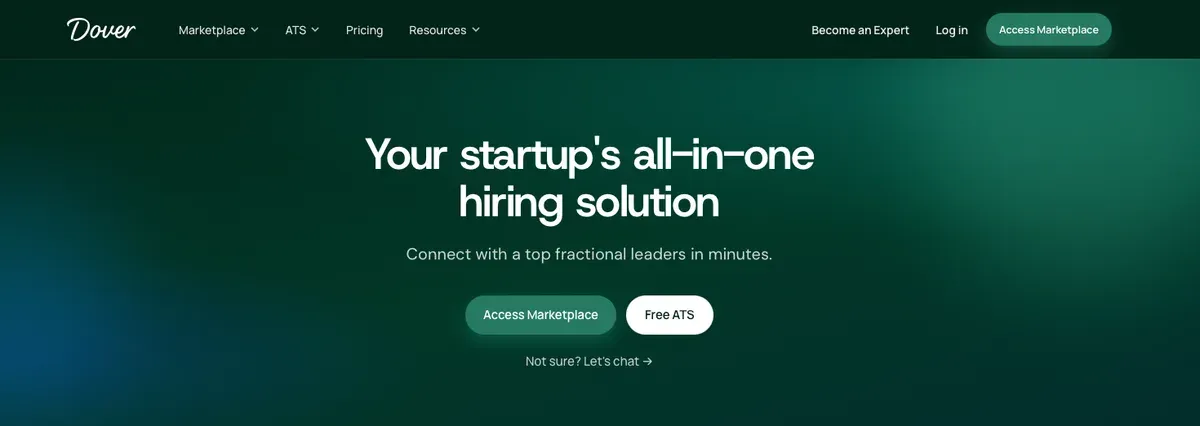
Key capabilities include:
-
A free Chrome extension for sourcing candidates from LinkedIn, with email outreach campaigns
-
A built-in CRM for tracking candidates across every role
-
Customizable scheduling links that sync with Google, Microsoft, and other calendars
-
A built-in ATS to track every candidate from application to offer
Workday
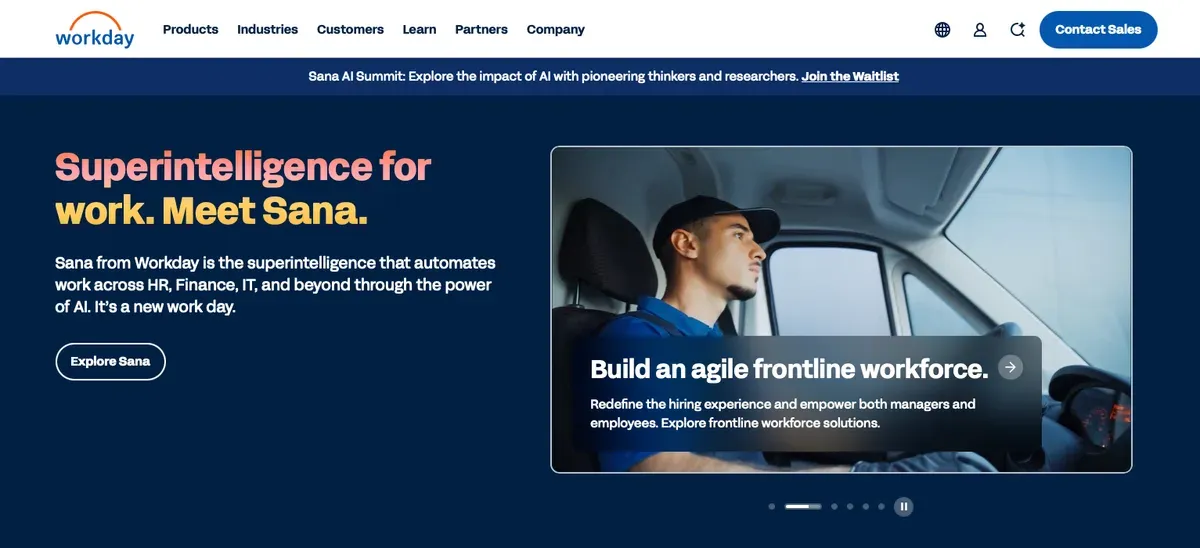
Workday is one of the most widely recognized enterprise HR suites on the market, and its ATS functionality is built into a broader human capital management (HCM) system. It’s designed for large organizations that want recruiting, onboarding, payroll, and workforce planning under one roof.
For recruiting, Workday offers requisition management, candidate tracking, interview scheduling, and reporting tools. The tradeoff is complexity: some users report a steep learning curve, and smaller teams often find it over-engineered for their hiring volume.
Workday is best suited for large enterprises with dedicated HR teams and IT support to manage configuration and maintenance.
iCIMS
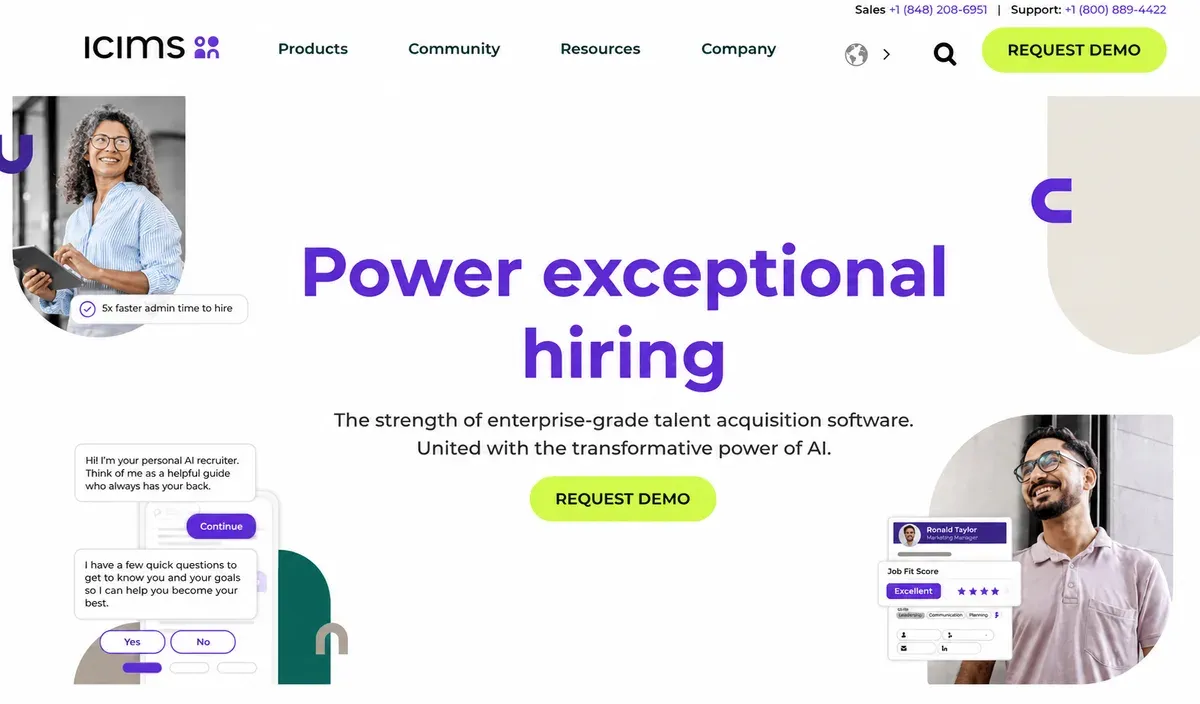
iCIMS is an enterprise talent cloud combining ATS, CRM, recruitment marketing, onboarding, AI recruiting, career sites, analytics, and 750+ integrations. It’s built for large enterprises managing high-volume hiring across multiple regions, not teams just getting started.
There are a few things that set it apart from other enterprise options:
-
Customizable multi-step workflows with approval chains and audit trails
-
Programmatic job advertising and talent pool CRM
-
Deep integrations with Workday, ADP, SAP, UKG, and Microsoft
Pricing is not published, and every plan requires a custom quote. Implementation can take 3-6 months with dedicated IT resources. For large organizations that can absorb that timeline, iCIMS delivers real depth. For startups that need to hire now, that ramp can be a poor fit.
Bullhorn
Bullhorn is a recruitment-focused ATS built for staffing agencies and high-volume recruiting operations. It combines applicant tracking with CRM functionality, making it a go-to choice for firms that need to manage both candidate pipelines and client relationships in one place.
Where Bullhorn stands out is in its depth of integrations and reporting. Agencies running dozens of concurrent searches benefit from its sourcing tools, automation rules, and resume parsing capabilities.
That said, some users report a steeper learning curve with Bullhorn, and its pricing reflects its enterprise focus, which can make it a less practical fit for smaller in-house recruiting teams.
Jobvite
Jobvite is a full-suite recruiting solution built for mid-size to enterprise companies that want sourcing, CRM, ATS, and onboarding under one roof. It’s well-regarded for its social recruiting features and referral management tools, which help recruiting teams tap employee networks alongside traditional job boards. Reporting and analytics are a step above many competitors at this price tier, giving hiring managers visibility into pipeline health and source quality. The tradeoff is complexity: smaller teams often find the setup and learning curve steeper than the value warrants.
Greenhouse
Greenhouse is a leading applicant tracking system built for structured hiring at scale. It offers deep customization for interview workflows, scorecards, and candidate evaluation, making it a strong fit for mid-size to enterprise teams that want consistency across hiring pipelines. Integrations with hundreds of HR tools give it flexibility, though that same depth can make onboarding time-consuming. Pricing scales with headcount, which some smaller teams report can put it out of reach. For organizations running high-volume recruiting with multiple stakeholders involved in each hire, Greenhouse holds up well.
Feature Comparison Table of Top ATS Systems
Here’s how the top ATS systems stack up across the features that matter most.
| Feature | Dover | Workday | iCIMS | Bullhorn | Jobvite | Greenhouse |
|---|---|---|---|---|---|---|
| Pricing | Free | Custom quote | Custom quote | $99 to $315/user/month | Custom quote | $6,500+/year |
| Setup Time | Minutes | 3 to 6 months | 3 to 6 months | Days to weeks | Weeks | Weeks to months |
| Free Trial | Free forever | No | No | No demo trial | Demo only | Demo only |
| Job Board Distribution | 50+ boards | Yes | Yes | Yes | Yes | Yes |
| AI Resume Screening | Yes (paid plan) | Yes | Yes | Yes | Yes | Yes |
| Chrome Sourcing Extension | Yes | No | No | No | No | No |
| Fractional Recruiter Access | Yes | No | No | No | No | No |
| Unlimited Users | Yes | No | No | No | No | No |
| Interview Scheduling | Yes | Yes | Yes | Yes | Yes | Yes |
| Mobile Access | Yes | Yes | Yes | Yes | Yes | Yes |
| CRM Features | Yes | Yes | Yes | Yes | Yes | Yes |
| Best For | Startups | Large enterprises | Enterprise | Staffing agencies | Midsize companies | Midsize to large |
Why Dover Is the Best ATS for Recruiting
Most startups end up choosing between expensive recruiting software and even more expensive agency fees. Dover removes that tradeoff. The free ATS handles job posting to 50+ boards, scheduling links, and referral tracking, with setup in minutes and zero subscription costs regardless of team size. AI resume review, which can score applicants against your own criteria, is part of the paid Premium plan.
Hiring through Dover typically costs considerably less per hire than what a traditional agency would typically charge for the same role, and costs vary by role and recruiter. Every marketplace hire and its all-in cost is listed in the public cost-per-hire table.
For startups hiring 5 to 50 roles per year, that combination of free software and on-demand recruiting help is hard to beat.
FAQs
Can I use an ATS if I also work with recruiting agencies?
Yes, many systems include agency management features that let you track external recruiter submissions alongside direct applications, giving you visibility into all candidate sources in one place.
Which ATS works best for startups hiring their first 20 to 30 people?
Tools with fast setup, no subscription costs, and built-in job board distribution tend to work well for early-stage teams that need to move quickly without dedicated HR support or long implementation timelines.
How do I stop good candidates from slipping through the cracks in my hiring process?
Candidates usually get lost at handoffs: an application sits in a shared inbox, interview feedback stays with one person, or nobody owns the next step. An ATS prevents this only when every source feeds one pipeline and every candidate has a stage and an owner. For small teams without an HR department, that typically means routing all applicants into a single pipeline, setting a response window for each stage, using stage-based email templates, and starring or snoozing strong candidates so they resurface for follow-up. Free ATS tiers with unlimited candidates can cover this without added cost.
Can an ATS score resumes with AI, and is it accurate?
Many ATS tools can score resumes against criteria you define, but a score is a way to order your review queue, not a verdict on candidate quality. Accuracy depends on how specific your criteria are and how well the resume text reflects real experience. Keyword-heavy scoring can miss strong candidates with nontraditional backgrounds, and vague or biased criteria can carry that bias into the results. Employers generally remain responsible for hiring outcomes under anti-discrimination rules and some local AI hiring laws, so a human should review rejections and spot-check low-scored applicants. Dover’s AI resume review is part of the $199/month Premium plan and scores applicants against your own prompt.
My ATS is too expensive for how little I use it. What cheaper options exist?
Start by listing the features you actually use. If that is job posting, candidate tracking, and interview scheduling, a free ATS tier or a month-to-month plan can cover it, while enterprise suites bundle onboarding, CRM, and analytics under quote-based annual contracts. Before switching, check your contract end date and any auto-renewal terms, and export your candidate data. Cheaper options generally fall into three groups: free tiers with unlimited users and candidates, lower-priced plans with no annual commitment, and HR suites with a basic ATS module. Dover’s free plan includes unlimited users, jobs, and candidates, and Premium is $199/month with no contract.
Final Thoughts on Selecting Applicant Tracking Systems
Among the top ATS systems for recruitment, the choice often comes down to cost and complexity. You can spend months configuring enterprise software or pay agency fees that eat your hiring budget, but neither option makes sense for most startups. Dover’s free applicant tracking system covers job posting, candidate tracking, and scheduling links, with fractional recruiters ready to jump in when you need them, at a cost that typically sits well below agency fees. Every hire’s all-in cost is listed in the public cost-per-hire table. Your hiring process should cost less and move faster as you figure out what works, and the right system is usually the one that fits how you hire today while leaving room to scale.