Early-stage startups have to grow quickly while working with limited resources. That’s why startup founders can’t afford to make costly hiring mistakes. Hiring the right talent keeps your growth on track and helps your early-stage startup build a quality team that will stick with you for the long run. In short, your hiring practices can make or break you in the early days. In this guide, we’ll outline some top hiring practices that every early-stage startup should adopt to attract, assess and keep top talent.
TLDR:
- Map skills and role requirements before posting jobs to keep hiring aligned with growth goals.
- Employee referrals can surface candidates who already fit your culture, as long as referred candidates go through the same process as everyone else.
- Limiting interviews to two to three rounds can reduce time-to-fill and help protect your employer brand.
- Equity, remote work, and flexible perks can offset salary constraints when competing for top candidates.
- Some tools offer free ATS software and a separate marketplace of on-demand recruiters, so teams can add active search support only when a role calls for it.
Define Your Startup’s Hiring Needs Early
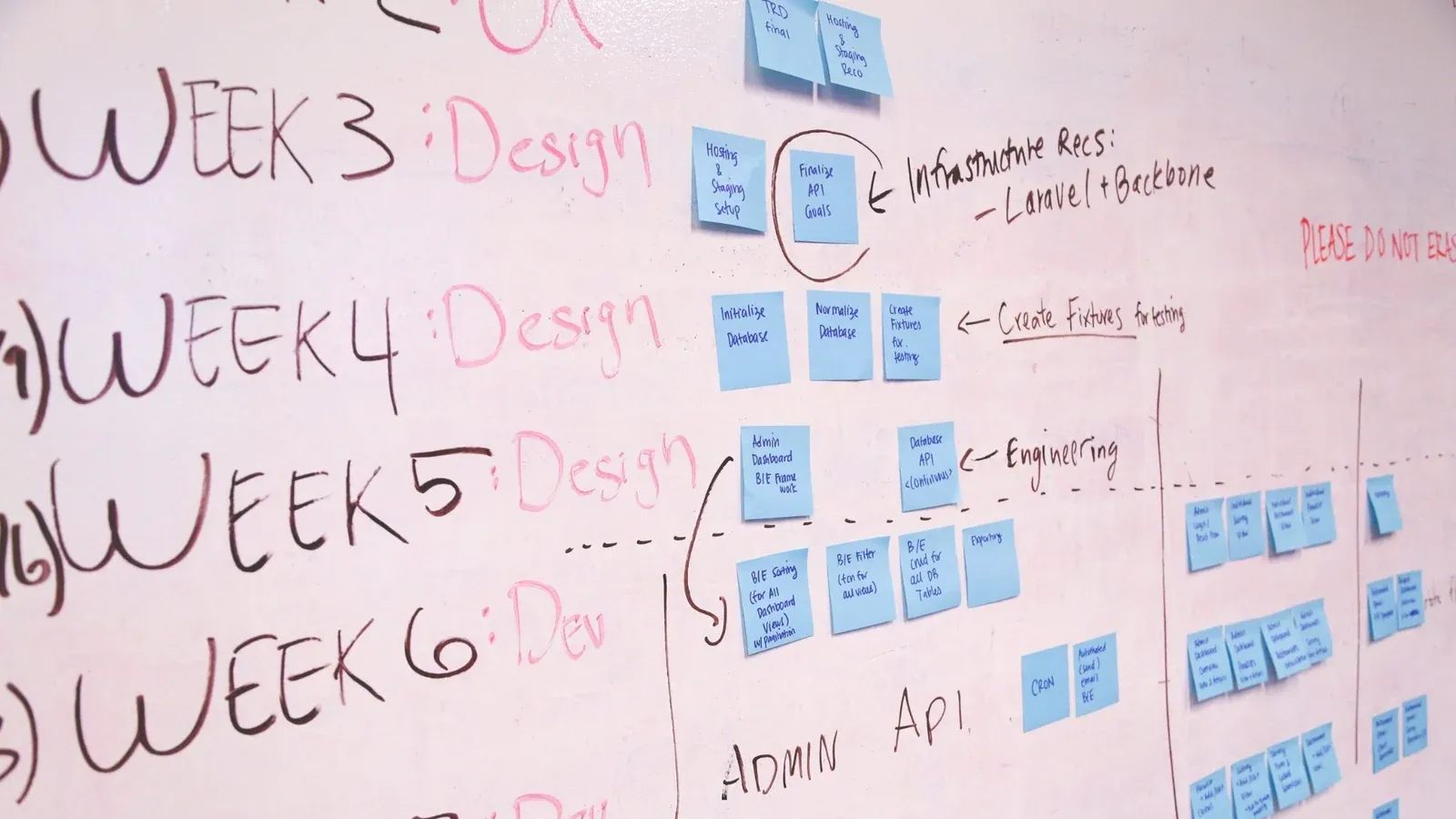
Before you start hiring, you need to define your talent needs. Early-stage startups often have to hire loosely defined positions that wear multiple hats. You need to take the time to clearly map out the skills and qualifications you need from your early hires.

Start by identifying clearly defined key roles. Finding qualified candidates for these critical roles is easier since you know their roles and responsibilities. For more general roles, put skills ahead of job titles. Focus on the capabilities a candidate needs to have to succeed. Finally, keep your upcoming growth in mind and consider how many roles you’ll need to fill to keep your scaling efforts from slowing down.
By setting clear priorities, you can keep recruitment efforts aligned with your business objectives.
| Hiring Practice | Challenge It Solves | Key Benefit |
|---|---|---|
| Define hiring needs early | Vague roles lead to mismatched hires | Keeps recruiting aligned with growth goals |
| Build employer brand | Top candidates vet companies before applying | Attracts mission-aligned candidates without extra spend |
| Use employee referrals | Cold outreach yields low-quality pipelines | Candidates who already know your team and often fit your culture |
| Use an ATS | Manual tracking causes missed candidates and disorganized pipelines | Keeps all candidates in one place from applicant to offer |
| Simplify interviews | Long, multi-round processes lose top candidates | Can reduce time-to-fill and help protect your employer brand |
| Offer competitive compensation | Salary constraints put startups at a disadvantage | Equity, perks, and flexibility can offset pay gaps |
| Focus on diversity and inclusion | Narrow searches limit the talent pool | Broader candidate pipeline and stronger team performance |
| Allow remote work | Office-only roles restrict geographic reach | Access to global talent and lower overhead costs |
| Partner with recruiting experts | Hard-to-fill roles stall when handled solo | Speeds up hiring and takes recruiting work off founders |
Build a Strong Employer Brand
Your employer brand as a startup is your identity and reputation in the talent marketplace. A strong employer brand can help attract top candidates that resonate with your vision and values.

Showcase Your Culture and Values
You can build your employer brand by showcasing your work culture. Talk about your mission, workplace environment and vision for the future in job descriptions and on your website. Also, encourage your team to share their experiences and advocate for your brand online.
Create a Great Candidate Experience
One of the best ways to build a strong employer brand is by creating a great candidate experience. Even if a candidate isn’t hired, they should walk away feeling like their time was respected and valued during the recruitment process.
Use Employee Referrals to Expand Your Talent Pool
Employee referrals are one of the easiest and most effective ways to get high-quality candidates. Your team likely already knows talented individuals, and they can reach out and connect you with them.
Referrals often align with your team culture since they already know your current employees. Employee referral program research suggests referred hires can often stay longer. That said, referrals can also reinforce existing biases within your team, so referred candidates should go through the same structured process as everyone else.
To encourage referrals, make sure you have a structured referral program in place that rewards and incentivizes successful referral placements.
Use an ATS for Efficient Candidate Management
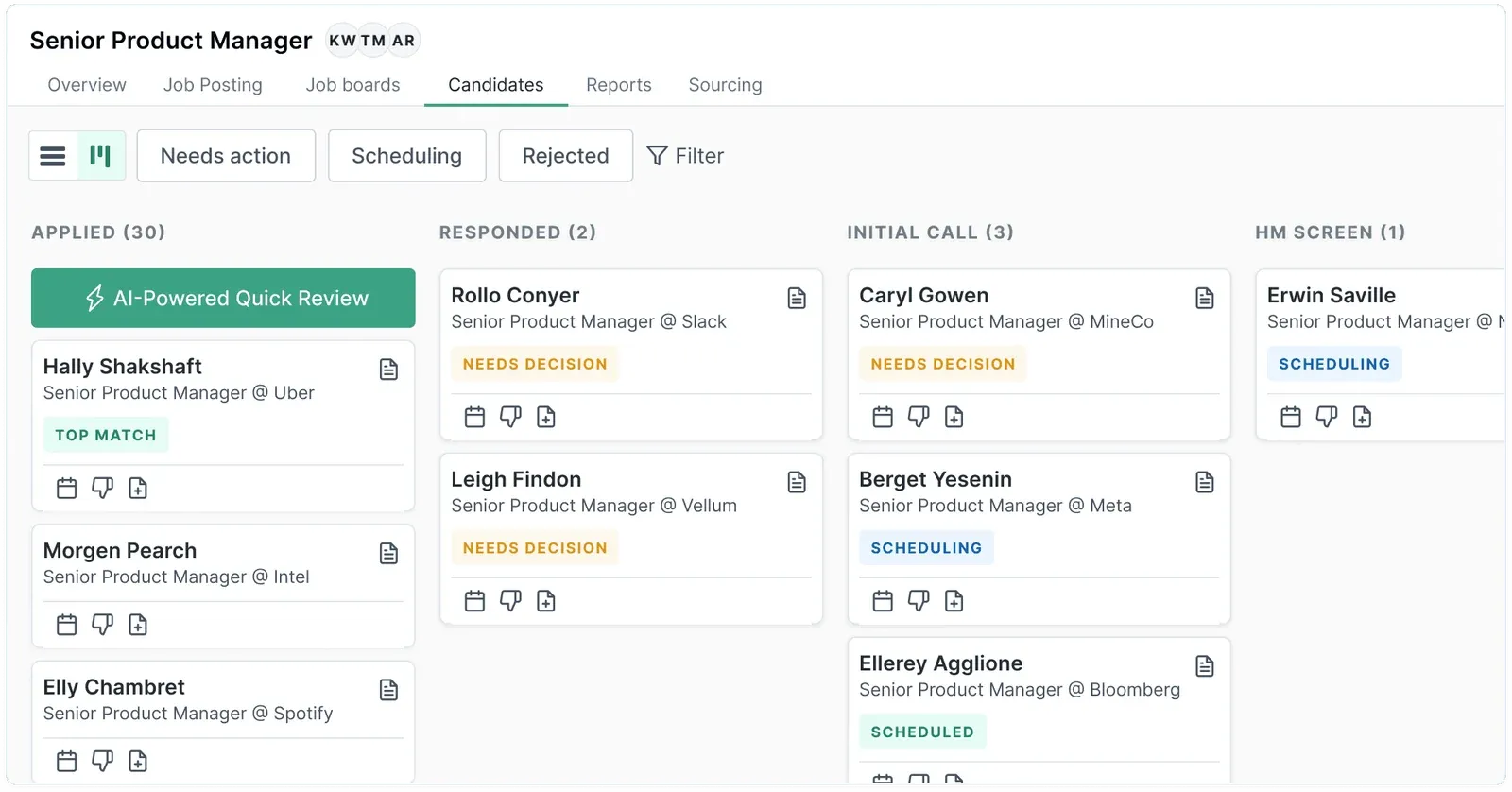
An applicant tracking system (ATS) is a must-have for managing your candidate pipeline. Early-stage startups often struggle with manual processes and keeping hiring organized. This can lead to wasted time and missed opportunities.
With an ATS, you can keep all of your candidates in one place. An ATS allows you to track candidates from applicant to offer, so you don’t let any of them slip through the cracks.
Dover’s ATS starts on a free plan with unlimited jobs, users, and candidates, along with AI-generated job descriptions and job board distribution. A Premium plan at $199/month with no contract adds AI resume review, an AI notetaker, knockout questions, bulk actions, and offer e-signing. AI resume review is a Premium-only feature. It can help rank applicants when paired with clear criteria, and a person still makes the final call.
On the free plan, an ATS covers pipeline organization, job board distribution, and manual review of inbound applicants. AI resume review and knockout questions are Premium-only. That’s the foundation. What it doesn’t handle is outbound sourcing. When a role is hard to fill through inbound alone, or when sourcing is pulling time away from other priorities, fractional recruiters can fill that gap. On Dover, they come from the Marketplace, which is a separate offering from either ATS plan, so you add it only when a search calls for it. Recruiters can work inside Dover’s ATS or in tools you already use, and each carries published founder reviews, so you can assess track record before any search begins.
Simplify Interview Processes to Save Time
In the fast-paced world of early-stage startups, you don’t have time for lengthy recruitment processes. If you have a clunky and slow hiring pipeline, you can lose out on top candidates and waste valuable time for both candidates and the company.
You can implement some best practices to speed up your interviews, such as:
- Limit rounds: Five or six rounds of interviews are overwhelming and unnecessarily time-consuming. Reduce them to two to three rounds, depending on the role.
- Prepare structured questions: Use consistent questions and align hiring stakeholders on the interview process.
- Use technology: Remember how useful we said an ATS can be? Using an ATS can also help simplify interviews, as can other technologies like scheduling tools, video interviews and more.
A well-structured and efficient interview process can also strengthen your employer brand, so it’s a win-win.
Offer Competitive Compensation and Benefits
Early-stage startups may not always be competitive with larger companies on salary. However, equity grants, unlimited PTO, and flexible hours can help attract top talent eager to grow with the company.
You can offer compensation options like equity to make a lower salary more attractive. A compensation package can include perks like flexible work hours, unlimited PTO and remote work.
Finally, you should be transparent during the negotiation process and discuss your budget for the role. While it may be outside their preferred range, growth opportunities and other benefits may be enough to get a top candidate off the fence.
Focus on Diversity and Inclusion in Hiring
Having a team with diverse backgrounds and perspectives can be a huge advantage in the startup space. DEI hiring practices create a richer workplace culture, widen your talent pool and produce a more well-rounded team equipped to help your startup grow and thrive.
To focus on diversity and inclusion, make sure you have inclusive hiring practices built into your hiring process. It’s also helpful to communicate these values by writing inclusive job descriptions that avoid biased language and encourage any and all applicants to apply.
Be sure you also provide training for your hiring team to remove unconscious bias and create a more equitable hiring process.
Consider Remote and Flexible Work Options
We mentioned including remote and flexible work as a perk in your compensation package, but these options have benefits beyond making the job more attractive.

For one, remote work expands your talent pool to anyone around the globe who fits your qualifications. Remote work can also reduce overhead costs by saving you money on office space. Plus, many employees prefer remote work for a better work-life balance, so you increase employee satisfaction for existing team members while also attracting great new hires.
Partner with Industry Experts and Networks
Sometimes, the best hiring strategy is to tap into external expertise. Recruiting experts and industry networks can help your startup quickly find and attract top-tier talent.
Expert recruiters have instant access to specialized talent pools and can quickly put highly qualified candidates in your hiring pipeline. Recruiters can also take a ton of work off your plate, saving you time and helping reduce your time-to-fill.
Dover’s Marketplace is separate from the ATS. The Recruiting Partners network lists 60+ vetted fractional recruiters with 5 to 20 years of experience at leading startups and tech companies, and many have served as Head of Talent. Each carries published reviews from other startups.
Access starts with a 100% refundable deposit that gives you instant entry to the Marketplace. The deposit is applied to your recruiter’s work and refunded if you never work with one. Intro calls are free and unlimited, so you can speak with several recruiters before deciding. From there, you can trial several recruiters at once, double down on the best fit, and pay for hours worked. If a recruiter turns out to be a long-term fit, you can also hire them full-time for a placement fee. Otherwise, you bring one in only when a role needs it.
Dover’s Three Tiers: Free ATS, Premium ATS, and a Recruiter Marketplace
Without the right tools and support, it can be hard to fill startup roles. Dover is built as three separate offerings you can adopt independently, so you add support as your hiring grows instead of buying one bundled product.
Our free ATS is the starting point. It doesn’t expire, and it includes unlimited jobs, users, and candidates, along with applicant tracking, AI-generated job descriptions, customized scheduling links, and distribution to 50+ job boards. The Premium ATS plan, at $199/month with no contract, adds AI resume review and applicant scoring, an AI notetaker, knockout questions, bulk actions, a multi-calendar interview scheduler, and offer management with e-signing once your process needs them.
The Marketplace is a third, separate offering. Our Recruiting Partners network connects you with vetted fractional recruiters who have worked directly with founders at Seed and Series A companies and have published reviews from other startups. You can trial several recruiters at once, double down on the best fit, and switch anytime. Engagements involve no long-term contracts, and recruiters can work in Dover’s ATS or in your existing tools, so you can start free, add Premium, bring in a recruiter, or do any combination as hiring needs change.
FAQs
What is the best free ATS for an early-stage startup in 2026?
A free ATS is only useful if its limits don’t appear during your first hires. Check whether the plan expires or caps jobs, users, or candidates, and which features you’ll need, such as AI screening, scheduling, or offer management, sit behind a paid tier. Many paid ATS options are sold on annual contracts or priced by company size, so a free plan with no caps is a different starting point. Dover’s free ATS includes unlimited jobs, users, and candidates and doesn’t expire. AI resume review, knockout questions, and offer e-signing are Premium-only, at $199/month with no contract.
What hiring tools do Y Combinator startups use?
There is no single standard stack, but early-stage teams, including YC companies, commonly assemble the same layers: an ATS that keeps the pipeline in one place, a CRM or sourcing tool for outbound outreach, job board distribution, and optional recruiter support for roles that inbound applicants don’t fill. Dover came out of Y Combinator’s Summer 2019 batch, and Y Combinator startups have used it, pairing a free ATS with a separate Marketplace of fractional recruiters. Recruiters can also work in tools a team already uses, such as Ashby, Greenhouse, or Lever.
What is the best recruiting solution for a startup without a full-time recruiter?
The right fit depends on annual hiring volume. Founders hiring a handful of roles a year can often run a free ATS and referrals on their own. Fractional recruiting tends to fit companies hiring roughly 5 to 50 roles per year, and a first full-time recruiter usually makes sense around 15 to 20 hires annually. A free ATS with a built-in CRM and email campaigns covers pipeline tracking and outbound outreach, while a Marketplace recruiter adds sourcing capacity for specific searches, billed for hours worked with no long-term contract. Costs vary by recruiter and role complexity.
Final Thoughts on Hiring Practices for Early-Stage Startups
Getting your hiring practices right at the early stage comes down to putting the right structure in place before you urgently need it: clear role definitions, a consistent interview process, and a system that keeps your pipeline organized from the first application to the final offer. Dover is built for that context as three separate tiers: a free ATS that handles pipeline tracking and job board distribution from day one, a Premium ATS plan for teams that want AI resume review and more automation, and a Marketplace of fractional recruiters for roles that are hard to fill through inbound alone. Whether you’re hiring your first five people or scaling into your second year, adding each layer only when the need appears tends to fit changing hiring volume better than committing to everything up front.