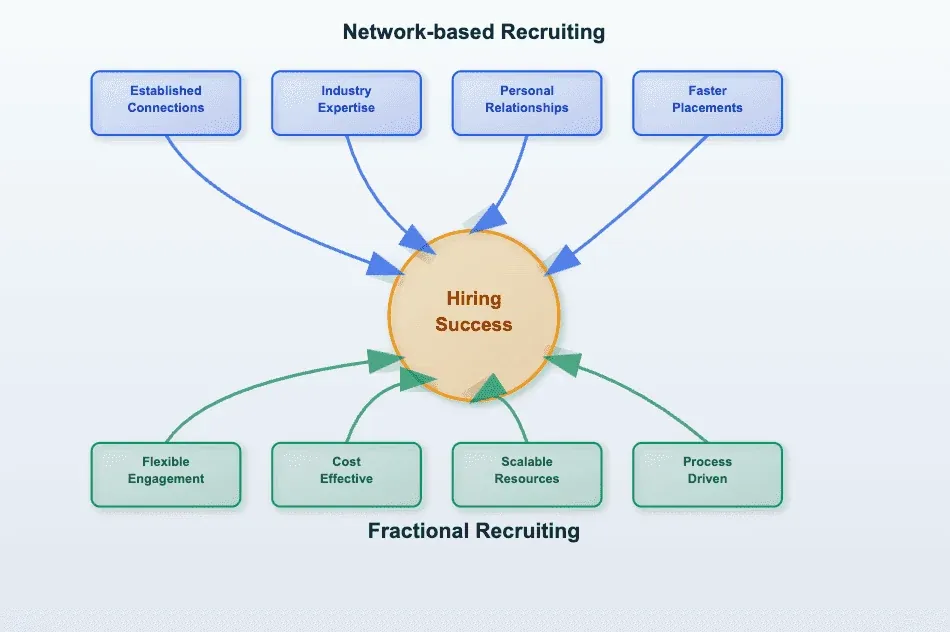

Choosing the wrong recruiting partner can cost a startup time and money it cannot spare. SHRM’s 2026 Talent Trends report found that 68% of surveyed HR professionals had difficulty recruiting full-time employees, with skills mismatches and compensation and benefits gaps among the drivers. That research is not a startup-failure study, but it offers useful context for judging how a recruiter will handle your search.
TLDR:
-
Placement-based fees can push speed over fit for a startup.
-
Watch for weak industry knowledge, high-pressure tactics, hidden fees, and rigid contracts.
-
A poor hire can cost lost productivity and team disruption instead of a quick win.
-
Fractional recruiters can offer flexible, cost-effective support when scope and budget align.
-
Recruiter marketplaces can connect startups with vetted recruiters who specialize in startup hiring.
Why Startup Recruiting Needs a Different Approach
Startup hiring needs shift fast, and a few factors set it apart from typical recruiting.
Volatility: Hiring can swing from a fast pace to a freeze within a month, so fixed recruiting commitments can be hard to adjust.
Budget: Large placement fees across multiple roles can strain a startup’s budget, making a fee structure that fits available cash a priority.
Cultural fit: A poor fit disrupts a small team quickly, so clear screening criteria help a recruiter assess candidates against company values.
Startup Mindset: Candidates need to thrive in chaos and build from scratch, so asking how a recruiter screens for these traits matters.
This is exactly why we built Dover’s fractional recruiting model just for startups.
The 12 Startup Recruiter Red Flags You Can’t Ignore

Red Flag #1: They Don’t Understand Your Industry or Product
If your recruiter can’t explain what your company does in their own words after your first conversation, run. A good recruiter asks about your tech stack, market, and growth challenges, and understands what skills you need and why. Limited industry knowledge can lead to mismatched candidates and make it harder to reach top talent. Dover’s recruiter marketplace lets you see each recruiter’s industry expertise and track record before you start working together.
Red Flag #2: Excessive Focus on Speed Over Quality
“We’ll have 20 resumes for you by tomorrow!”
Resume volume alone says little about candidate fit. Placement-based fees can favor speed over screening quality, and without clear standards, more screening work may fall to your team. Good recruiters spend time understanding your needs and carefully screening candidates before presenting them. With hourly fractional recruiting, covered in our fractional recruiting employer’s guide, recruiters are paid for time and knowledge rather than placements alone, which can support closer alignment when scope and screening criteria are agreed upfront.
Red Flag #3: Vague Communication and Lack of Transparency
Watch for phrases like these:
-
“Our fees are competitive” (no numbers given)
-
“We’ll discuss pricing later.”
-
“Trust us, we’ve done this before” (no specifics)
-
“We need a small upfront investment” (no guarantees)
Recruiters should be clear about fees, process, timeline, and what happens if a search doesn’t work out. Unclear answers can make it harder to agree on expectations before the search begins.
Dover provides clear pricing upfront. You know exactly what you’re paying per hour, and you can see metrics for every recruiter in our recruiter marketplace.
Red Flag #4: One-Size-Fits-All Approach
An enterprise hiring process may not fit a small startup, and candidates suited to larger companies may not match a startup’s pace or role needs. Early-stage startups need different candidate profiles than Series B companies, and your recruiter should understand this.
Dover’s fractional recruiters tailor their approach to your stage, culture, and role needs.
Red Flag #5: High-Pressure Sales Tactics
High-pressure tactics make it harder to judge a candidate or contract fairly. A recruiter should explain a real deadline without asking you to skip agreed checks.
-
“This candidate has other offers; decide today!”
-
“Sign our exclusive agreement or we can’t focus on your search.”
-
“This is the best candidate you’ll find for this role.”
Good recruiters act as consultative partners, offering candid feedback and respecting your timeline. Dover’s flexible terms let you scale up or down as needs change.
Red Flag #6: Lack of Startup Experience
Startup recruiting calls for knowledge of equity compensation, remote work, and fast-paced hiring. Enterprise experience alone may not cover these needs, so ask about a recruiter’s background with similar roles and company stages.
Red Flag #7: Unprofessional Behavior and Poor Organization
Basic professionalism matters:
-
Late to or missing meetings
-
Sloppy written communication
-
Forgetting basic details about your company or role
-
Unclear next steps or little preparation
Dover vets recruiters for professionalism and tracks their record across the marketplace.
Red Flag #8: Misaligned Incentives and Hidden Fees
Contingency agencies charge a fee when a candidate is hired, often a percentage of first-year salary. A placement-based fee can reward speed over fit, so it helps to agree on candidate criteria upfront and clarify whether background checks, reference calls, or rush searches cost extra.
| Traditional Agency | Dover Fractional |
|---|---|
| $30,000 at a 20% fee on a $150,000 salary | $4,800 average cost per hire; varies by role |
| Paid on placement | Hourly; retainer and pay-per-hire also available |
| Fees can favor speed | Pays for time worked, independent of salary |
| Included services vary by agreement | Scope, rates, and budget agreed upfront |
Red Flag #9: Poor Candidate Screening and Assessment
Interviewing candidates who do not meet agreed requirements wastes time, and screening based on job titles alone can miss gaps in skills or experience. The U.S. Office of Personnel Management’s structured interview guidance describes using the same predetermined questions and rating standards across candidates, a useful reference when asking recruiters how they assess job-related skills. Quality screening should include:
-
Technical skills review appropriate to the role
-
Cultural fit evaluation based on your company values
-
Reference checks and background verification
-
Compensation expectations set
Dover’s fractional recruiters can use AI-assisted tools to support screening, with human judgment needed to check candidates against the role’s criteria.
“Dover makes my life as a founder much easier. Being able to outsource initial screenings (which take SO much time) is amazing. Plus, getting inbound automatically is huge. So far, we’ve hired two great people with Dover’s help!”
Matt Shumer, CEO/Founder of OthersideAI
Red Flag #10: Limited Network and Sourcing Capabilities
Relying only on job boards and an existing database can limit a search when strong candidates are not actively looking. Ask potential recruiters about their sourcing methods:
-
Do they use LinkedIn and other professional networks well?
-
Can they tap into passive candidate pools?
-
Do they use modern sourcing tools and techniques?
Dover provides integrated sourcing tools, and our recruiters have worked directly with founders at Seed or Series A companies.
Red Flag #11: Inflexible Contract Terms and Long-Term Lock-ins
Startup hiring needs change fast. Exclusive agreements or long-term commitments can limit your options if plans shift.
⚠️ Watch out for:
-
Agreements that prevent you from using other recruiting sources
-
Long-term contracts with penalties for early termination
-
Requirements to commit to a minimum number of hires
Red Flag #12: No Track Record or References
A recruiter worth working with should offer references from recent startup clients, examples of roles filled, and data on success rates and time-to-fill. Be wary of anyone evasive about past work.
Dover’s recruiter marketplace provides performance data for each and every recruiter.
October 2026 Update: Ask Who Oversees AI Screening
Illinois’ AI hiring law took effect on January 1, 2026. As Seyfarth’s June 2026 legal update explains, the law bars discriminatory AI use in covered hiring decisions and requires notice of that use. The state’s Department of Human Rights temporarily withdrew its proposed notice rules in June, so the details of compliant notice remain unsettled.
A useful question for founders choosing a recruiter: who reviews candidates an AI tool screens out? A recruiter unable to explain which tools shape the shortlist or who handles candidate notices leaves a gap worth flagging. Requirements vary by jurisdiction, so legal counsel can confirm which obligations apply to your search.
Why Fractional Recruiting Is the Smart Alternative
Hourly fractional recruiting offers flexibility and control over hours worked, while contingency agencies may suit teams that prefer a fee tied to a completed hire. Neither model guarantees candidate quality.
Fractional recruiters often work best when they share one ATS with your hiring team. A shared pipeline gives both sides a live view of candidate stages and keeps candidate records in your own system for later searches. Dover’s model pairs a free ATS with on-demand fractional recruiters in one shared system, which is one concrete way to set this up.
How Dover Helps Reduce Recruiting Risks
Dover’s approach can help reduce these risks when the recruiter’s experience, scope, and budget match your search:
-
Marketplace Expertise: Choose vetted recruiters by industry track record and sourcing reach.
-
Hourly Model: Pay for time and screening quality, not merely placements.
-
Transparent Communication: Agree on reporting cadence and pricing before the search starts.
-
Flexible Terms: Pause or scale support with no long-term lock-in, though agreed fees for work performed still apply.
-
Vetted Startup-Experienced Recruiters: Every recruiter understands startup stages and tailors their approach accordingly.
-
Performance Data: Review track records and metrics for every recruiter upfront.
FAQs
What should I ask a recruiter’s client references?
Ask whether the recruiter worked on similar roles at a similar stage, how closely candidates matched agreed criteria, and how setbacks were handled. Questions about unexpected charges and repeat business reveal more than a placement count.
How can I tell a real candidate deadline from a pressure tactic?
Ask what is driving the deadline and what the candidate has agreed to share. Genuine urgency gets explained; your recruiter should never push you to skip interviews or reference checks because of it.
What should a short recruiter trial include?
A useful trial has a written scope, an agreed budget, clear candidate criteria, and a review date. Outreach quality, screening notes, and responsiveness to feedback matter more than a completed hire within the window.
How do I know whether the recruiter or the role requirements are slowing the search?
Review where candidates leave the pipeline and why. Repeated mismatches with agreed criteria point to sourcing or screening problems; declines over compensation or scope point to issues in the offer itself.
What should I clarify about candidate data before switching recruiters?
Confirm who keeps candidate records, sourcing notes, and outreach history when the engagement ends. Agree on a handover plan for active candidates and check for fees tied to prior introductions.
Final Thoughts on Choosing a Startup Recruiter and Spotting Red Flags Early
Choosing a recruiting partner is rarely about finding a perfect option. It is about weighing how a recruiting partner’s incentives, experience, communication, and contract terms fit a search that may change shape within months. The red flags above, from vague pricing to unclear oversight of AI screening, work less as a pass or fail checklist and more as prompts for better questions before a search begins. Dover shows one way this can work: a free ATS paired with on-demand fractional recruiters, hourly pricing as the core model (with retainer and pay-per-hire options), and no long-term contracts. Contingency agencies, in-house hires, and other fractional models each suit different stages and budgets, so the right fit depends on how many roles you are hiring for and how much flexibility your team needs.