

You’ve likely spent weeks scrolling through freelance sites trying to hire Android developers, only to find yourself overwhelmed by hundreds of profiles with wildly different skill levels and price points. With Android widely estimated to hold roughly 70% of the global mobile market, finding the right developer who can actually deliver exceptional mobile experiences matters a great deal.
Startup recruiters help you find an Android developer who brings expertise beyond just Java or Kotlin. They identify developers who understand your specific needs, can work within your timeline, and won’t disappear halfway through your project. Here’s how to hire an Android developer who is a strong fit for your team.
TLDR:
-
Android developer rates vary by experience, location, and engagement model, and Kotlin and Jetpack Compose skills often command premium rates.
-
Practical coding challenges usually reveal real-world mobile development skills better than algorithmic tests do.
-
Remote talent and fractional hiring models can give you access to strong developers at meaningfully lower costs than local full-time hires.
-
Rushing technical hiring puts your mobile roadmap and team at risk, so careful vetting of Android developers pays off.
-
Some providers pair free ATS software with on-demand fractional recruiters, which can help startups fill Android developer roles faster than going it alone.
Key Android Developer Skills for 2026
Basic Java knowledge used to be enough to build a competitive Android app, but that’s no longer the case. Modern Android work spans core programming languages, UI frameworks, architectural patterns, data storage, and performance optimization. The five areas below are what to screen for when you hire an Android developer.
Core Programming Languages
Kotlin has become the preferred language for Android development, offering cleaner syntax and better null safety than traditional Java. Google has taken a Kotlin-first approach to Android development. While Java remains relevant for legacy codebases, most startups focus on Kotlin. Your ideal candidate should show fluency in both languages and understand when to use each.
Modern Frameworks
Jetpack Compose represents the future of Android UI development. This declarative framework simplifies UI creation and reduces boilerplate code. Developers who can migrate from XML-based layouts to Compose can save your team considerable time and create more maintainable codebases.
Architectural Patterns
Strong Android developers understand MVVM (Model-View-ViewModel), MVP (Model-View-Presenter), and MVC (Model-View-Controller) patterns. These architectural approaches create scalable, testable code that won’t become a maintenance nightmare as your app grows.
Database and Storage
Room database, SQLite, and cloud storage integration are fundamental skills. Your developer should understand local data persistence, synchronization strategies, and offline-first app design principles.
Performance Optimization
With users expecting lightning-fast apps, performance optimization skills are important. Look for experience with Baseline Profiles, memory management, and app startup optimization techniques.
When reviewing resumes, pay attention to candidates who mention specific performance improvements they’ve achieved. Numbers matter here.
Understanding Android Developer Salary Expectations
Budget planning for Android developer hiring requires understanding current market rates across different engagement models and experience levels.

Freelance Developer Rates
Freelance Android developer rates vary widely depending on experience, specialization, and location. Strong demand for skilled mobile developers keeps rates competitive across the market.
Geographic Variations
Location greatly impacts salary expectations. Rates tend to be highest in major US tech hubs like the San Francisco Bay Area and New York. Latin American developers often offer strong value with useful US time zone overlap, while Eastern Europe and South and Southeast Asia also have large Android talent pools at varied rates. Actual rates vary by experience, role, and engagement model.
Experience Level Breakdown
As a startup founder, choosing the right developer really depends on your goals. If you need to ship fast, a junior or mid-level developer might be enough. But if you’re building for long-term scalability, a senior developer who writes clean, maintainable code can often deliver better long-term value, since less experienced developers without enough review and guidance may introduce technical debt.
Rates and salaries typically rise with experience and specialization. Senior developers with deep Kotlin, Jetpack Compose, and architecture experience tend to sit at the top of the market, while junior and mid-level developers usually cost less but may need more guidance and code review.
For startups considering compensation strategies, remember that equity can be a powerful tool for attracting top talent when cash budgets are tight.
Different Hiring Models for Android Developers
Choosing the right engagement model depends on your project scope, timeline, and long-term mobile strategy. The same principles apply across engineering roles, as covered in this broader engineering hiring guide.
Full-Time Employees
Full-time hiring makes sense when you’re building a core mobile product that requires ongoing development and maintenance, since full-time developers understand your business context better than external contractors.
The downside is higher costs, longer hiring timelines, and the challenge of keeping developers engaged during slower periods. You’ll also need to provide benefits, equipment, and professional development opportunities.
Contract Developers
Contract developers offer flexibility for specific projects or temporary team augmentation. They typically cost more per hour than full-time employees but eliminate benefits overhead and long-term commitments.
This model works well for startups with defined project scopes, tight deadlines, or seasonal development needs. However, knowledge transfer can be challenging when contracts end.
Freelance Developers
Freelancers provide maximum flexibility and access to specialized skills. They’re ideal for proof-of-concept development, specific feature implementation, or when you need expertise your team lacks.
The challenge lies in finding reliable freelancers who communicate well and deliver quality work consistently. Sites like Upwork and Fiverr offer large talent pools but require careful vetting.
Development Agencies
Agencies provide complete teams with proven processes and quality assurance. They’re excellent for startups that need to move fast without building internal development skills.
Agency partnerships work best when you have clear requirements and prefer hands-off project management. The trade-off is higher costs and less direct control over individual team members.
Just like fractional recruiting offers specialized expertise without full-time overhead, fractional development teams can provide similar benefits for technical projects.
Android developer hiring models compared
| Hiring Model | Best For | Cost Structure | Main Trade-off |
|---|---|---|---|
| Full-time employee | Core mobile products needing ongoing development | Higher fixed cost with benefits and equipment overhead | Longer hiring timelines and harder to scale down |
| Contract developer | Defined projects or temporary team augmentation | Higher hourly cost than full-time pay but no benefits overhead | Knowledge transfer can be difficult when contracts end |
| Freelance developer | Proof-of-concept work or specific feature builds | Variable rates depending on skill and project scope | Reliability and communication quality vary widely |
| Development agency | Startups needing a full team without in-house development skills | Premium pricing for bundled teams and processes | Less direct control over individual team members |
| Fractional recruiter-led hire | Startups wanting expert screening without a full-time recruiter | Pay scales with recruiting support actually used | Still requires internal involvement in final hiring decisions |
Common Hiring Mistakes to Avoid
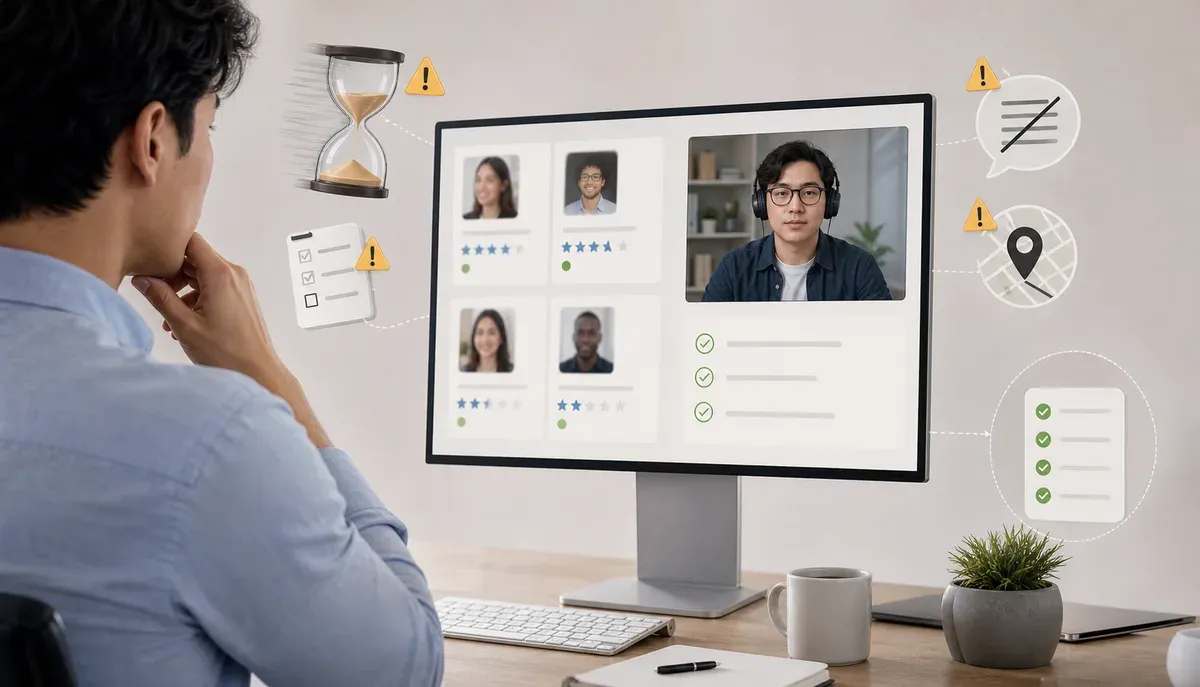
Research shows that 23% of startups fail due to team-related issues. Investing time in proper hiring prevents much larger problems down the road. Learning from these mistakes can save your startup time, money, and frustration.
-
Rushing the Hiring Process: Taking shortcuts on screening or skipping reference checks often results in costly hiring mistakes that set back your launch timeline.
-
Overemphasizing Technical Skills: Developers who can’t communicate effectively or adapt to changing requirements will struggle in startup environments.
-
Ignoring Mobile UX Knowledge: Great mobile developers understand user experience principles, Android-specific design patterns, and the implications of their decisions.
-
Underestimating Onboarding Needs: Developers need time to understand your codebase, business logic, and team. Reduced productivity often lasts a few weeks while they get up to speed.
-
Focusing Only on Local Talent: Limiting your search to local candidates really reduces your options and often increases costs unnecessarily. Consider hiring remote and international employees to widen your candidate pool.
Another big founder hiring mistake is trying to handle complex technical hiring without the right expertise or tools. Without someone who can assess mobile skills, strong candidates can slip through while weaker ones advance, which often slows the search.
How Dover Makes Android Developer Hiring Easier

Android hiring takes more than posting a job and waiting for applicants. Dover pairs a free ATS, with unlimited jobs, users, and candidates plus a built-in CRM, with a marketplace of fractional recruiters. Job posts go out to 50+ job boards, including Indeed, and verified, venture-backed startups can also post for free to Dover Startup Jobs, where applications flow straight into the ATS. A free Chrome extension supports outreach to candidates on LinkedIn.
On the Premium plan ($199/month), AI resume review can score applicants against criteria a team sets itself, such as Kotlin experience, Jetpack Compose familiarity, and mobile architecture knowledge, to help prioritize which resumes get a closer look. The team still makes the final calls on who moves forward. Reporting dashboards show pipeline and source data so progress can be tracked over time. Dover also offers an Enterprise plan, so the ATS can scale as the business grows.
Dover’s fractional recruiters have 5 to 20 years of experience at startups and tech companies and have worked directly with Seed or Series A founders, so they can source and screen mobile candidates on a flexible basis. Traditional agencies typically charge 15 to 25% of first-year salary, with some reaching up to 30%. Dover recruiters work hourly, on retainer, or per hire, and hourly cost is tied to the work done instead of the candidate’s salary. A 100% refundable deposit gives access to the marketplace, intro calls are free and unlimited, and there are no long-term contracts. Every hire’s all-in cost is published in a public cost-per-hire table.
FAQs
How do I assess an Android developer’s technical skills effectively?
Focus on practical coding challenges that reflect real work scenarios like API integration, local data storage, and clean UI implementation instead of complex algorithms. Look at their portfolio for published Play Store apps, check code quality, and ask about handling complex challenges.
When should I consider using a specialized recruiter for Android developer hiring?
Consider specialized technical recruiters when you lack mobile development expertise to properly screen candidates, need to fill senior roles quickly, or want access to passive candidates not actively job searching. Fractional recruiters often bill hourly or on retainer, so cost is tied to the work done instead of the percentage-of-salary fees that traditional agencies commonly charge, typically 15 to 25% of first-year salary.
What are the most important Android development skills to focus on in 2026?
Focus on Kotlin proficiency over Java, Jetpack Compose for modern UI development, and MVVM/MVP architectural patterns for scalable code. Also look for experience with Room database, performance optimization techniques, and understanding of Material Design principles for polished user experiences.
How can co-founders make Android hiring decisions less gut-feel?
Agree on the must-have skills before interviews start, then score every candidate against the same shared checklist. Have each interviewer rate the candidate on their own before the group talks it through, and compare notes using evidence from the same practical coding exercise so the discussion stays grounded in what each person actually saw.
How do you measure whether an external recruiter is performing?
Track how many submitted candidates pass your technical screen, along with interview-to-offer conversion, offer acceptance, time to fill, and how long hires stick around after joining. Review these numbers with the recruiter on a regular basis so both sides can spot patterns early and adjust the search.
Final Thoughts on Hiring Expert Android Developers
Finding the right Android developer doesn’t have to mean endless scrolling through profiles or settling for mediocre talent. Knowing how to hire an Android developer who can actually deliver comes down to practical screening methods, realistic budget planning, and choosing an engagement model that fits your timeline and team. Dover’s model is one example of this approach: a free ATS paired with fractional recruiters, with no long-term contracts.