

Your ATS keeps your hiring organized, but it doesn’t do the recruiting for you. You’re still the one sourcing candidates, writing messages, and chasing down referrals. Some ATS platforms with recruiters now give you both the software and access to experienced recruiting help when you need it. Use the tools yourself when you can, and bring in a recruiter when you’re slammed or need to move faster on a role.
TLDR:
-
Most ATS platforms only give you software; integrated recruiter access lets you tap into human recruiting help without signing separate agency contracts.
-
Some modern tools combine a free ATS with vetted fractional recruiters you pay hourly (low thousands per hire vs. 15-25% agency fees).
-
Dedicated recruiter models often deliver better outcomes than contingency marketplaces where multiple recruiters compete on the same role.
-
Some tools serve as the foundational hiring platform that fractional recruiting agencies are built on, with vetted recruiters carrying real, verifiable reviews rather than competing anonymously in a contingency pool.
-
Some optimized solutions offer an unlimited free ATS with 100+ job board posting and on-demand recruiter support, with AI screening on a paid tier.
Why ATS + Recruiter Access Matters in 2026
Hiring budget pressure that built through 2025 has carried into 2026, with companies continuing to face slower growth cycles and a push to do more with leaner teams. That shift changed how companies approach recruiting: fewer full-time recruiters on staff, more scrutiny on agency fees, and a growing preference for flexible, on-demand support. ATS platforms that also offer access to recruiters fit that moment well. You keep control of your pipeline, pay only for the recruiting help you actually use, and avoid locking into agency retainers or long-term contracts when hiring needs are unpredictable.
When Software Alone Isn’t Enough
An ATS keeps your pipeline organized and handles the mechanical work of posting jobs, screening applications, and scheduling interviews. But when a role is senior, highly specialized, or the internal team simply has no bandwidth to source actively, the software layer can’t close that gap on its own. At that point, layering in a fractional recruiter on top of the ATS is a practical option: the recruiter handles sourcing and candidate qualification while the internal team retains full pipeline visibility in the same shared system. The software and the human support address different parts of the problem, and deciding when to add the second layer comes down to role complexity and available bandwidth.
What Is an ATS with Built-in Recruiter Access?
Most applicant tracking systems give you software to manage candidates. You post jobs, track applications, and organize interviews. But you’re still doing all the recruiting work yourself.
An ATS with built-in recruiter access combines that software with a network of human recruiters you can tap into when needed. You get both the tools and the talent in one place.
The difference matters when you’re stretched thin. Traditional ATS tools help you stay organized, but they don’t source candidates for you or handle the time-consuming parts of recruiting. Systems with integrated recruiter access let you bring in experienced recruiting help without signing a contract with an external agency.
This gives you flexibility. Use the software when you can handle recruiting yourself, and pull in recruiter support when you need to fill roles faster or lack the bandwidth to source actively.
How We Ranked These Solutions
We assessed these solutions on access to quality recruiters, cost predictability, and how well the software and services work together.
-
Recruiter Engagement Model: Dedicated models connect you with one recruiter who learns your company and works your roles exclusively, typically producing better candidate quality and less duplicated outreach than shared or contingency models.
-
Pricing Transparency: Hourly models give you more control over recruiting costs, while contingency fees (usually 15-25% of first-year salary) can add up quickly. The ATS market is growing as companies seek more cost-effective solutions.
-
Performance Visibility: Metrics like candidates sourced and time-to-hire help you decide which recruiters to use and where to focus resources.
-
ATS Functionality: Some solutions bundle everything at no cost; others charge per user or per job posting.
| Tool | Starting Price | Free Tier | Best For |
|---|---|---|---|
| Dover | Free ATS, $199/mo Premium; recruiters set their own rates | Yes, unlimited jobs and users | Startups and growing teams that want a free ATS with on-demand recruiter access |
| Paraform | Listing fee + success fee (varies) | No | Companies comfortable coordinating multiple competing recruiters on the same role |
| SmartRecruiters | Enterprise subscription (custom pricing) | No | Large enterprises needing a full ATS with access to an agency marketplace |
| Greenhouse | Enterprise subscription (custom pricing) | No | Companies with dedicated recruiting teams that manage pre-contracted external agencies |
| Workable | $299/month | No (trial only) | Mid-sized businesses running in-house recruiting with job board distribution |
| Lever | Custom pricing (mid-market+) | No | In-house talent acquisition teams building long-term candidate pipelines |
Dover
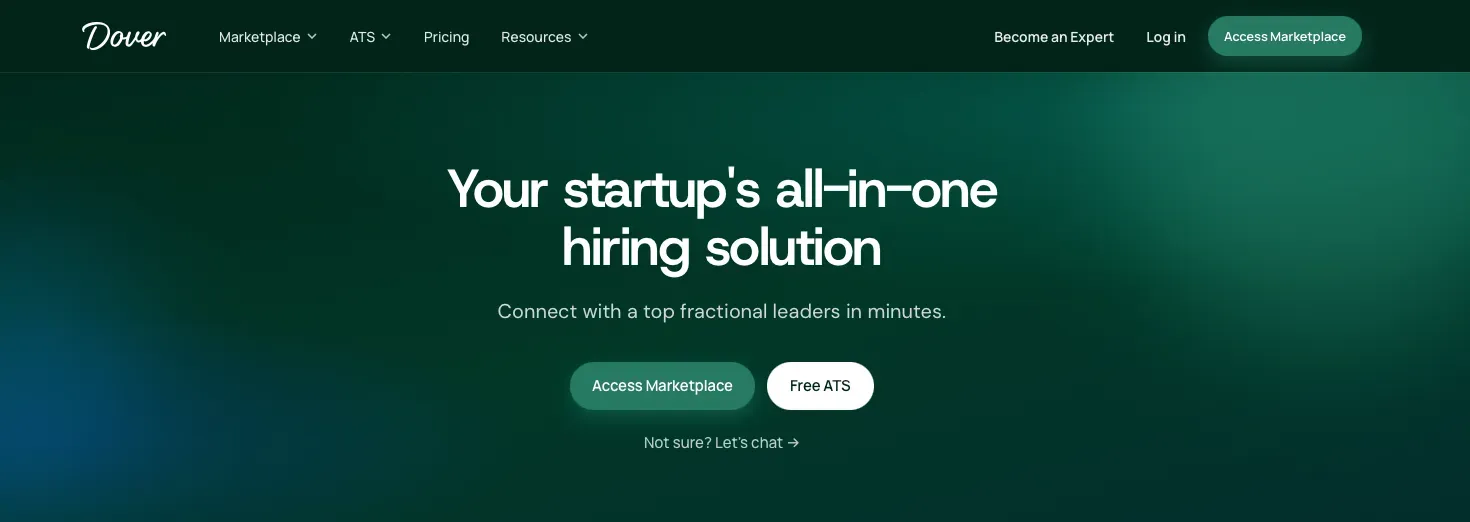
Dover offers a free ATS with optional access to vetted fractional recruiters. The free tier covers candidate tracking, a careers page, interview plans and feedback forms, posting to 100+ job boards, and LinkedIn sourcing via a Chrome extension, with unlimited users and jobs. A $199/month Premium plan adds AI applicant scoring, AI note taking, advanced scheduling, and bulk actions.
What Dover Offers
-
Free ATS with unlimited jobs and users
-
Candidate tracking, careers page, interview plans, and feedback forms on the free tier
-
One-click posting to 100+ job boards plus LinkedIn sourcing via Chrome extension
-
AI applicant scoring and AI note taking on the $199/month Premium plan
-
Optional access to a dedicated, vetted recruiter through an agency management dashboard
Dover is the infrastructure layer that fractional recruiting agencies are built on. Every recruiter in the network carries real, verifiable reviews from past hiring engagements, visible before you commit, so you can check individual track records on specific role types and company stages instead of relying on an agency’s reputation alone.
Good for: Early-stage and growing teams that want a modern ATS with on-demand recruiting help, without agency fees or retainers.
Limitation: The model focuses on depth over breadth. Companies that want dozens of competing recruiters on the same role simultaneously may find it less suited to ultra-high-volume sourcing, though you can work with multiple recruiters through Dover at once.
Bottom line: A free, startup-friendly ATS with optional, transparent recruiting support. It is built for consistency and cost predictability instead of volume.
Paraform
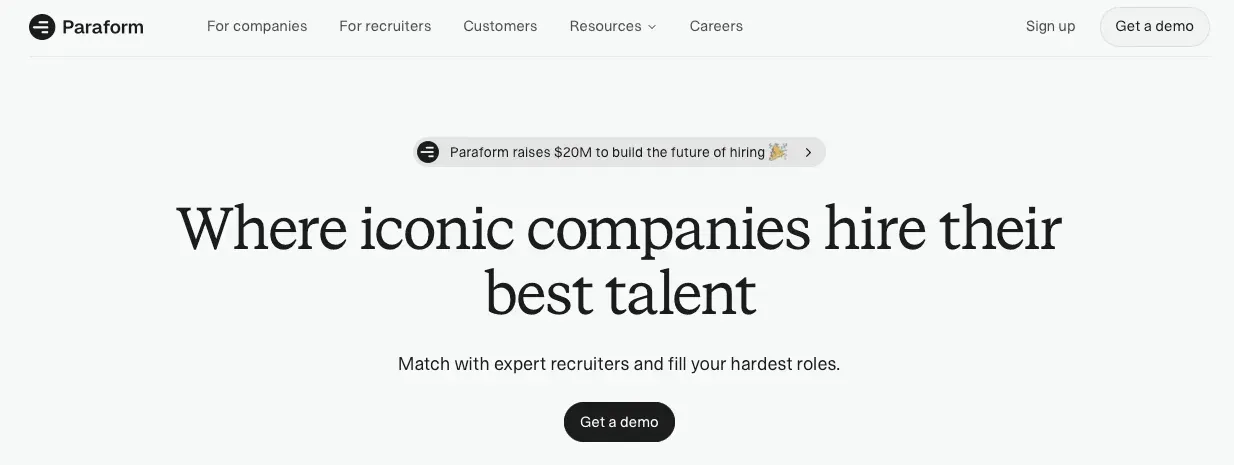
Paraform is a bounty-based recruiter marketplace where companies post roles publicly and independent recruiters compete to submit candidates for placement fees.
What They Offer
-
Recruiter marketplace connecting companies with independent sourcers
-
Candidate CRM tracking submission status and pipeline for agency referrals
-
Upfront listing fees plus success fees when hiring through the network
-
Chrome extension and sourcing tools for recruiters on posted jobs
Good for: Companies comfortable coordinating multiple recruiters on the same role and managing potentially overlapping candidate outreach.
Limitation: Multiple recruiters often reach the same candidates with different messaging. When several recruiters contact one candidate with conflicting details on requirements or pay, the candidate experience suffers and you lose control over how your company is presented.
Bottom line: Paraform is a contingency marketplace, not a fractional recruiting agency. Companies don’t get dedicated recruiter engagement, shared ATS infrastructure, or verifiable performance reviews tied to individual recruiters. A broad network is the trade-off for accepting coordination challenges when competing recruiters work the same opening without unified messaging.
SmartRecruiters
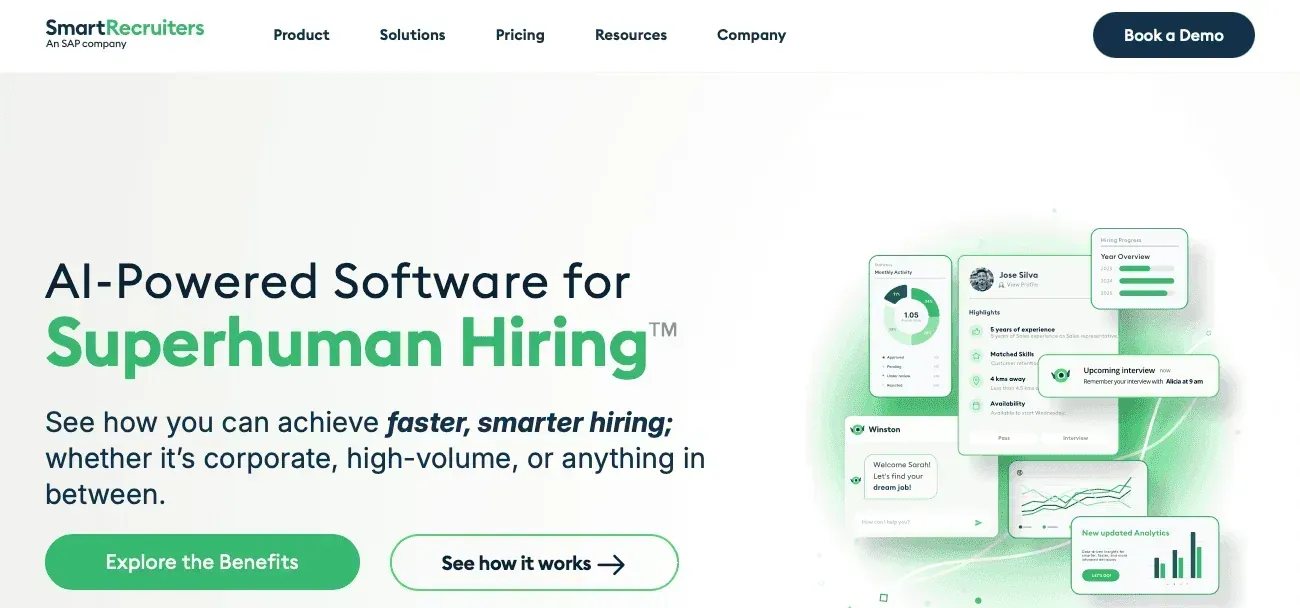
SmartRecruiters is an enterprise ATS that includes a marketplace connecting companies with recruitment service providers and tech partners.
What They Offer
-
Enterprise ATS with recruitment marketing and collaborative hiring features
-
Marketplace hosting 600+ tech partners and recruitment service providers
-
Agency management portal for contracting and managing external recruiters
-
Job posting distribution and candidate tracking
Good for: Large enterprises with existing recruiting budgets that need an ATS and want the option to occasionally contract with external agencies through a managed marketplace.
Limitation: SmartRecruiters requires purchasing the core ATS subscription before accessing any recruiter marketplace features. You pay ongoing software fees whether you use recruiting services or not. The marketplace functions as an agency directory where you still negotiate terms, manage contracts, and coordinate with recruiters separately.
Bottom line: SmartRecruiters is best for large enterprises that want an effective ATS with optional access to agencies, but it doesn’t offer integrated, on-demand recruiting support and still requires a considerable software investment.
Greenhouse
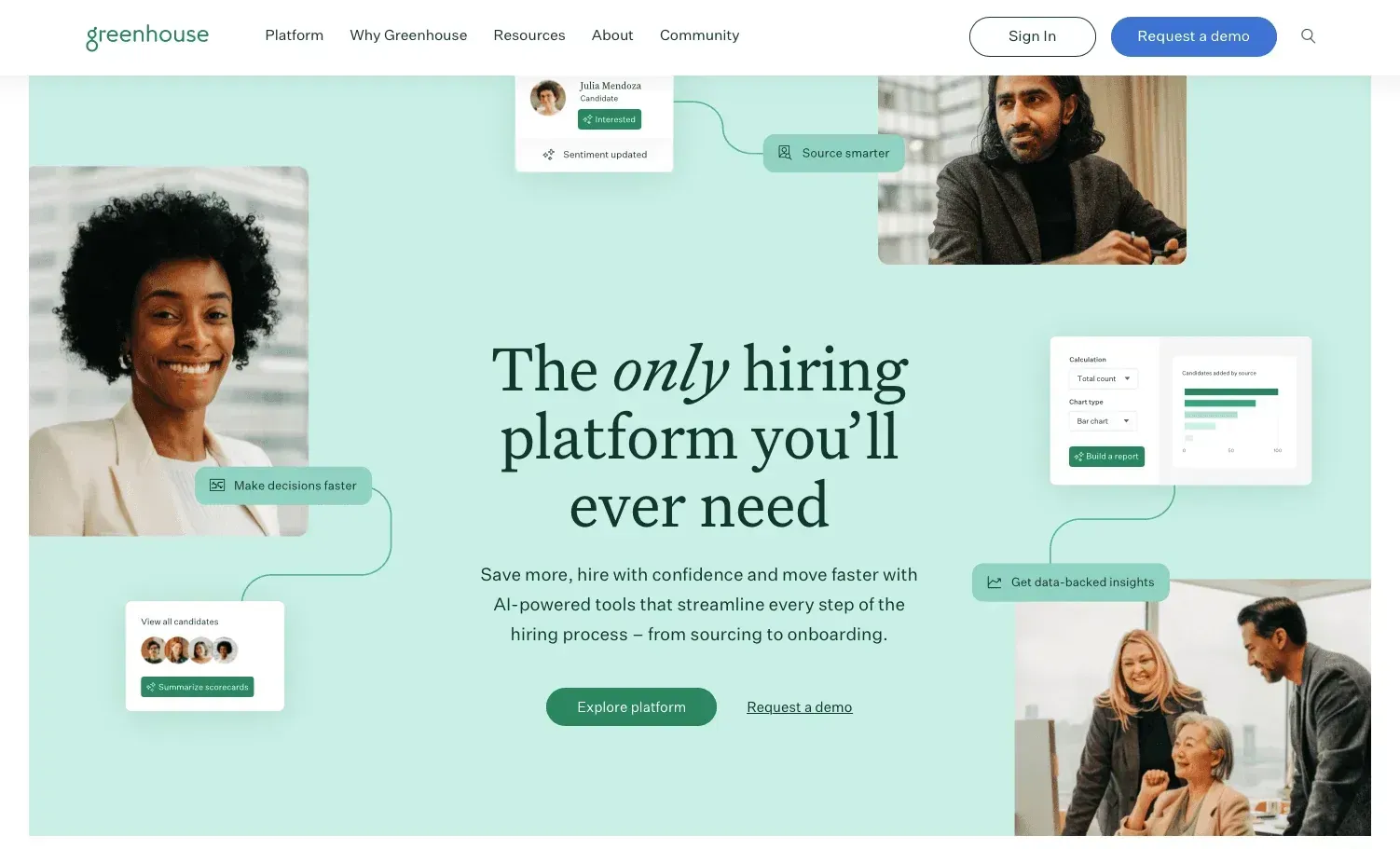
Greenhouse is an enterprise ATS with structured hiring workflows and an agency portal for managing external recruiting firms.
What They Offer
-
Structured hiring ATS with scorecards and interview kits for enterprise teams
-
Agency portal where external recruiters can submit candidates to specific jobs
-
Interview scheduling and collaborative review tools for hiring teams
-
Integration ecosystem for background checks, assessments, and HR tools
Good for: Companies with dedicated recruiting teams that occasionally invite specific external agencies to submit candidates for hard-to-fill roles.
Limitation: Greenhouse provides an administrative tool for tracking external recruiters you’ve already contracted with separately. You must source, vet, and contract with recruiting agencies on your own before granting portal access. The portal only allows recruiters to submit candidates into your system instead of via email.
Bottom line: Greenhouse helps manage external agencies you’ve already hired, but doesn’t provide access to recruiters or recruiting services.
Workable
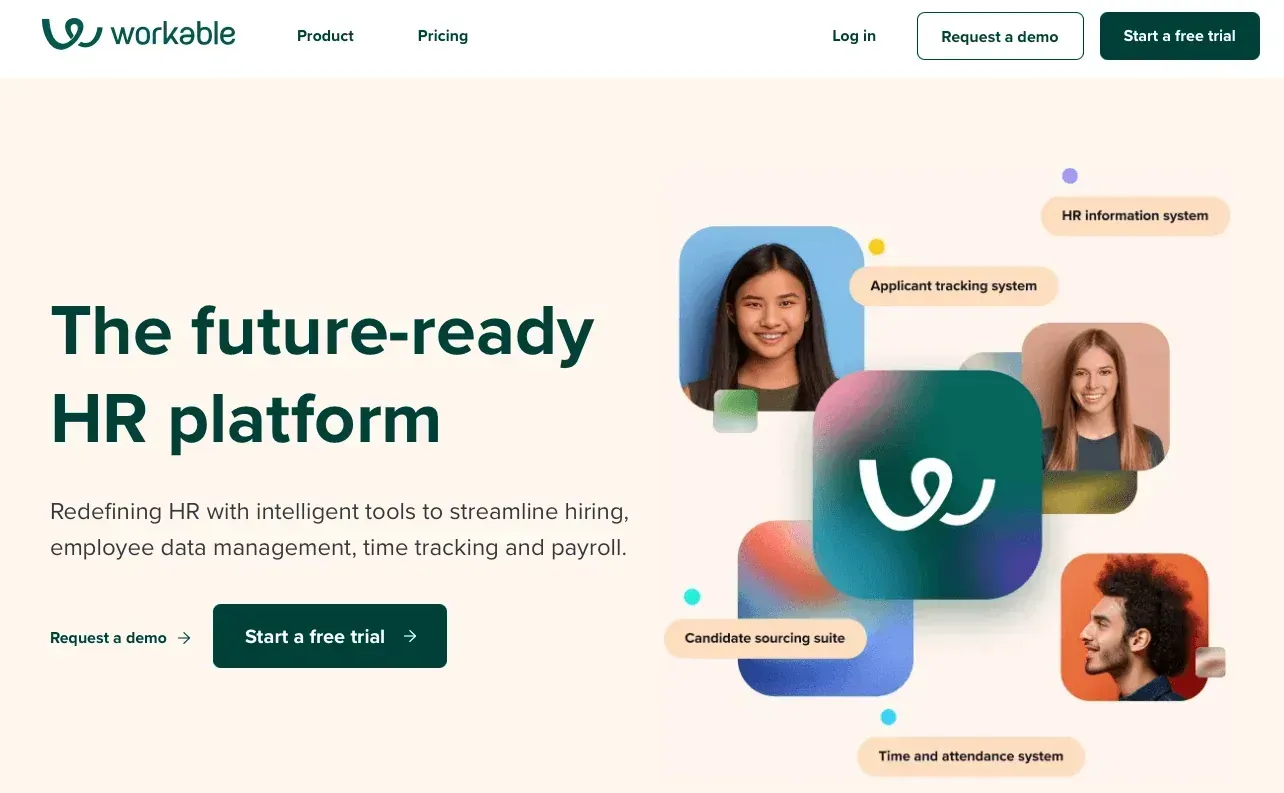
Workable is a mid-market ATS with job posting and team collaboration features for internal recruiting workflows.
What They Offer
-
Cloud-based ATS with candidate screening and pipeline management
-
One-click posting to multiple job boards
-
Team-based candidate evaluation tools
-
Mobile interface for application review and interview coordination
Good for: Mid-sized businesses that want an ATS with job board distribution and team collaboration for in-house recruiting.
Limitation: Workable has no recruiter marketplace or access to external recruiting help. You’ll need to source, manage, and pay for any recruiting services separately while maintaining your ATS subscription.
Bottom line: A standalone ATS that requires separate arrangements for external recruiting support.
Lever
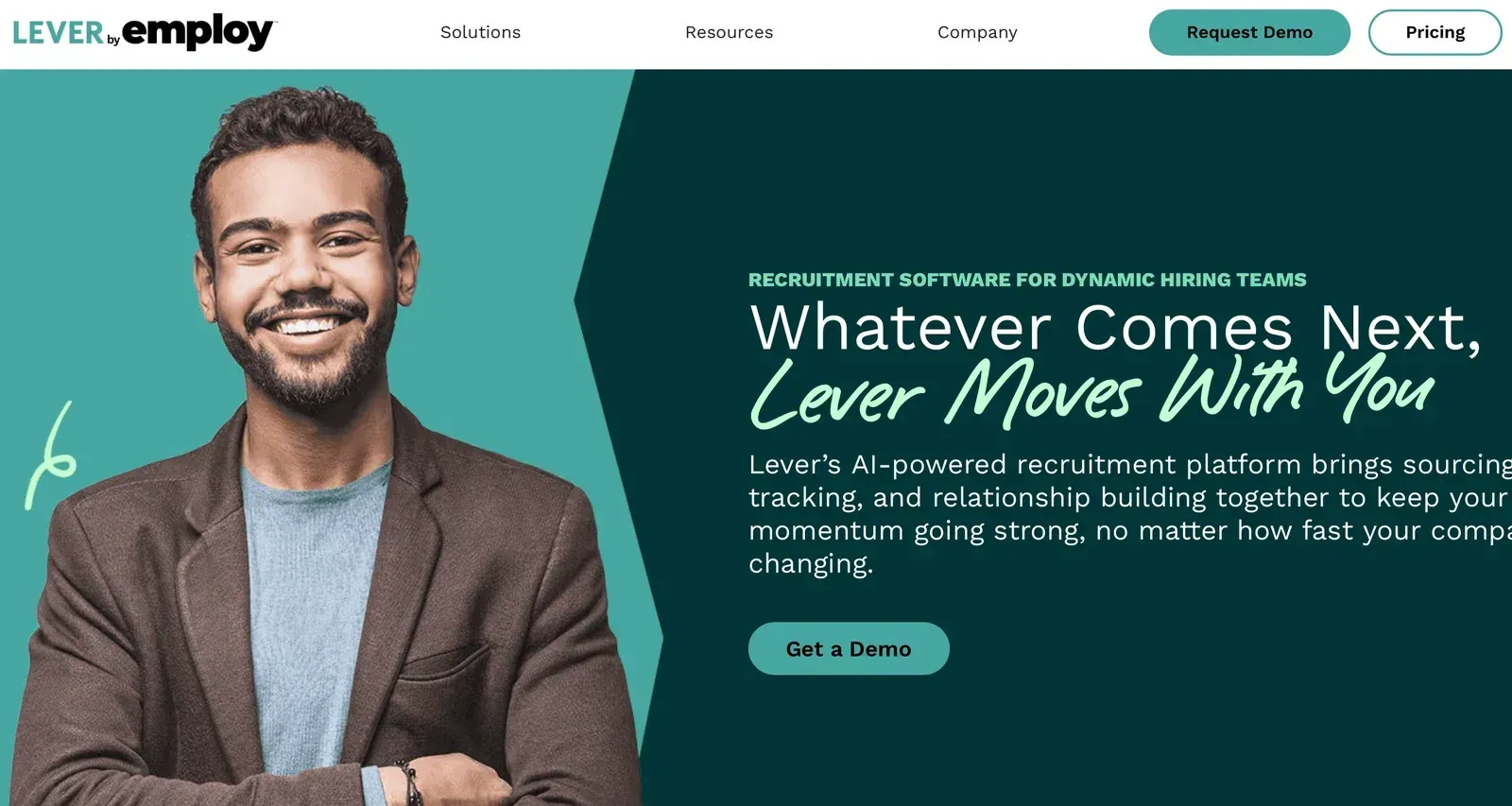
Lever combines an ATS with CRM capabilities for managing candidate relationships throughout the hiring pipeline.
What They Offer
-
ATS and CRM hybrid for building candidate pipelines over time
-
Automated workflows and sourcing tools for internal recruiting teams
-
Integration marketplace connecting to hundreds of HR and recruiting tools
-
Analytics dashboards for tracking pipeline health and team performance
Good for: Companies with in-house talent acquisition teams that want to maintain long-term candidate relationships while managing active hiring.
Limitation: Lever is software only. There’s no recruiter marketplace or services, so you’ll need to source and manage external recruiters separately if you need hiring support.
Bottom line: Solid ATS and CRM combination, but no access to recruiters.
Why Dover Is the Best ATS with Built-in Recruiter Access
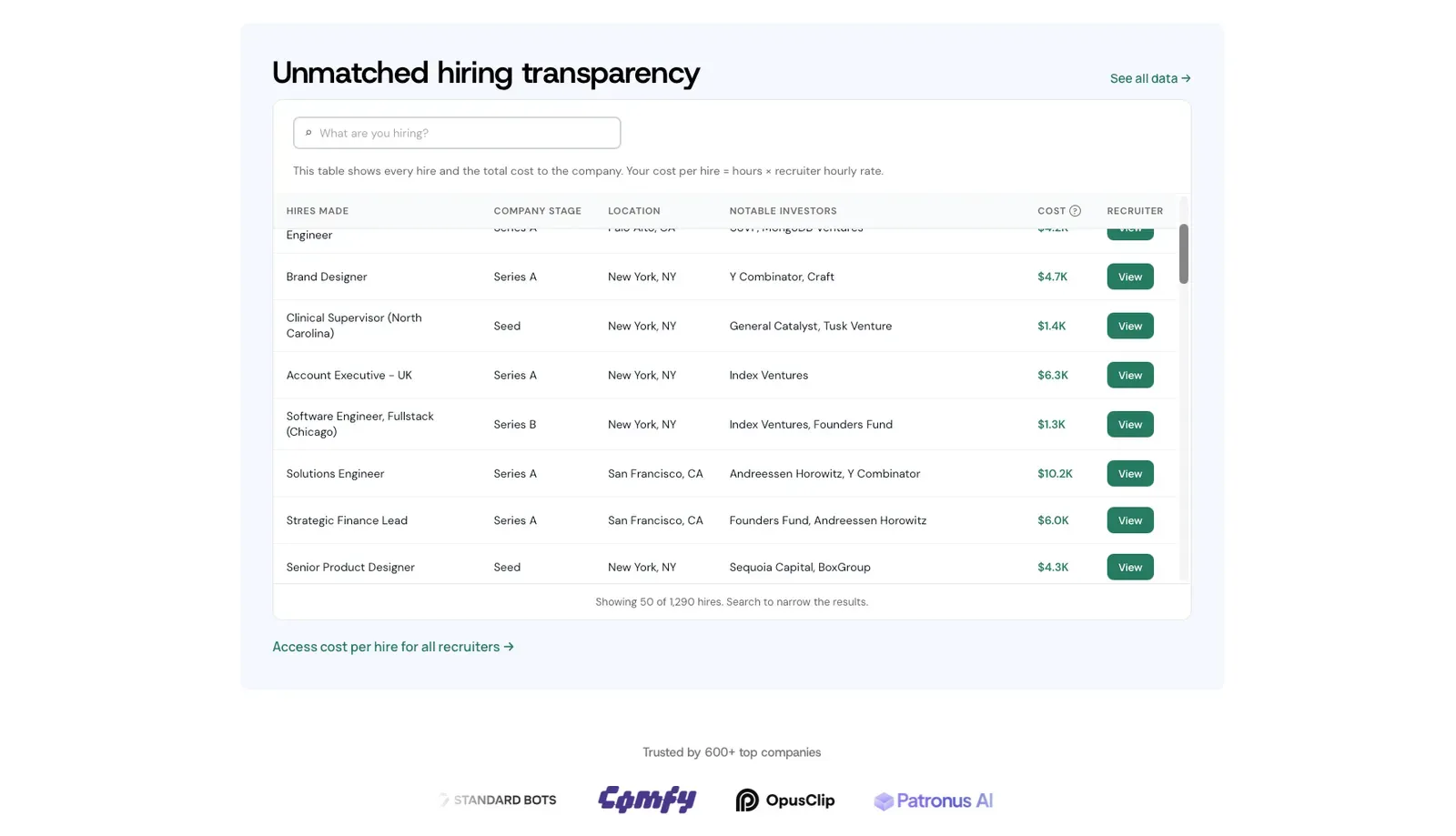
The free ATS includes one-click job posting to 100+ boards, candidate tracking, a careers page, and unlimited users, with AI applicant scoring and AI note taking on the $199/month Premium plan. When you need recruiting help, bring in a vetted recruiter at an hourly rate they set themselves, which for most roles works out well below a 15 to 25% contingency fee.
Dover is the platform fractional recruiting agencies are built on. Every recruiter carries real, verifiable reviews so you can check their track record before committing, which is something contingency marketplaces don’t offer. You work with one dedicated recruiter who integrates with your team, and the agency management dashboard shows exactly what you’re spending and how each recruiter performs.
FAQs
How do I choose between an ATS with built-in recruiters versus hiring an agency separately?
If you want flexibility and cost control, an integrated solution lets you use the software for free and only pay for recruiting help when you need it (typically a few thousand dollars per hire). Separate agencies lock you into 20-25% contingency fees and require managing two different systems.
Which type of recruiter model works best for startups with limited budgets?
Dedicated recruiter models on hourly pricing give you the most control over costs and better candidate quality since one recruiter learns your company deeply. Contingency or bounty-based models can result in multiple recruiters contacting the same candidates with inconsistent messaging about your roles.
Do I need a recruiter if I’m already using an ATS?
An ATS handles pipeline organization, job distribution, and screening, but it does not source candidates or manage the outreach-heavy parts of recruiting. Whether to add a recruiter depends on factors like role complexity, available bandwidth, and how passive the candidate pool is. For straightforward roles with healthy inbound, self-serve works well. For senior, technical, or hard-to-fill roles where recruiting passive candidates matters, a fractional recruiter working inside the same ATS can fill the gap without duplicating tooling or losing pipeline visibility.
Final Thoughts on ATS Options with Recruiter Access
The best ATS platform options with recruiter access give hiring teams flexibility without forcing an all-or-nothing choice. The most useful approaches let you run the ATS yourself and layer in a recruiter when you need to move faster or fill a harder role. Dover is one concrete implementation: a free ATS for pipeline and job distribution, with a $199/month Premium tier for AI features, paired with on-demand fractional recruiters who set their own rates. Hourly work has typically run $75 to $125 per hour and hires have averaged $2,000 to $7,000, though you agree terms with the recruiter directly and no retainer is required.